
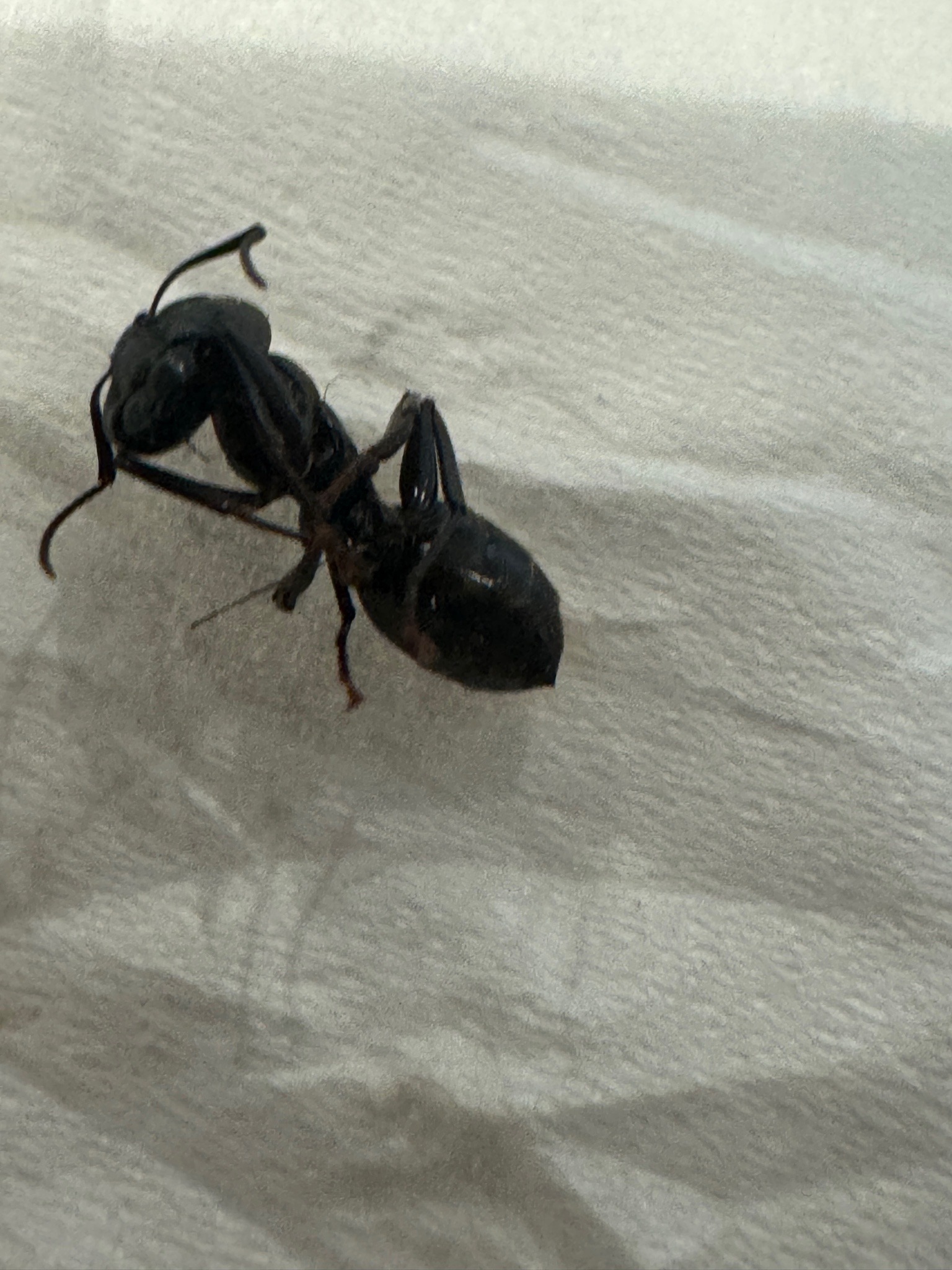
Community identification
Carpenter ant
Camponotus sp.
- Order & Family
- Hymenoptera; Formicidae
- Size
- Workers typically 6–13 mm; queens can be larger.
Natural Habitat
Woodlands and buildings, nesting in dead or damp wood, tree cavities, and wall voids.
Diet & Feeding
Omnivorous scavengers that eat insects, sweet liquids, and household food scraps; they do not eat wood.
Behavior Patterns
Live in colonies with queens and workers; workers forage in trails, often at night. Winged reproductives emerge seasonally to mate and establish new colonies.
Risks & Benefits
They can damage buildings by excavating galleries in damp or decaying wood, but do not usually bite or sting people. Outdoors, they help recycle wood and prey on other insects.