
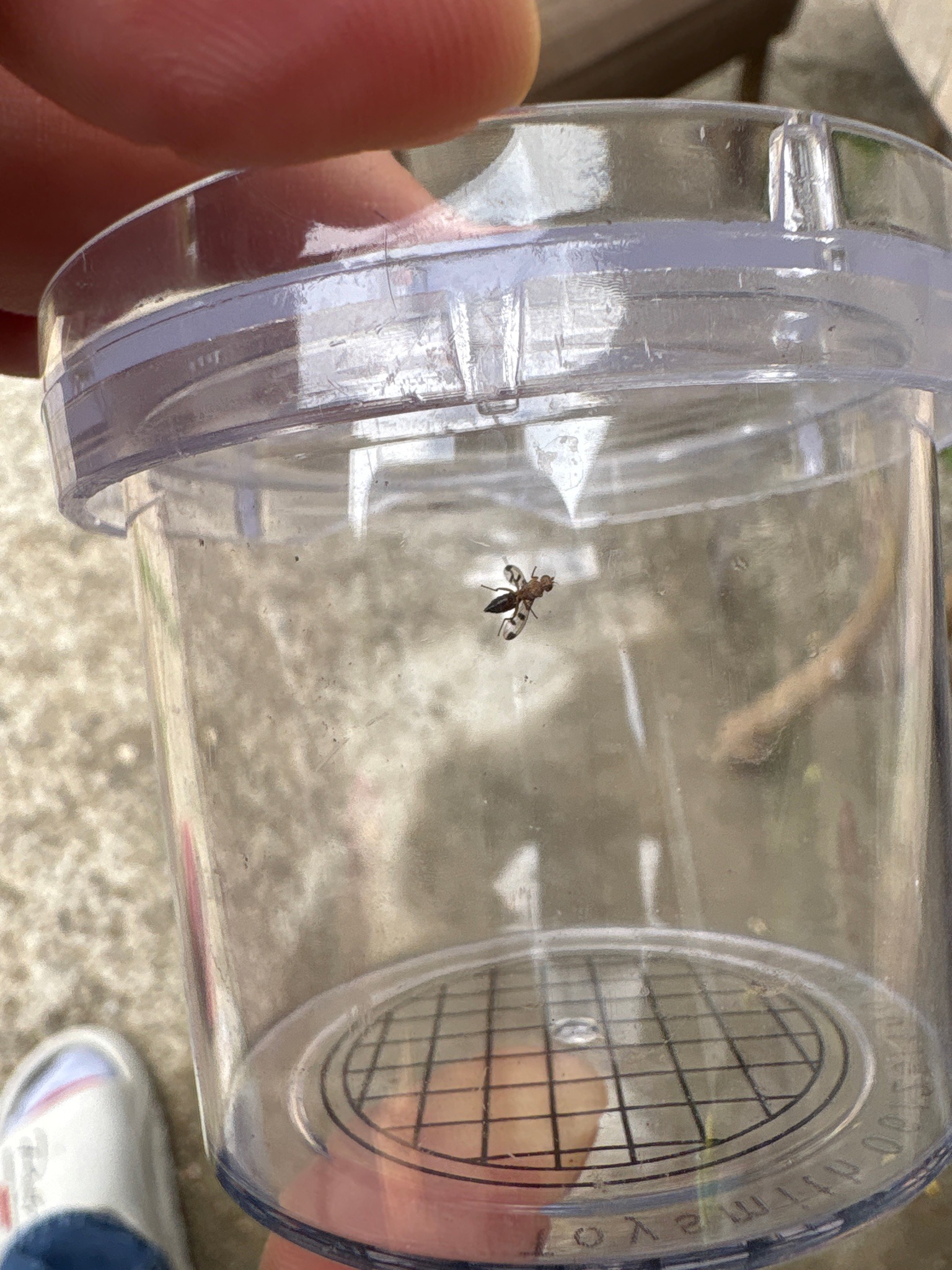
Community identification
Small ant (likely pavement or household ant)
Tetramorium sp. (probable; image resolution prevents species-level identification)
- Order & Family
- Hymenoptera; Formicidae
- Size
- Workers are typically 2–4 mm long; this specimen appears approximately 3–4 mm.
Natural Habitat
Common around soil, pavement cracks, foundations, gardens, and buildings, including indoor wall voids and kitchens.
Diet & Feeding
Omnivorous and opportunistic, feeding on sugary liquids, dead insects, seeds, and household food residues.
Behavior Patterns
Highly social, living in colonies with queens, workers, and brood; workers follow pheromone trails and forage persistently. Winged reproductive ants may emerge during seasonal mating flights.
Risks & Benefits
Generally harmless, though colonies can become nuisance pests indoors and may contaminate food. They recycle organic matter, prey on small arthropods, and contribute to soil processes.