
Community identification
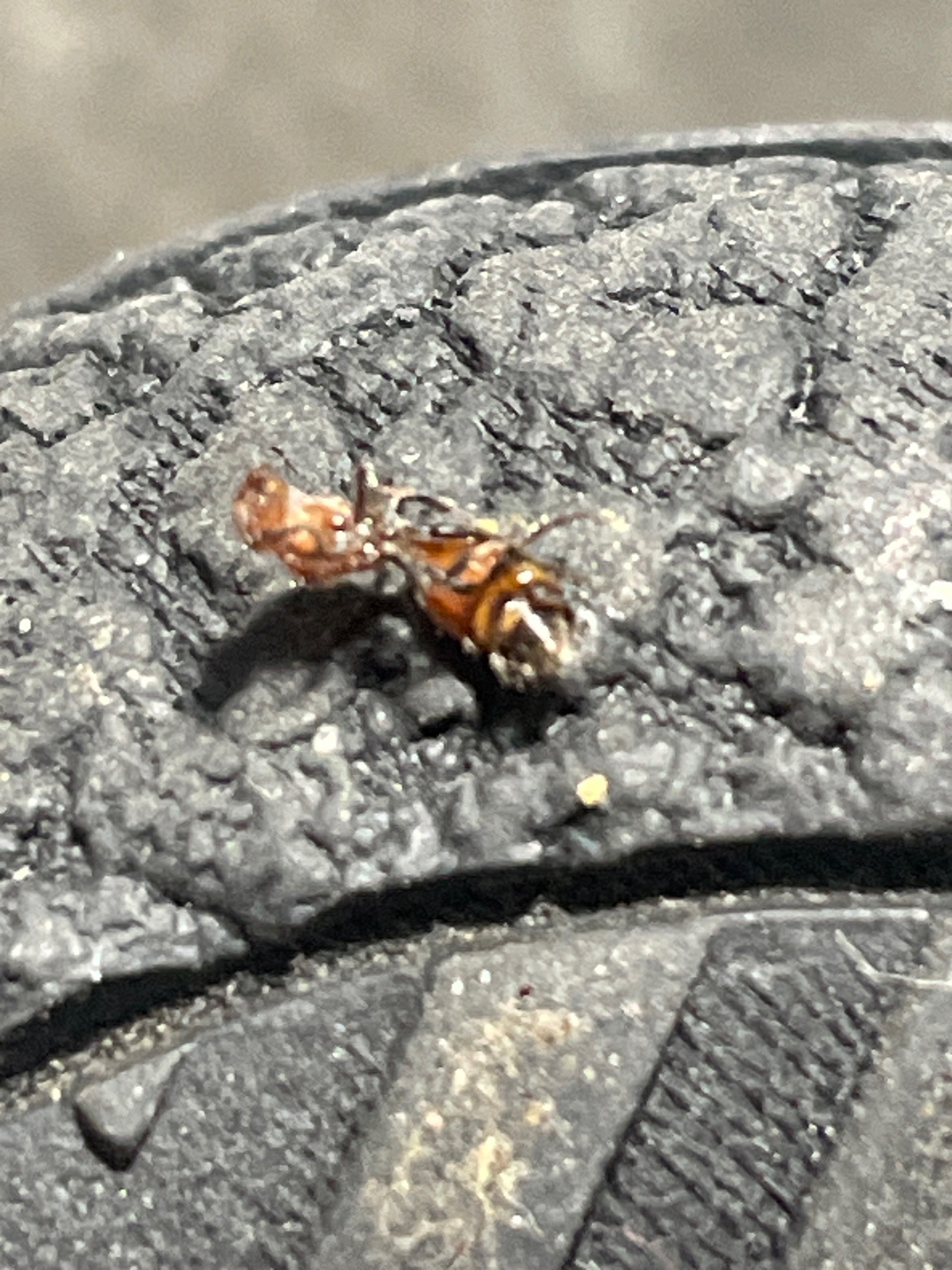
Ant (likely a carpenter ant)
Camponotus sp.
- Order & Family
- Hymenoptera; Formicidae
- Size
- Workers are typically 6–12 mm long; winged reproductives commonly reach 12–18 mm.
Natural Habitat
Woodlands, gardens, soil, and structures containing damp or decaying wood. This individual appears to be a worker or possibly a winged reproductive ant.
Diet & Feeding
Omnivorous: feeds on honeydew, nectar, insects, and other protein sources. It does not eat wood but excavates galleries in it for nesting.
Behavior Patterns
Social and colony-forming, with workers following chemical trails and caring for brood. Mature colonies produce winged males and females that swarm for mating, usually seasonally.
Risks & Benefits
Generally harmless, though carpenter ants can damage damp or compromised wood and may bite defensively. They help recycle wood, aerate soil, and prey on other insects; exact identification is uncertain from the blurred image.