
Community identification
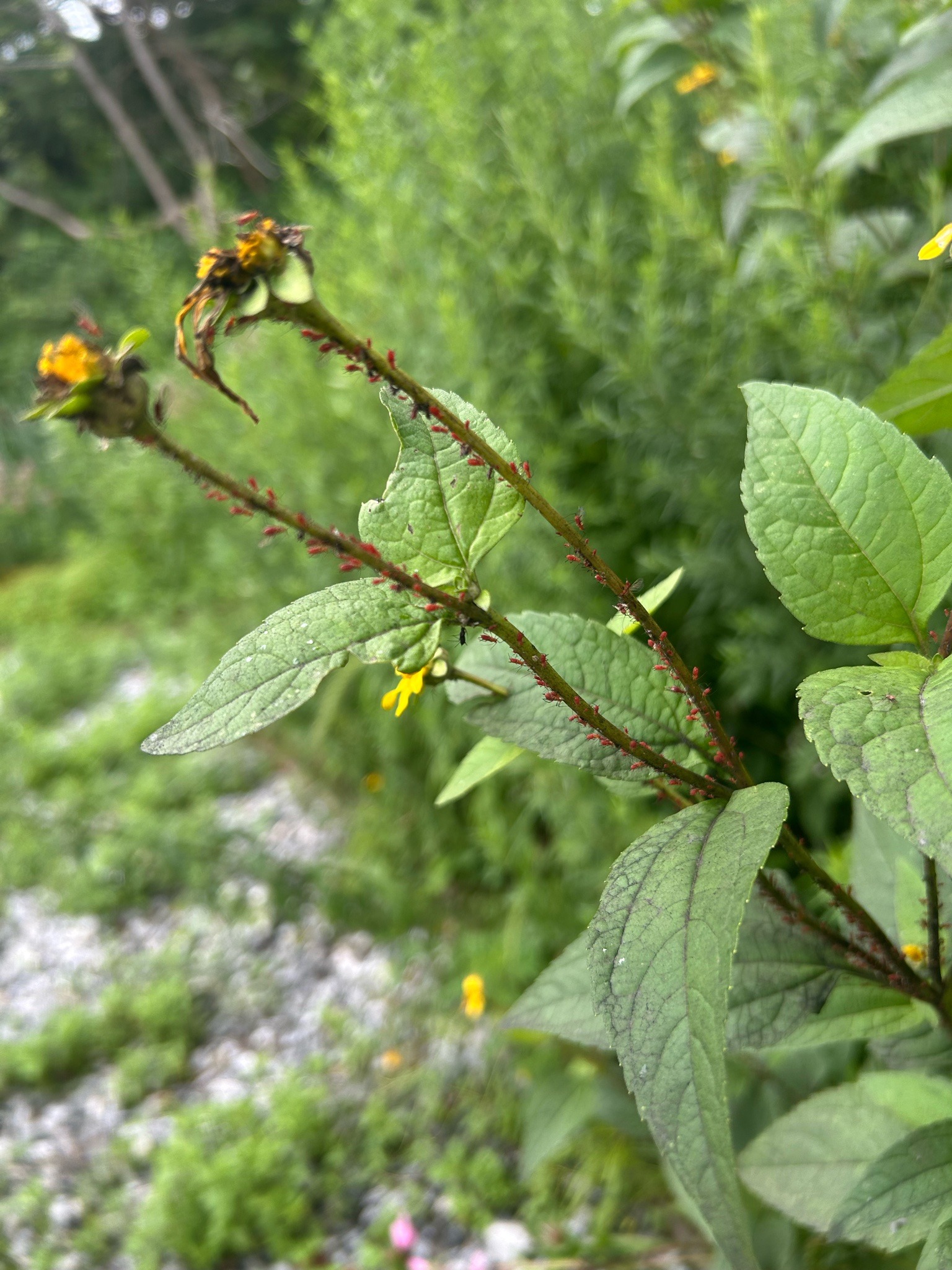
Red Aphid
Uroleucon sp. (or similar species)
- Order & Family
- Order: Hemiptera, Family: Aphididae
- Size
- 1.5 to 3.5 mm
Natural Habitat
Found on the stems, leaves, and flower buds of herbaceous plants and wildflowers in fields, meadows, and gardens.
Diet & Feeding
Plant sap, feeding by piercing plant tissues with mouthparts and sucking out nutrients.
Behavior Patterns
They often cluster densely in large colonies on host plant stems. They can reproduce rapidly through parthenogenesis (females giving birth to live young without mating) during warmer months and produce winged forms to migrate to new host plants when overcrowding occurs.
Risks & Benefits
Risks: Heavy infestations can weaken plants, cause leaf curling, stunt growth, and transmit plant viruses. Benefits: They serve as a crucial food source for beneficial predators such as lady beetles, lacewings, and parasitic wasps.