
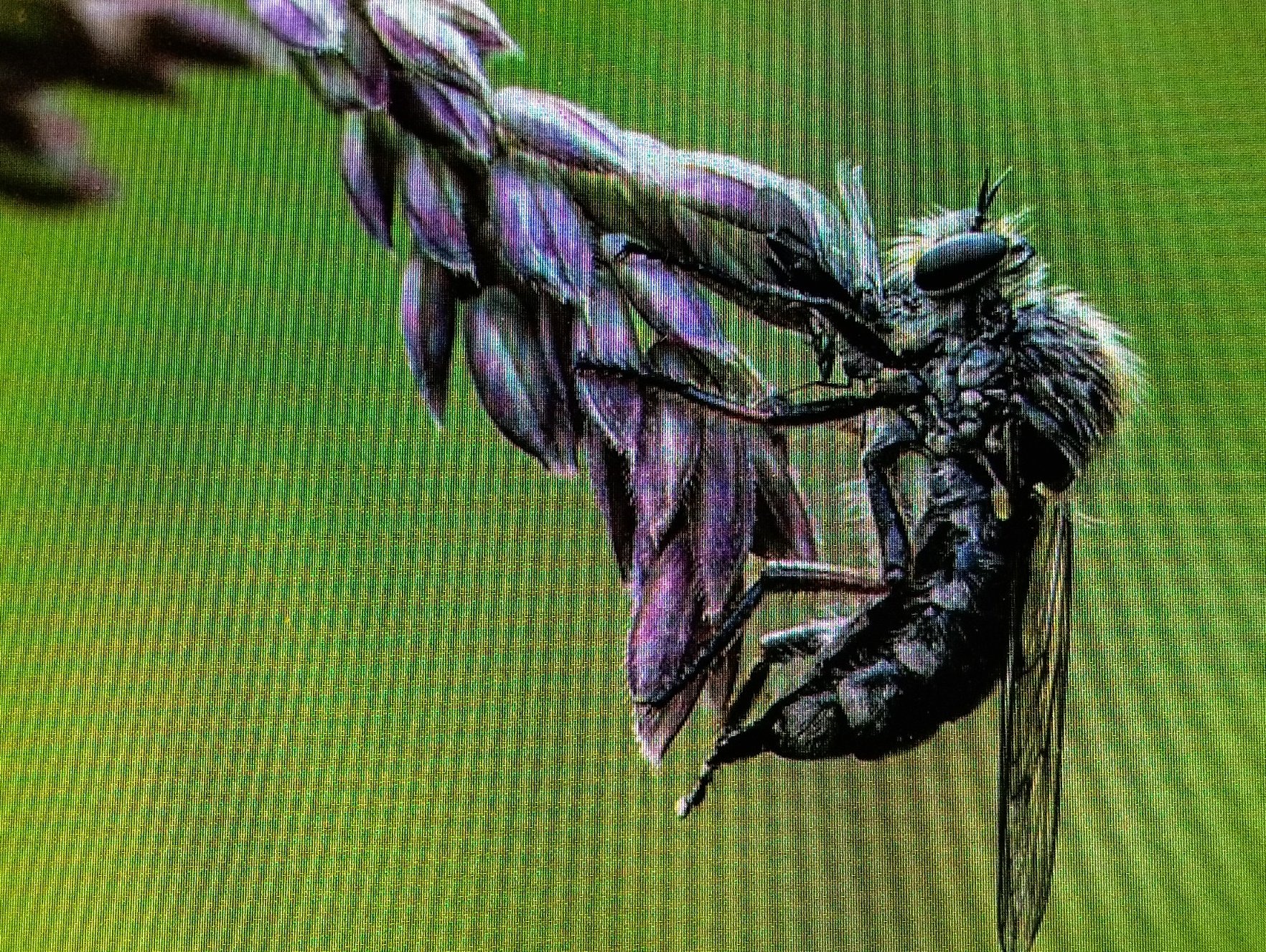
Robber fly (probable hangingfly robber fly)
Diogmites sp. (identification from image is uncertain)
- Order & Family
- Diptera, Asilidae
- Size
- Typically 15–30 mm long, depending on species.
Natural Habitat
Open sunny habitats such as meadows, woodland edges, gardens, and grasslands; often perches on vegetation. The August date is consistent with adult activity in temperate regions, but the location is not provided, so geographic verification is impossible.
Diet & Feeding
A predatory adult that intercepts flying insects—including bees, wasps, flies, and beetles—in flight, then sucks out their fluids with a piercing proboscis.
Behavior Patterns
Usually solitary and strongly territorial; adults bask and hunt from exposed perches. The pictured individual appears to be feeding on a captured insect, possibly a wasp or bee.
Risks & Benefits
Generally beneficial predators and not dangerous to people, though they can deliver a painful defensive bite if handled. They may occasionally capture pollinators, but most are valuable natural controls of other insects.