
Community identification
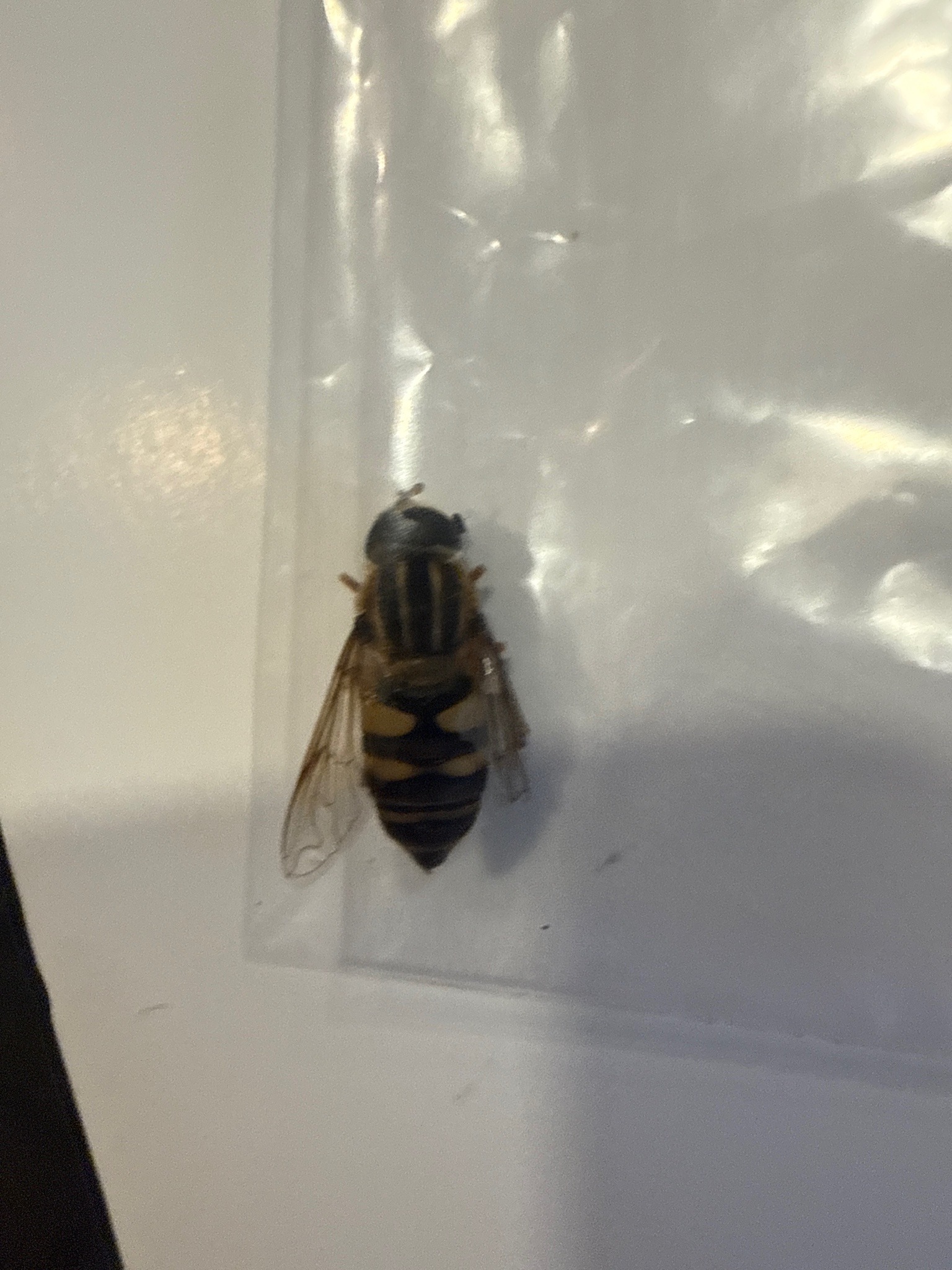
Hoverfly (drone fly type)
Eristalis sp. (likely Eristalis tenax)
- Order & Family
- Diptera; Syrphidae
- Size
- About 10–15 mm long.
Natural Habitat
Gardens, meadows, and other flower-rich areas; larvae often develop in nutrient-rich standing water.
Diet & Feeding
Adults feed on nectar and pollen; larvae consume microorganisms and decaying organic matter.
Behavior Patterns
Often hovers in place and mimics a honeybee or wasp. The pictured insect’s single pair of wings and large eyes fit a hoverfly.
Risks & Benefits
Harmless to people: it cannot sting. Adults pollinate flowers, and larvae help break down organic matter.