
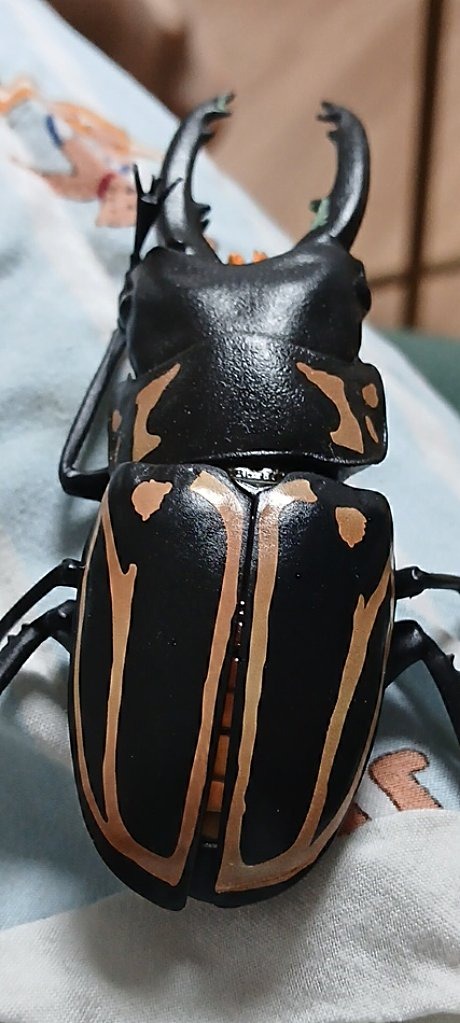
Golden flower chafer (likely)
Protaetia speciosa (possibly the subspecies P. speciosa cyanochlora)
- Order & Family
- Coleoptera (beetles), Scarabaeidae (scarab beetles), Cetoniinae
- Size
- Typically about 25–35 mm long; the pictured beetle appears substantially larger than the reported 5–15 mm.
Natural Habitat
Woodlands, forest edges, gardens, and areas with flowering plants or rotting fruit across Korea. Adults are commonly found on flowers, sap, and fallen fruit rather than exclusively on bare ground.
Diet & Feeding
Adults feed on nectar, pollen, tree sap, and ripe or fermenting fruit. Larvae develop in decaying wood, compost, or other rich organic soil material.
Behavior Patterns
Adults are active in warm daylight from late spring through early autumn, making a September capture in Korea plausible. They fly strongly, may bask or feed conspicuously, and larvae remain concealed in decaying organic matter.
Risks & Benefits
Harmless to people and not venomous; adults can occasionally damage flowers or soft fruit, while larvae help decompose organic material. The size, ornate markings, and September Korean range fit this identification, but a sharper image—especially of the antennae and underside—is needed to distinguish it from related Protaetia species.