
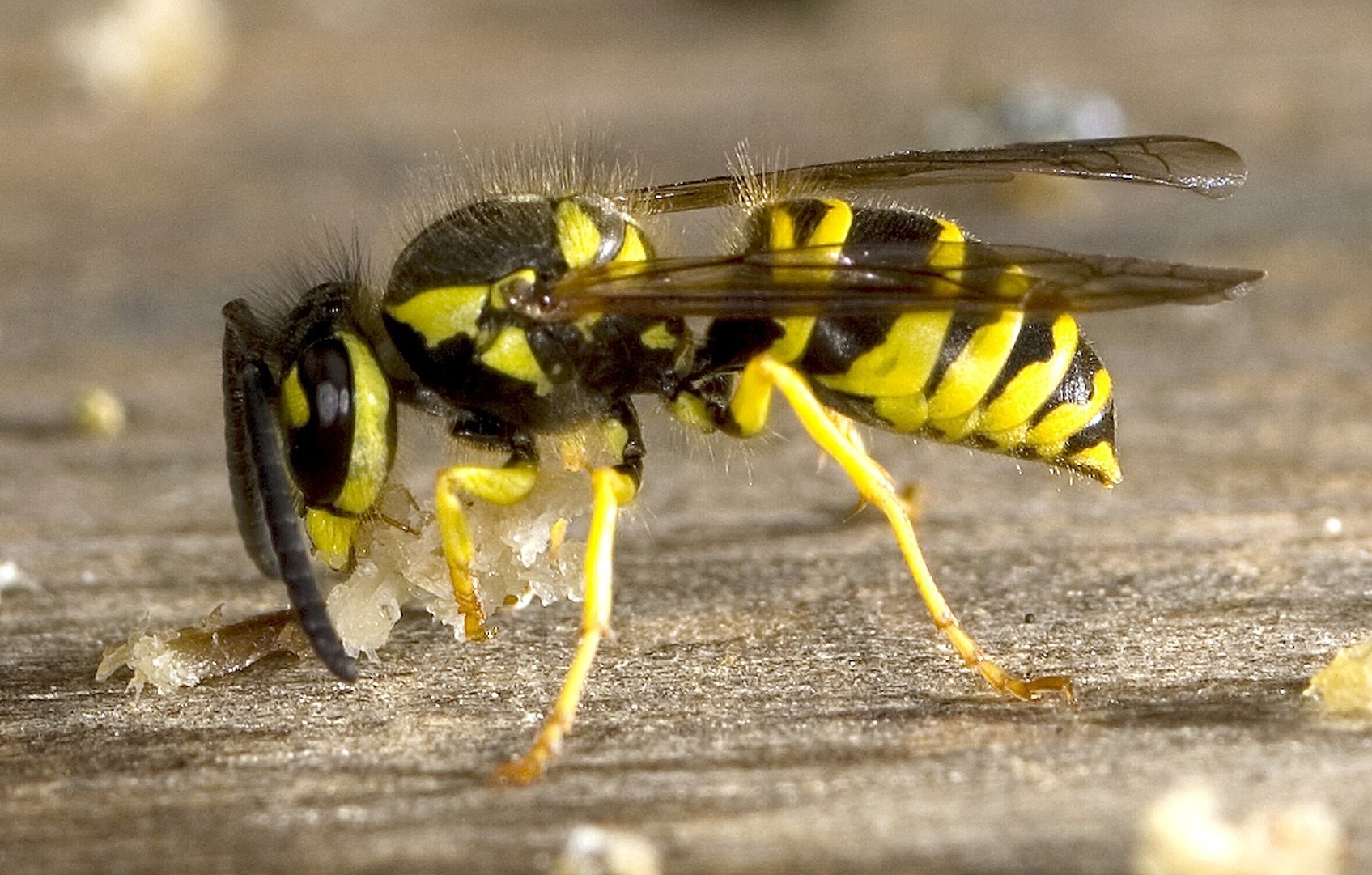
Community identification
Yellowjacket wasp
Vespula vulgaris (likely; species-level identification from the image is uncertain)
- Order & Family
- Hymenoptera; Vespidae
- Size
- Workers are typically 10–15 mm long; queens may reach about 18 mm.
Natural Habitat
Forests, gardens, meadows, urban areas, and buildings; nests occur underground, in wall voids, attics, or sheltered structures.
Diet & Feeding
Adults eat sugars from nectar, fruit, and human foods. They hunt insects and chew them into protein-rich food for larvae.
Behavior Patterns
Social, colony-forming wasps active mainly in daylight. Colonies are annual, and workers can defend nests aggressively with repeated stings.
Risks & Benefits
Stings are painful and may cause severe allergic reactions; scavenging around food creates nuisance risks. They benefit ecosystems by controlling caterpillars and other insects and by providing limited pollination.