
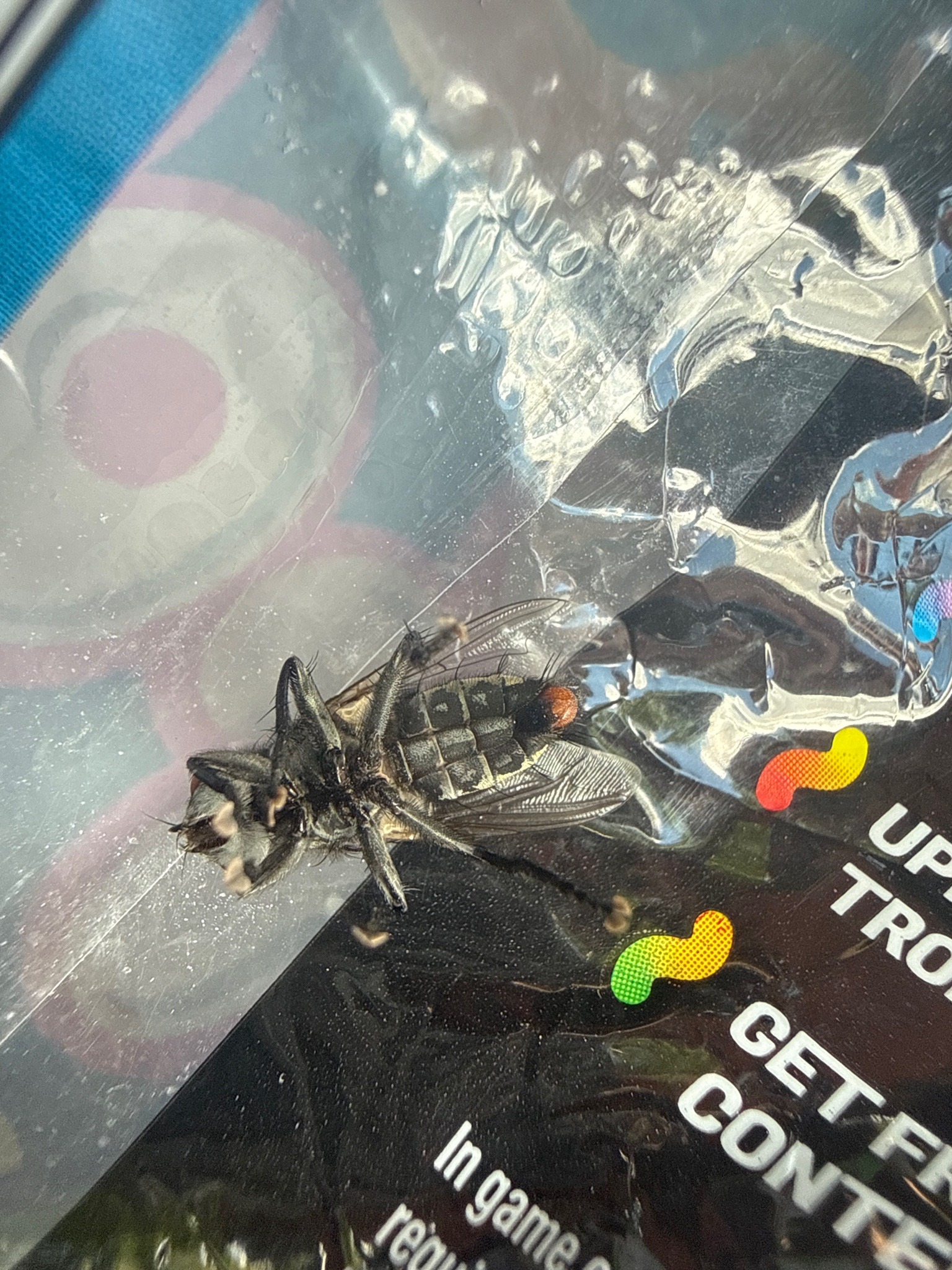
Community identification
Red-tailed Flesh Fly
Sarcophaga haemorrhoidalis
- Order & Family
- Diptera: Sarcophagidae
- Size
- 10 to 15 mm (0.4 to 0.6 inches)
Natural Habitat
Widespread globally, commonly found around urban areas, livestock, manure, garbage, and decaying organic matter.
Diet & Feeding
Adults feed on nectar, sap, liquid from decaying organic matter, and animal secretions. Larvae (maggots) feed on flesh, carrion, dung, and decomposing material.
Behavior Patterns
They are ovoviviparous, meaning females hatch eggs internally and deposit live larvae directly onto food sources like carrion or feces. They are strong fliers often attracted to strong odors and light.
Risks & Benefits
Benefits: Important decomposers that aid in recycling nutrients and breaking down organic waste. Risks: Can act as mechanical vectors for pathogens and bacteria, and occasionally cause intestinal or tissue myiasis in humans or livestock.