
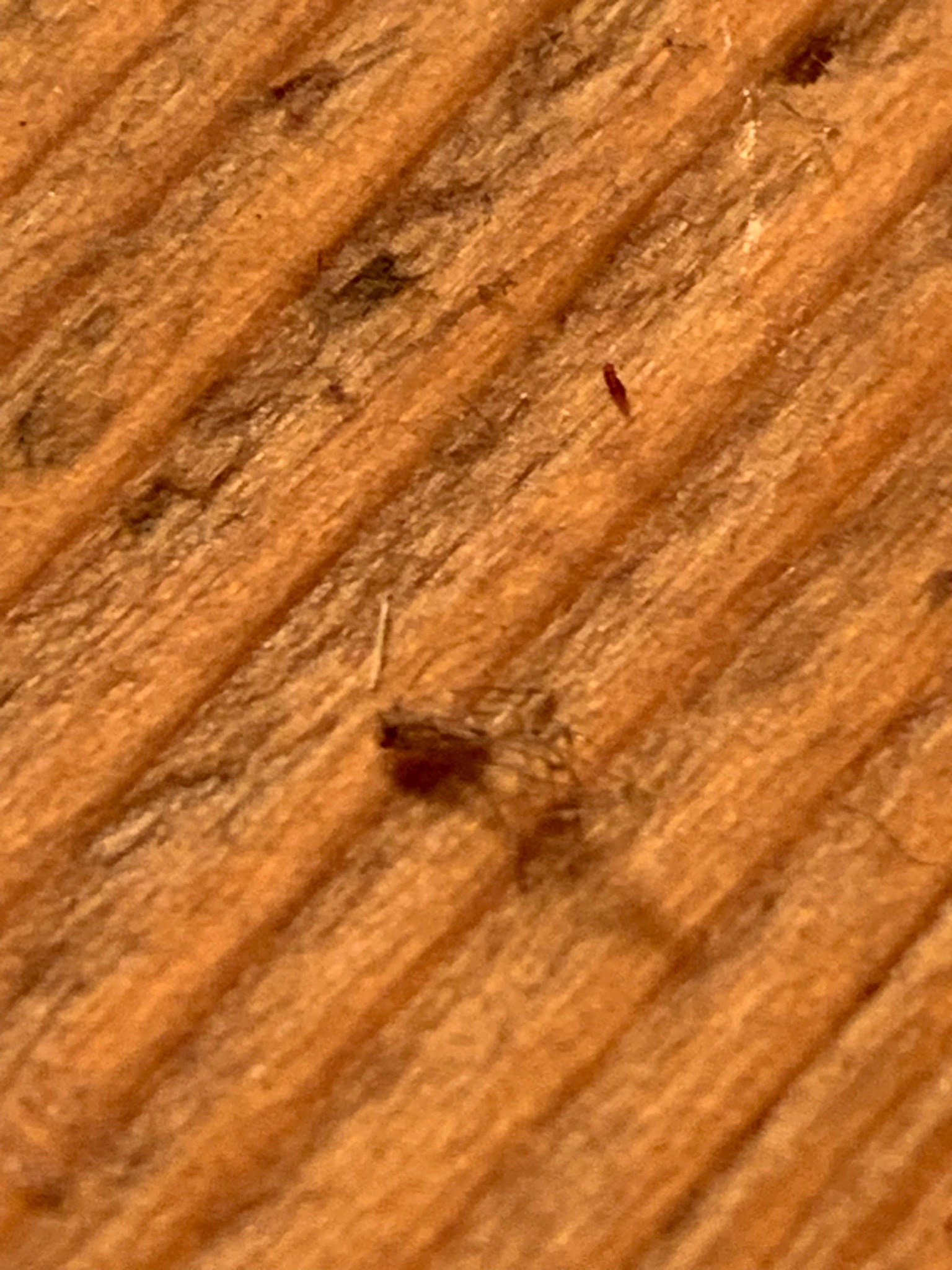
Community identification
Booklouse (psocid)
Likely Liposcelis spp.
- Order & Family
- Psocodea, Liposcelididae
- Size
- About 0.5–2 mm long; this specimen appears near the larger end of that range.
Natural Habitat
Warm, humid indoor locations such as books, cupboards, stored foods, and wood surfaces; often associated with mold or high humidity.
Diet & Feeding
Feeds mainly on microscopic mold, fungi, algae, and organic debris rather than wood or human tissue.
Behavior Patterns
Wingless, soft-bodied, and fast-moving; populations increase in damp conditions and may reproduce rapidly, including without mating in some species.
Risks & Benefits
Harmless to people, pets, clothing, and structural wood; large numbers indicate excess moisture and can contaminate stored materials. They help consume fungal matter and organic debris.