
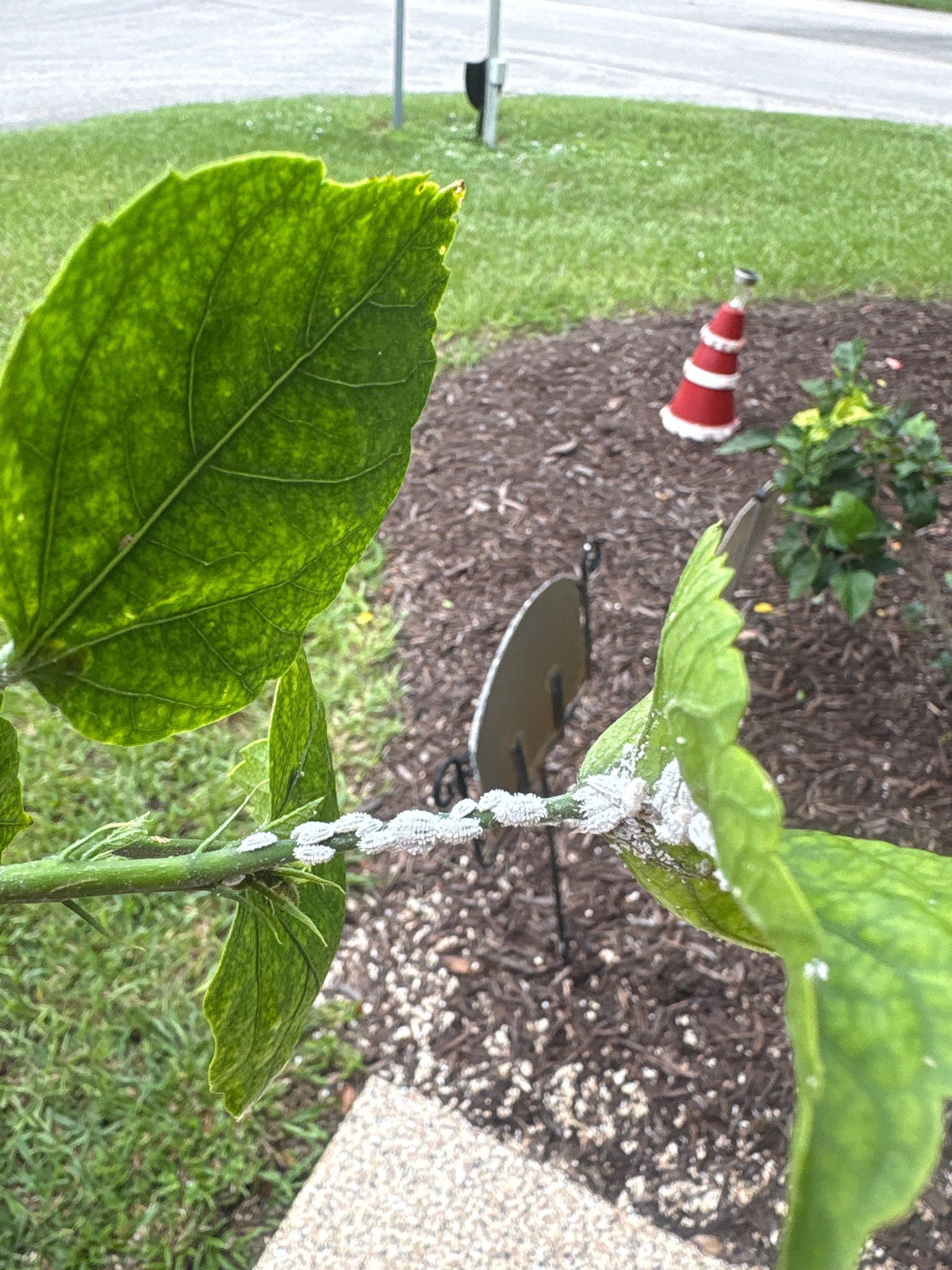
Community identification
Oleander aphid (milkweed aphid)
Aphis nerii
- Order & Family
- Hemiptera; Aphididae
- Size
- Adults are about 1.5–2.6 mm long; the pictured white material is likely shed skins and waxy residue around a dense colony.
Natural Habitat
Colonies occur on tender stems, leaves, and flower buds of milkweeds, oleander, and related plants, especially in warm gardens and landscapes.
Diet & Feeding
They suck phloem sap, weakening plants and causing leaf curling, yellowing, and sticky honeydew that supports sooty mold.
Behavior Patterns
They reproduce rapidly, often parthenogenetically, producing live young without mating. Winged forms disperse when plants become crowded or stressed; ants may protect colonies for honeydew.
Risks & Benefits
They rarely threaten healthy established plants but can stunt growth and spread plant viruses. They provide food for lady beetles, lacewings, hoverfly larvae, and parasitoid wasps; handling is generally harmless to people.