
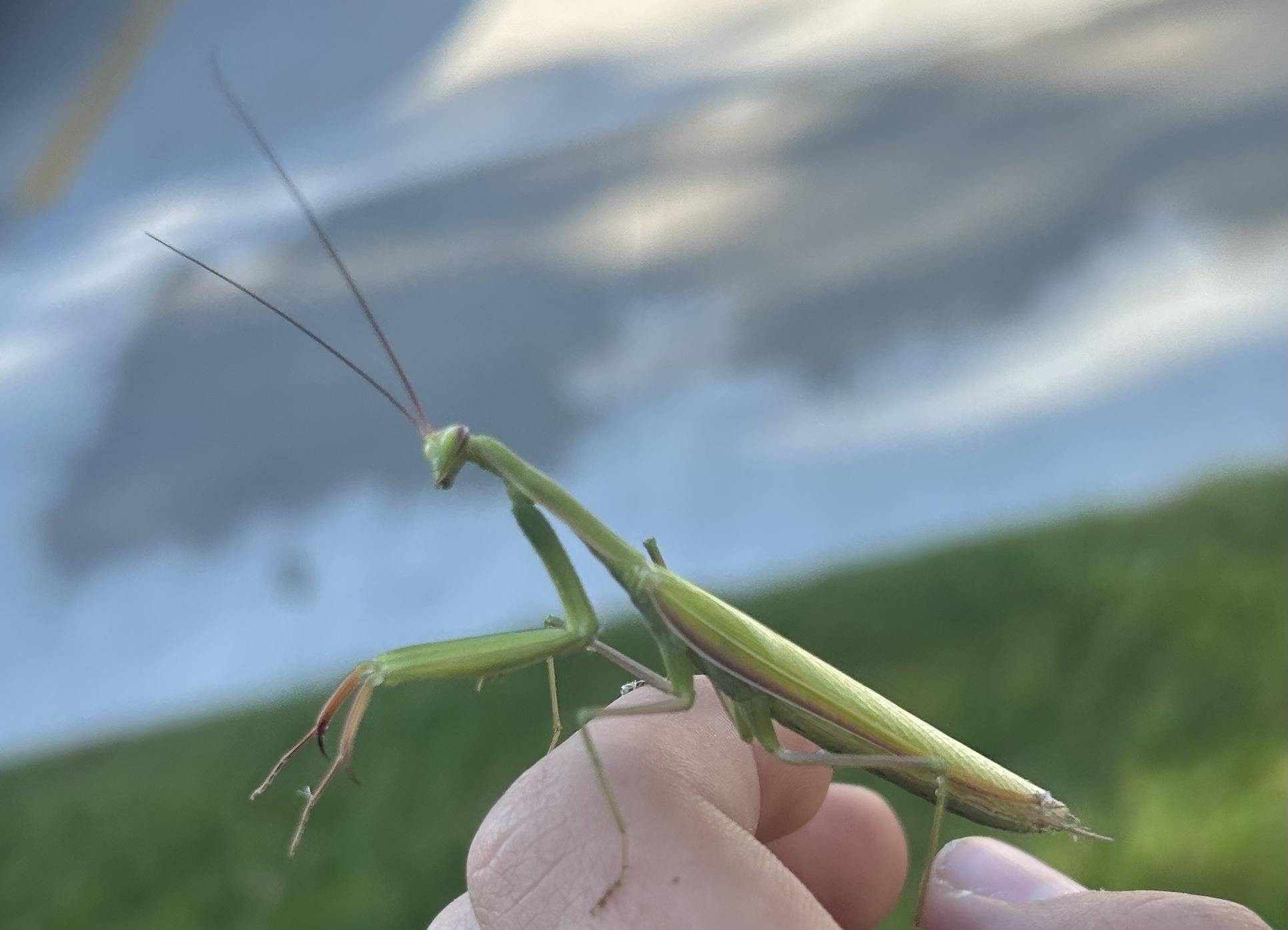
Community identification
Praying mantis
Likely a Chinese mantis (Tenodera sinensis)
- Order & Family
- Mantodea; Mantidae
- Size
- Adults typically 7–10 cm (2.8–4 in) long; males are generally smaller and slimmer.
Natural Habitat
Grasslands, gardens, shrubs, and woodland edges, often on vegetation where prey is abundant.
Diet & Feeding
Predatory; eats flies, grasshoppers, moths, crickets, and other insects, occasionally taking small vertebrates.
Behavior Patterns
An ambush hunter that remains motionless, then rapidly strikes with spined forelegs. Females produce foamy egg cases (oothecae); adults are usually solitary and cannibalism may occur.
Risks & Benefits
Harmless to people and beneficial as a generalist predator of garden insects, though it also consumes pollinators and beneficial species. It is not a reliable biological-control agent because it lacks prey selectivity.