
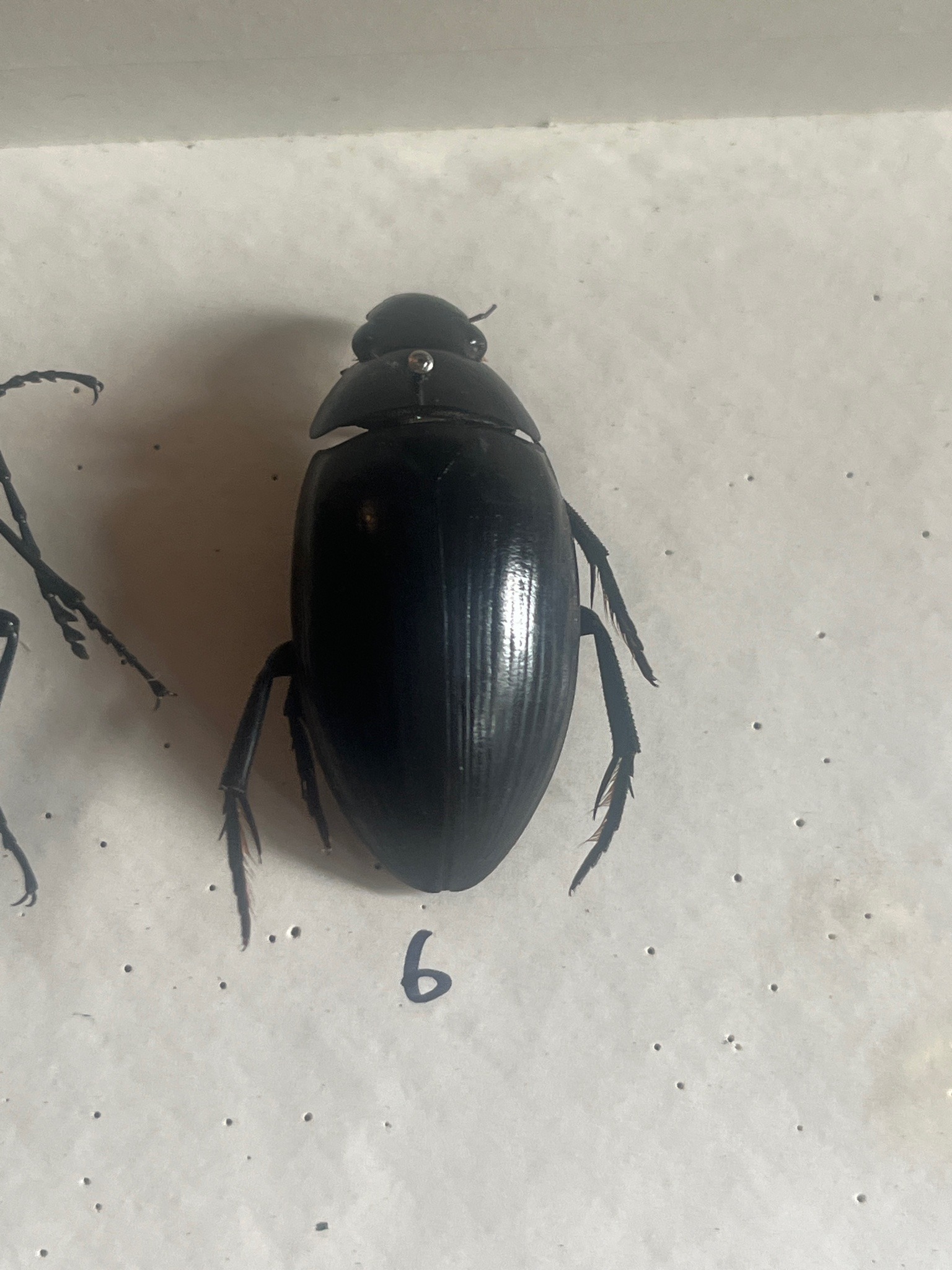
Community identification
Predaceous diving beetle
Dytiscus sp. (likely a large predaceous diving beetle)
- Order & Family
- Coleoptera; Dytiscidae
- Size
- Typically 25–35 mm long for large Dytiscus species; exact size depends on species and sex.
Natural Habitat
Freshwater ponds, lakes, marshes, and slow-moving streams; adults may fly between water bodies and enter lights or buildings.
Diet & Feeding
Adults and larvae are aquatic predators that eat insects, crustaceans, tadpoles, small fish, and other aquatic animals.
Behavior Patterns
Adults swim using flattened, fringed hind legs and carry an air supply beneath their wing covers. They are strong fliers, often nocturnal, and larvae undergo complete metamorphosis.
Risks & Benefits
Harmless to property and beneficial predators in freshwater ecosystems. They can deliver a painful defensive bite if handled, but are not venomous.