
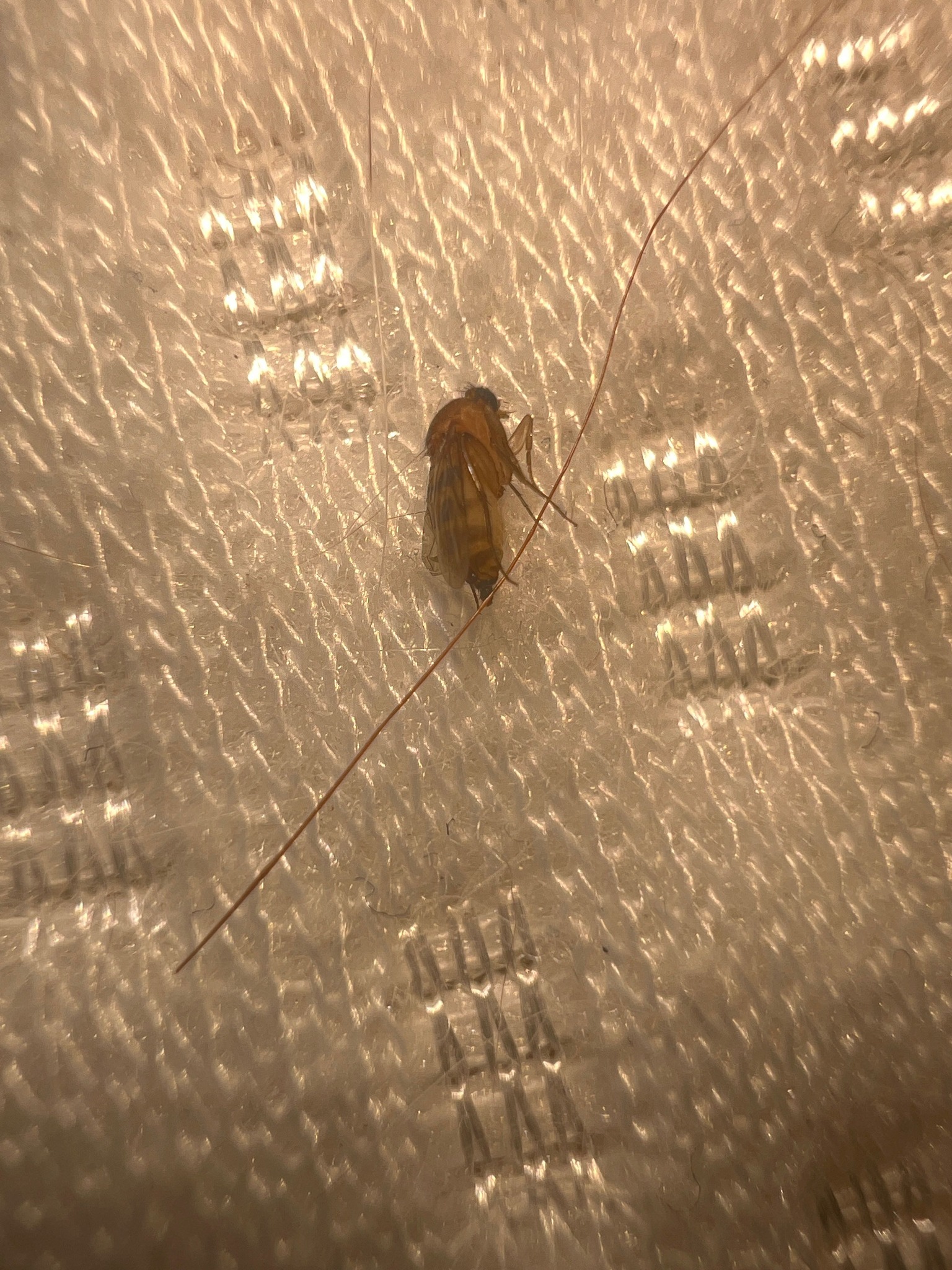
Phorid fly
Megaselia scalaris (or family Phoridae)
- Order & Family
- Order: Diptera, Family: Phoridae
- Size
- 0.5 mm to 6 mm (typically around 2 to 4 mm)
Natural Habitat
Found worldwide in moist, decaying organic matter, household drains, compost, soil, and sometimes associated with indoor plumbing or rotting food.
Diet & Feeding
Larvae feed on decomposing organic material, fungi, carrion, and sometimes living plant or animal tissue. Adults feed on liquids, nectar, and moisture.
Behavior Patterns
Known for running rapidly across surfaces rather than flying immediately when disturbed, giving them the alternative name 'scuttle fly'. They can infest indoor spaces if a breeding source like a dirty drain or decaying matter is present.
Risks & Benefits
Risks include being a nuisance pest and a potential mechanical vector for bacteria if they land on food. Benefits include contributing to the decomposition of organic waste in natural ecosystems.