
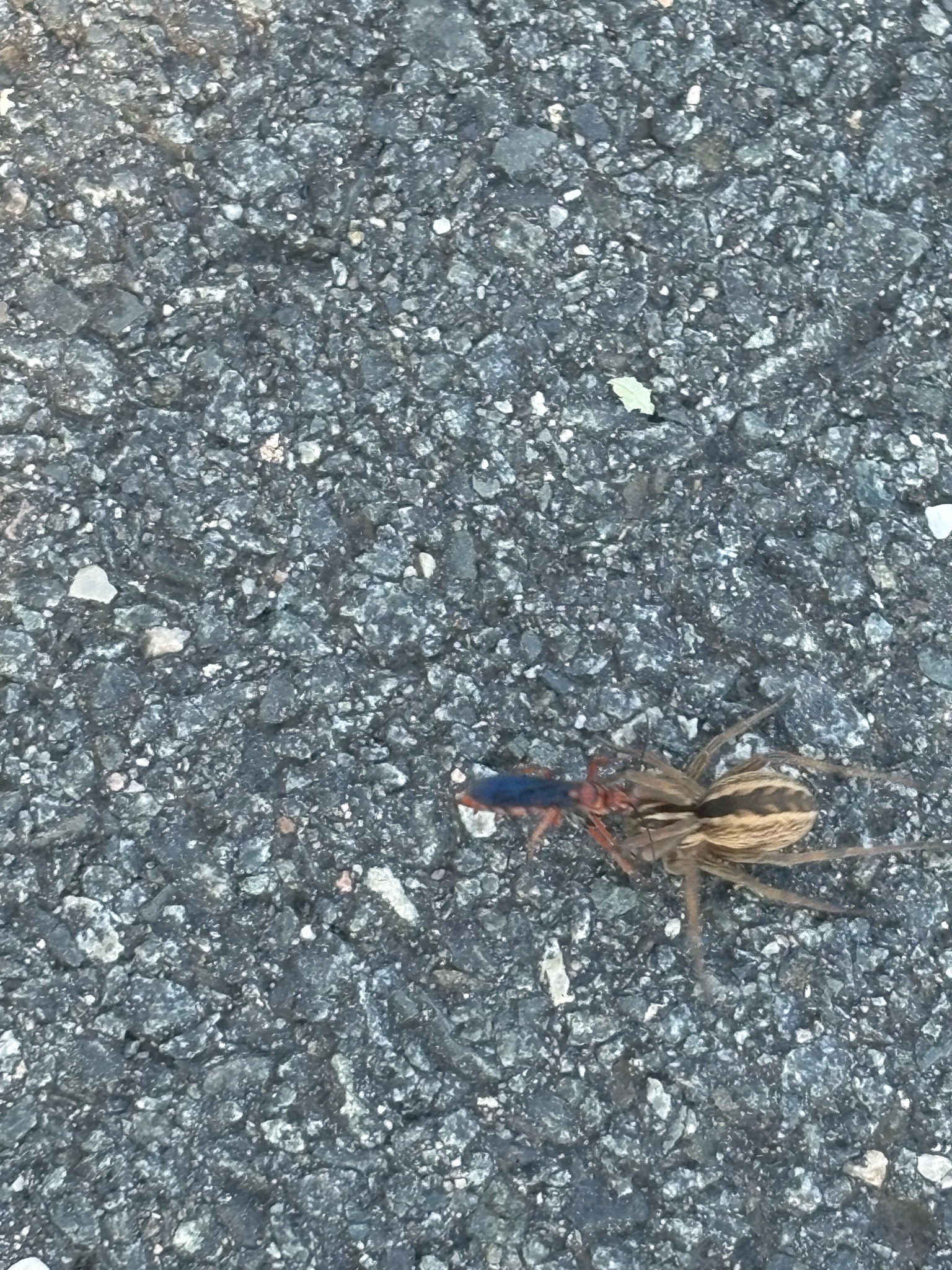
Community identification
Robber fly (likely a bearded robber fly)
Asilidae, likely *Efferia* or a related genus
- Order & Family
- Diptera; family Asilidae
- Size
- Typically 15–35 mm (0.6–1.4 in), depending on species.
Natural Habitat
Open, sunny habitats such as roadsides, grasslands, woodland edges, and scrub. Adults often perch on bare ground, rocks, or vegetation.
Diet & Feeding
Adults are aerial predators that seize flies, bees, wasps, beetles, and other insects in flight, then inject saliva that immobilizes and digests prey.
Behavior Patterns
Fast, agile hunters that repeatedly launch from exposed perches and return after capturing prey. Larvae develop in soil or decaying wood and prey on other insect larvae.
Risks & Benefits
Generally harmless to people, though handling can result in a painful defensive bite. They are beneficial natural predators that help regulate insect populations.