
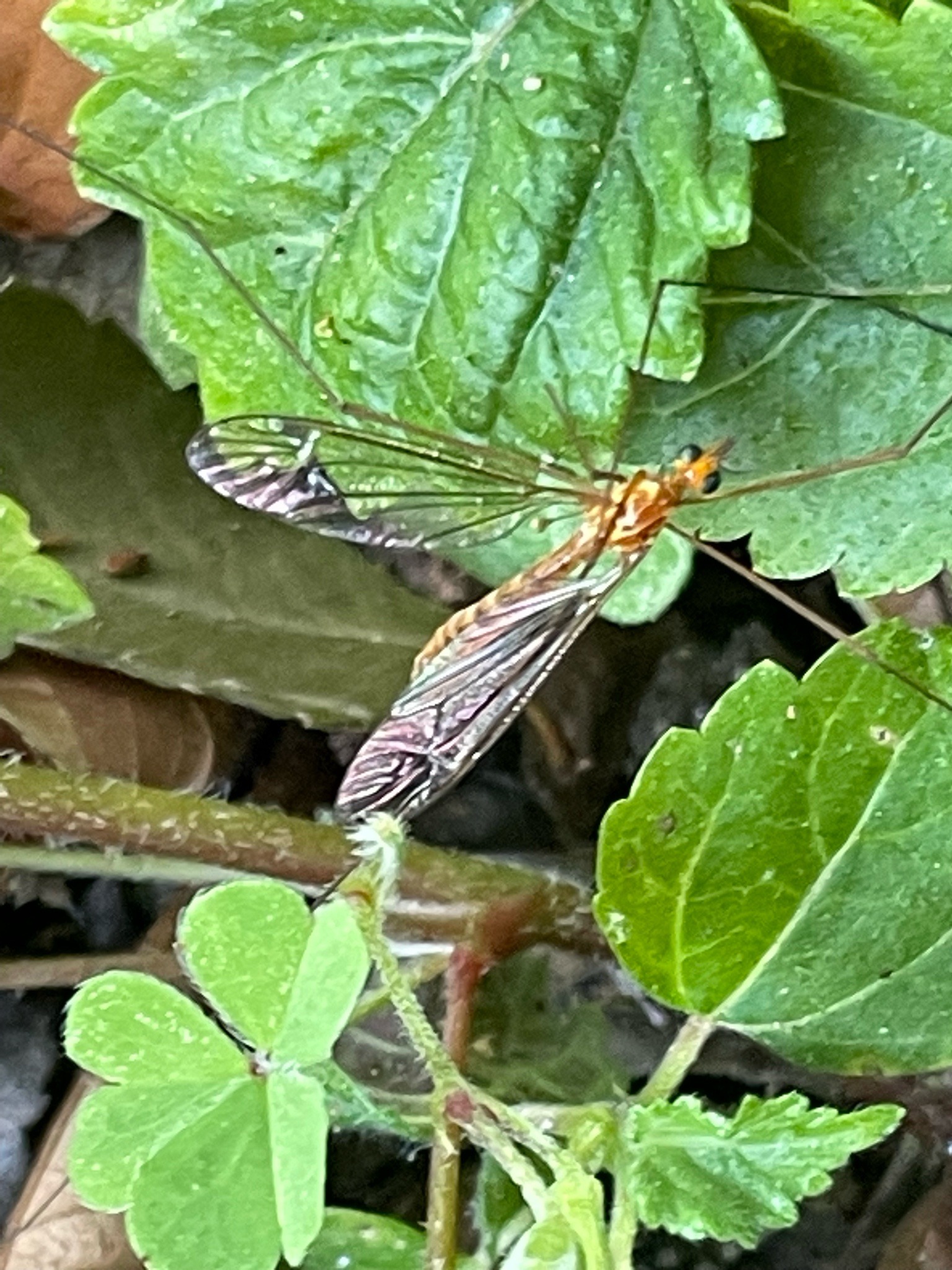
Caddisfly (likely a long-horned caddisfly)
Likely *Oecetis* or a related leptocerid genus; species-level identification is uncertain from the image
- Order & Family
- Trichoptera; likely Leptoceridae
- Size
- Typically about 10–25 mm long, with a wingspan around 15–35 mm, depending on species.
Natural Habitat
Adults occur near freshwater streams, ponds, and wetlands, often resting on vegetation. Larvae develop underwater, commonly among submerged plants or debris.
Diet & Feeding
Adults usually consume little or no food, though some take nectar or water. Larvae feed on algae, decomposing plant matter, and occasionally small aquatic organisms.
Behavior Patterns
Adults are mostly nocturnal and attracted to lights; their wings are held roof-like or folded over the body. Aquatic larvae construct cases or shelters and undergo complete metamorphosis.
Risks & Benefits
They do not bite or sting and pose no meaningful human risk. Larvae help decompose organic matter and serve as important food for fish and other freshwater wildlife; their presence can indicate relatively healthy water.