
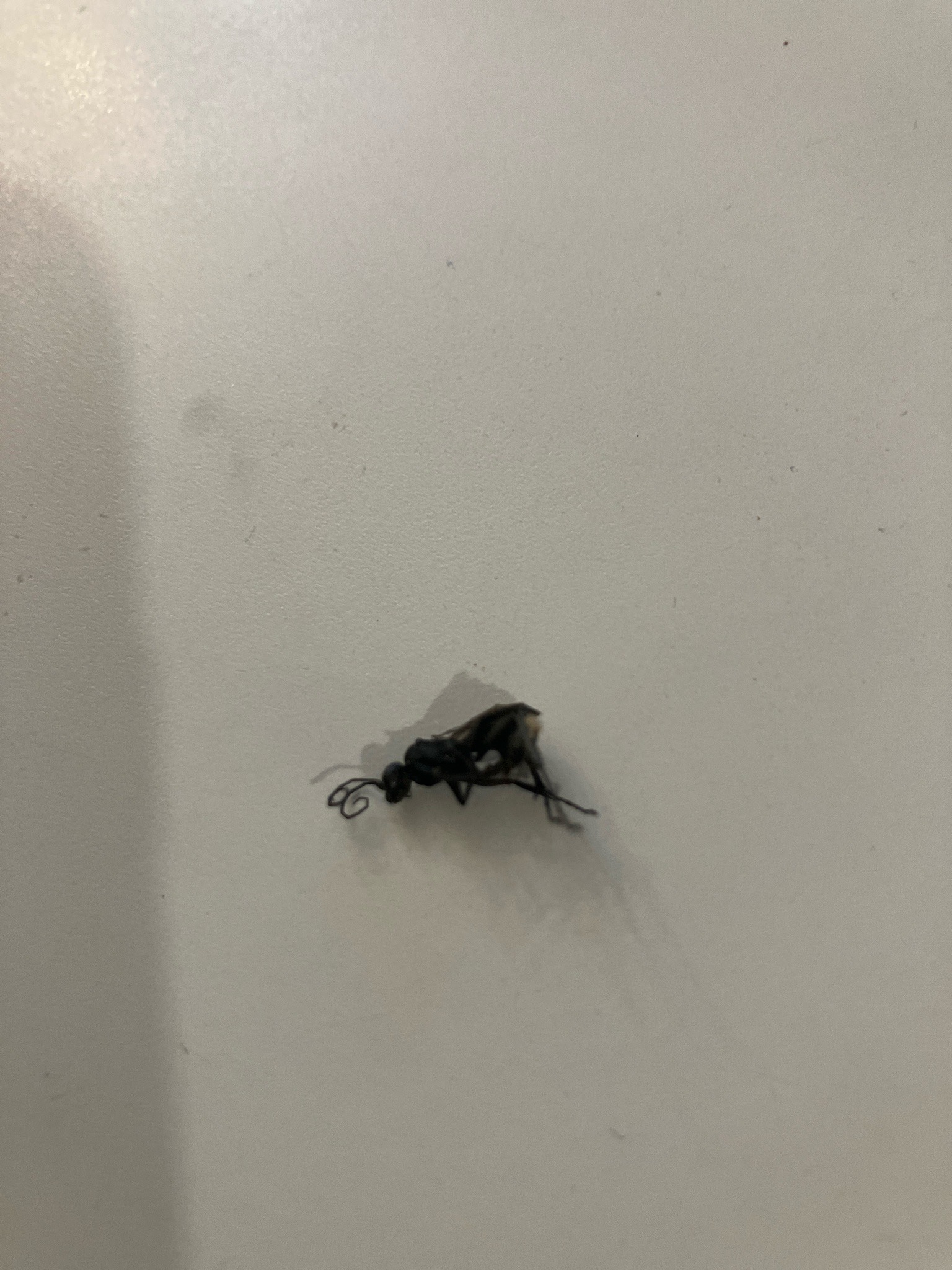
Community identification
Parasitic Wasp
Hymenoptera (suborder Apocrita)
- Order & Family
- Order: Hymenoptera, Multiple Families (e.g., Ichneumonidae, Braconidae)
- Size
- Varies widely from 1 mm to over 50 mm depending on the specific species.
Natural Habitat
Gardens, forests, fields, and urban areas where host insects are abundant.
Diet & Feeding
Adults feed on nectar, pollen, and honeydew; larvae are parasitic and feed on the body fluids and tissues of host insects.
Behavior Patterns
Females locate host insects (such as caterpillars, aphids, or beetle larvae) to deposit their eggs inside or on them. The larvae develop internally, eventually consuming and killing the host.
Risks & Benefits
Extremely beneficial for pest control in gardens and agriculture by naturally reducing populations of harmful insects. Most species do not sting humans unless severely handled.