
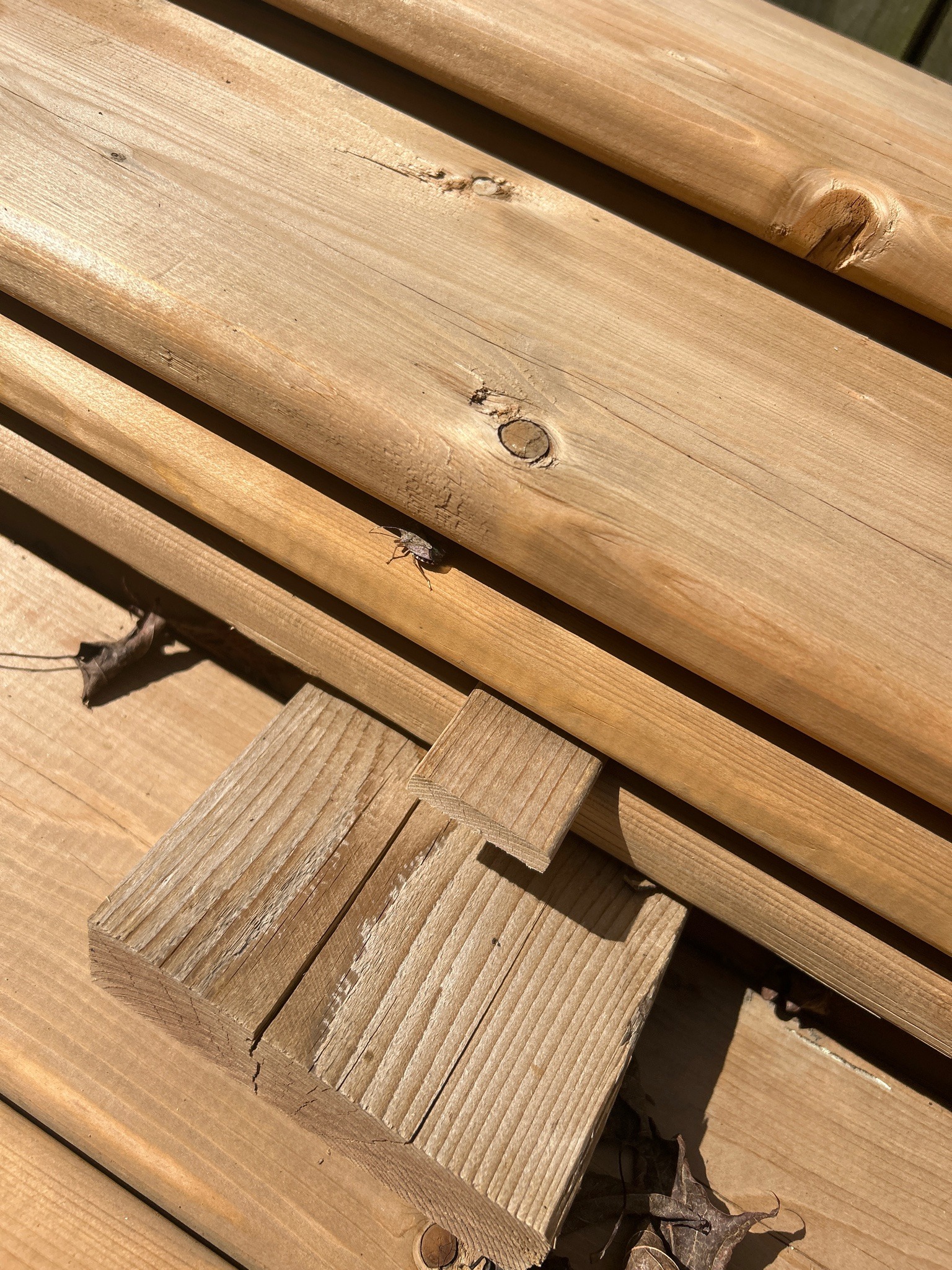
Community identification
Carpenter ant (likely)
Camponotus sp.
- Order & Family
- Hymenoptera; Formicidae
- Size
- Workers are typically 6–12 mm long; queens may reach about 15–20 mm.
Natural Habitat
Wooded areas, gardens, buildings, and wooden decks, especially where timber is damp or weathered.
Diet & Feeding
Omnivorous: feeds on honeydew, nectar, insects, and sugary or protein-rich food. It does not eat wood, but excavates galleries in it for nesting.
Behavior Patterns
Colonies establish a parent nest and satellite nests, often inside structural wood. Workers are usually active at night or in warm conditions and may forage in trails.
Risks & Benefits
Can weaken wood when colonies are large, though they rarely cause rapid structural damage. They help recycle dead wood, aerate soil, and control other insects.