
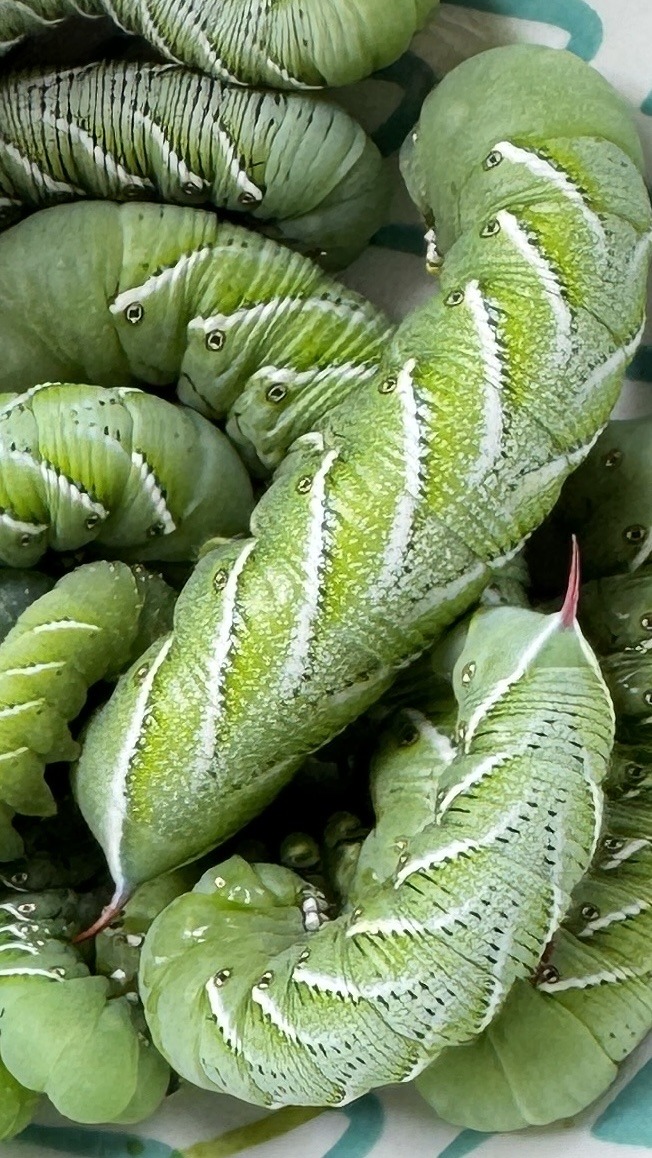
Community identification
Elephant hawk-moth caterpillar
Deilephila elpenor
- Order & Family
- Lepidoptera; family Sphingidae
- Size
- Usually 6–8 cm (2.4–3.1 in) when fully grown.
Natural Habitat
Gardens, woodland edges, hedgerows, wetlands, and other areas with rosebay willowherb or related host plants, primarily across Europe and parts of Asia.
Diet & Feeding
Larvae chew leaves of rosebay willowherb, bedstraws, and related plants; adults feed on nectar from tubular flowers.
Behavior Patterns
The caterpillars are nocturnal and often rest on foliage by day; when disturbed, they retract the head and inflate the front body segments, producing an elephant-trunk-like appearance. They pupate in leaf litter or loose soil, and adults emerge as night-flying moths.
Risks & Benefits
Harmless to people and non-venomous; the eye-like markings are defensive mimicry. They are important pollinators as adults and provide prey for birds and other predators.