
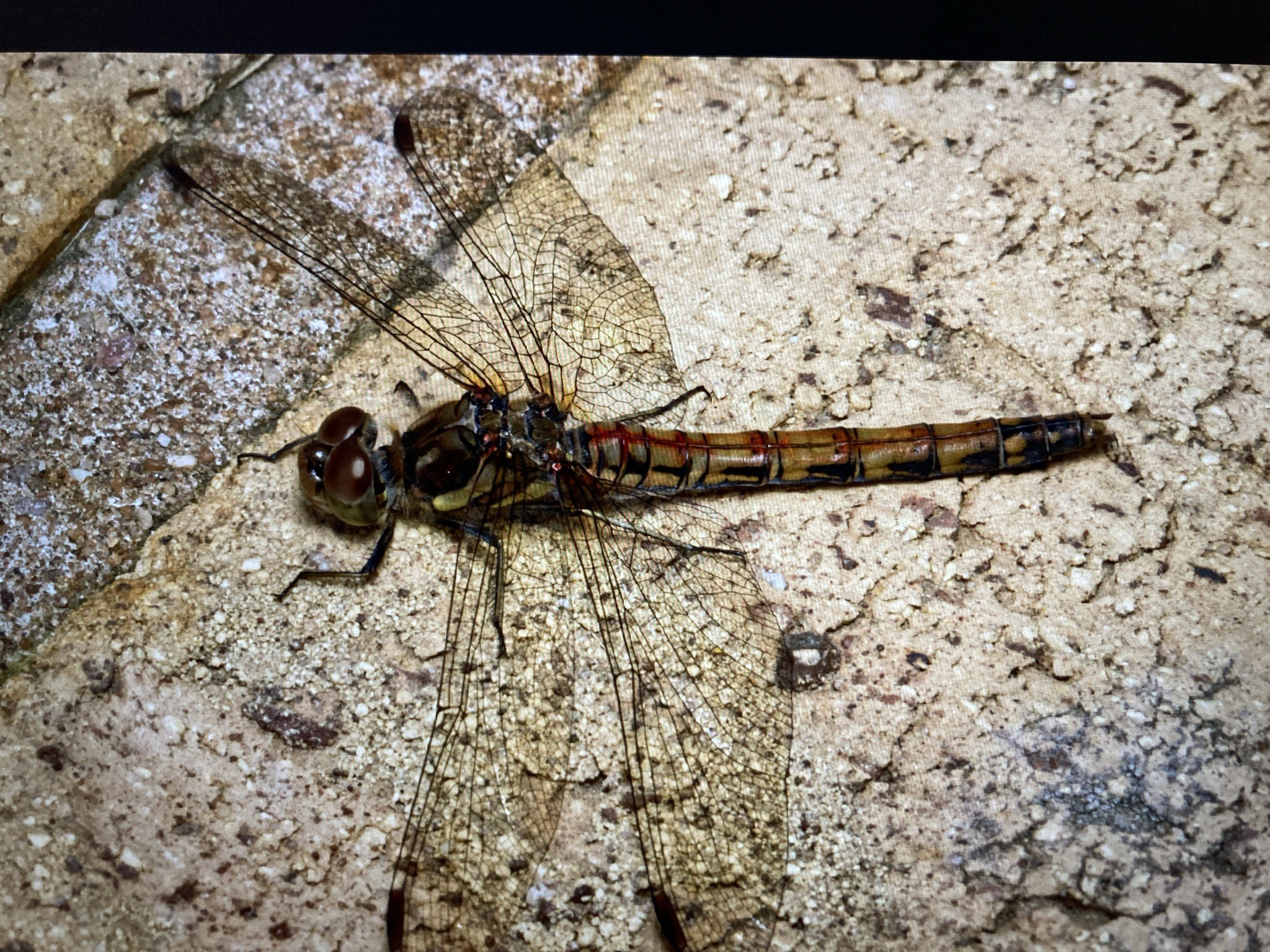
Community identification
Common sand dragon (a dragonfly)
Progomphus obscurus
- Order & Family
- Odonata, Gomphidae (clubtail dragonflies)
- Size
- About 45–55 mm (1.8–2.2 in) long; wingspan typically 55–65 mm (2.2–2.6 in).
Natural Habitat
Sandy, clean, slow-moving streams and rivers, especially with exposed banks. Adults rest on rocks, soil, and vegetation near water.
Diet & Feeding
Adults capture flying insects, including mosquitoes, flies, and small moths. Aquatic nymphs ambush insect larvae and other small aquatic organisms.
Behavior Patterns
Adults are strong, low-flying hunters that often perch on the ground and patrol stream edges. Females lay eggs in sandy shallows; nymphs burrow in sediment for roughly 1–3 years before emerging.
Risks & Benefits
Harmless to people and beneficial as a predator of nuisance insects. Its presence can indicate relatively healthy stream habitat.