
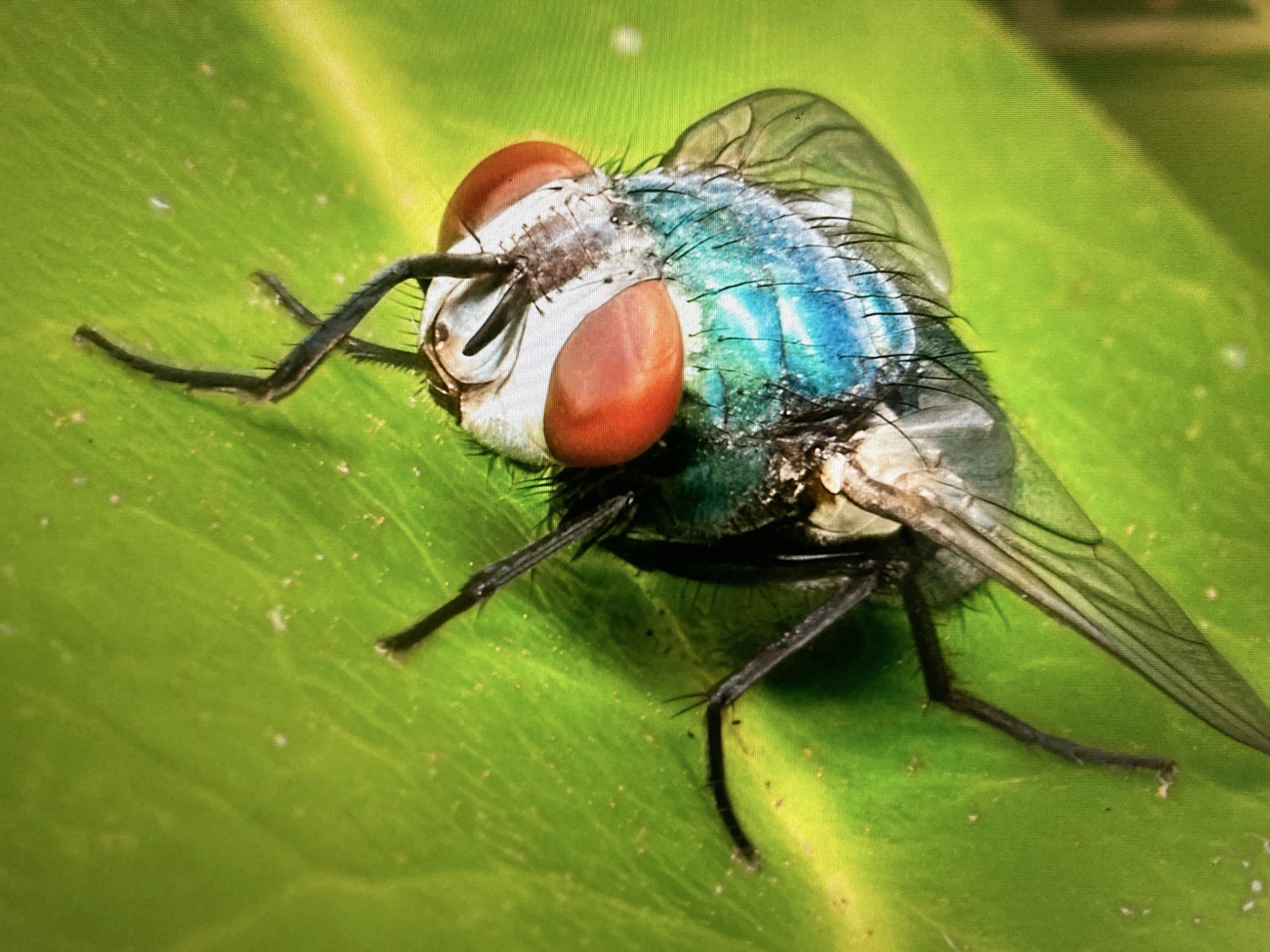
Community identification
Bottle fly (likely a bluebottle fly)
Calliphora vomitoria
- Order & Family
- Diptera; Calliphoridae
- Size
- Approximately 8–14 mm long.
Natural Habitat
Decaying organic matter, garbage, carrion, animal shelters, and nearby vegetation in temperate regions.
Diet & Feeding
Adults feed on liquids from carrion, feces, refuse, nectar, and other organic material. Larvae consume decomposing flesh and organic waste.
Behavior Patterns
Adults are strong, persistent fliers attracted to odors of decomposition; females lay eggs on carrion or refuse, where maggots develop through three stages before pupating.
Risks & Benefits
Can mechanically transfer pathogens to food and may occasionally cause myiasis. Larvae accelerate decomposition and are useful in forensic investigations and, in controlled settings, wound debridement.