
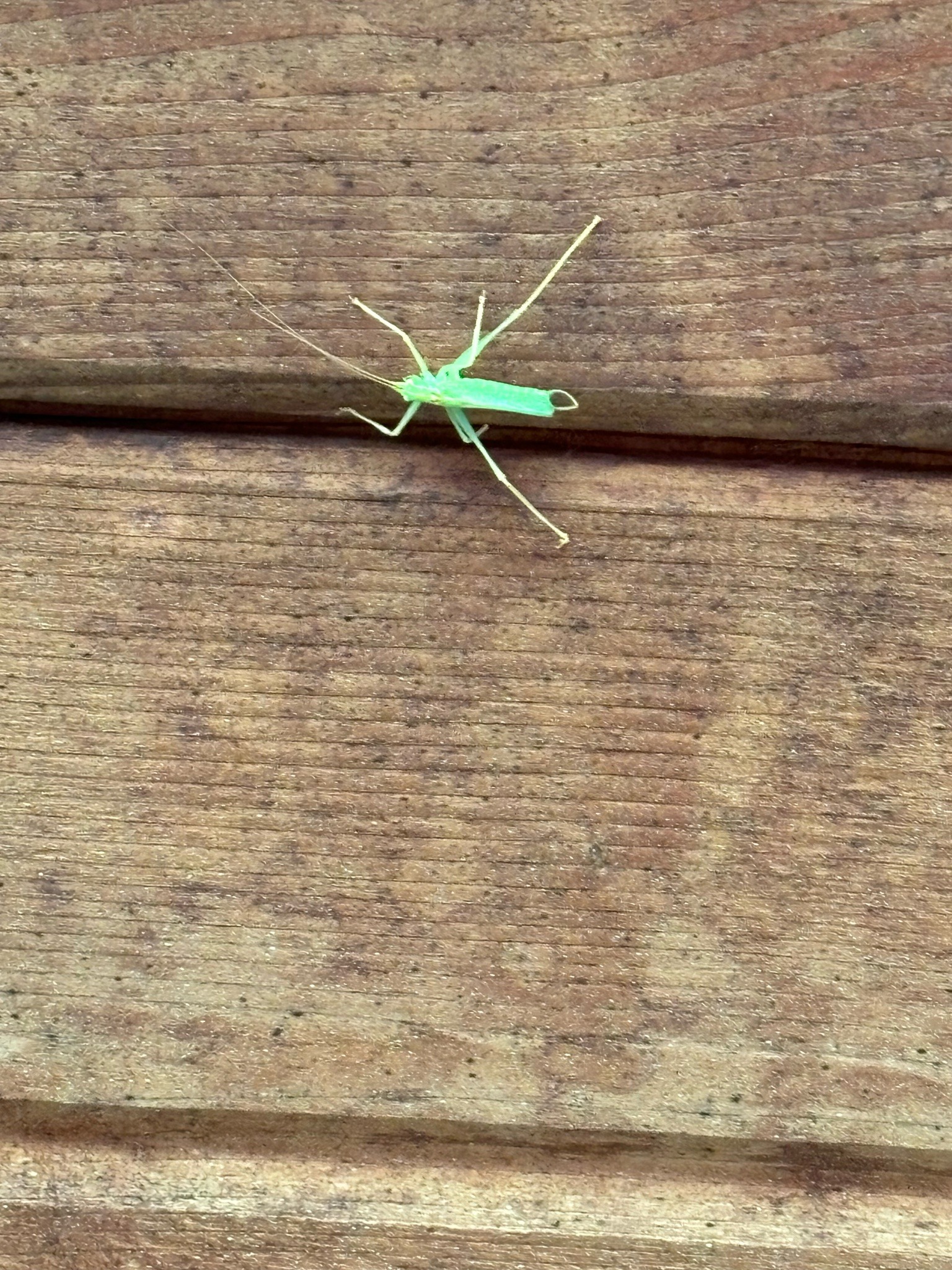
Community identification
Katydid nymph (likely a conehead katydid)
Neoconocephalus sp.
- Order & Family
- Orthoptera; Tettigoniidae
- Size
- About 15–30 mm (0.6–1.2 in) as a nymph; adults commonly reach 35–55 mm.
Natural Habitat
Grassy fields, meadows, roadside vegetation, and gardens, especially where tall grasses are abundant.
Diet & Feeding
Primarily grasses and other vegetation, though some katydids also eat small insects or pollen.
Behavior Patterns
Usually nocturnal and highly camouflaged; nymphs molt several times before becoming winged adults. They jump when disturbed and males produce species-specific songs by rubbing their wings.
Risks & Benefits
Harmless to people and pets. It contributes to food webs and may occasionally nibble garden plants, but significant crop damage is uncommon.