
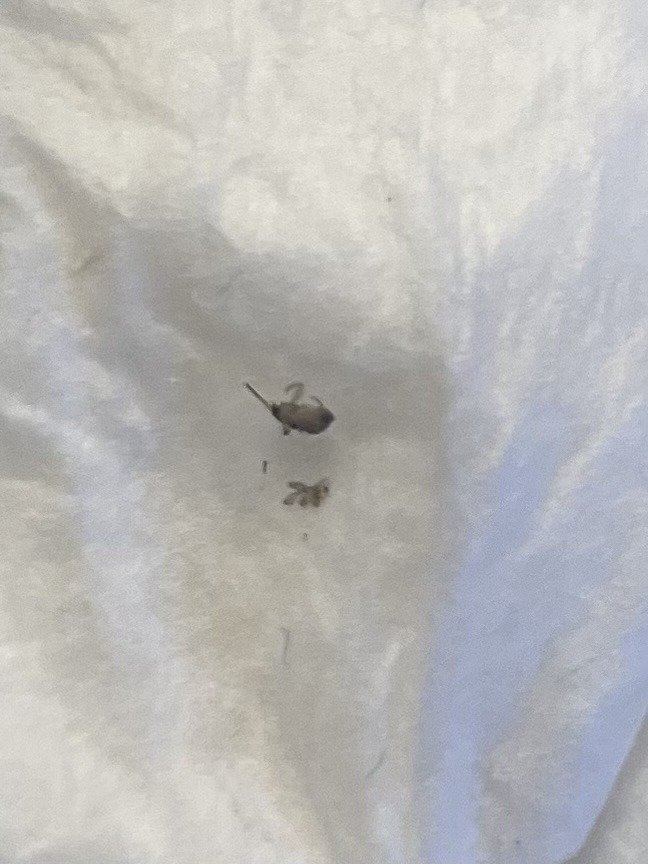
Community identification
Flea (likely cat flea)
Ctenocephalides felis
- Order & Family
- Siphonaptera; Pulicidae
- Size
- Adults are about 1.5–3.3 mm long; the pictured insect is too blurry for definitive measurement or identification.
Natural Habitat
Animal bedding, carpets, upholstery, and other sheltered areas frequented by cats, dogs, or wildlife.
Diet & Feeding
Adults consume blood from mammals and occasionally birds. Larvae feed mainly on dried blood, skin debris, and organic material in the environment.
Behavior Patterns
Wingless, laterally flattened adults move through fur and jump readily; females lay eggs on hosts, which fall into the environment. Eggs, larvae, and pupae develop off-host, often within weeks under warm, humid conditions.
Risks & Benefits
Bites cause itching and allergic dermatitis and can transmit pathogens, including flea-borne typhus and tapeworms. Fleas have little ecological benefit in homes but serve as prey and parasites within natural food webs.