
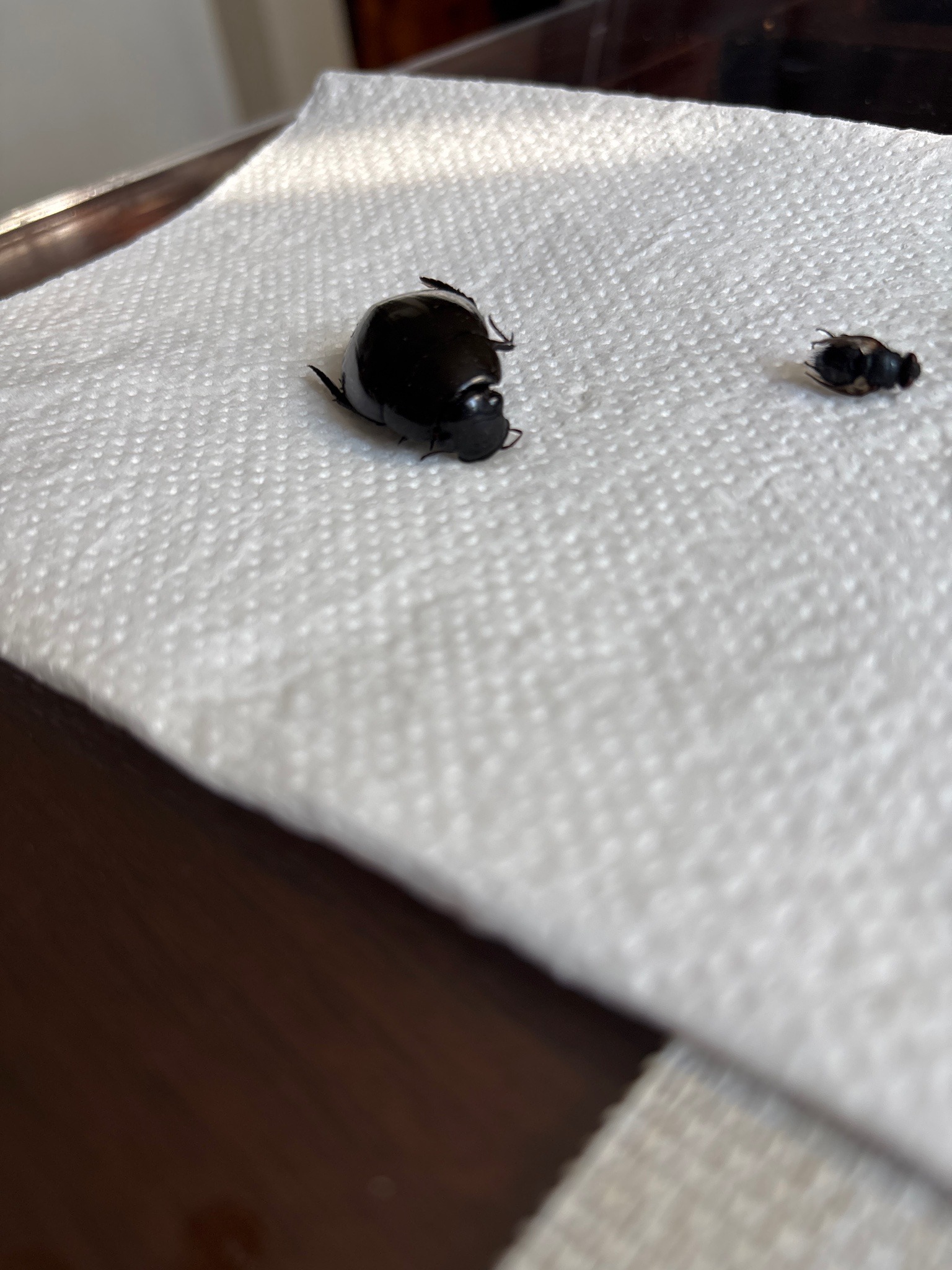
Community identification
Oriental cockroach (likely)
Blatta orientalis
- Order & Family
- Blattodea, Blattidae
- Size
- Adults are typically 20–27 mm (0.8–1.1 in) long; nymphs are smaller and wingless.
Natural Habitat
Damp, cool locations such as basements, drains, crawl spaces, and areas beneath appliances. They may enter buildings through cracks, pipes, and other concealed routes.
Diet & Feeding
Omnivorous scavengers that consume food scraps, starches, decaying organic matter, and occasionally animal material.
Behavior Patterns
Mostly nocturnal, fast-moving, and strongly associated with moisture; they hide during daylight. Females produce egg cases, and nymphs develop through several molts without a pupal stage.
Risks & Benefits
They can contaminate food and surfaces with microbes and may aggravate allergies or asthma. They contribute modestly to decomposition outdoors but are generally considered household pests.