
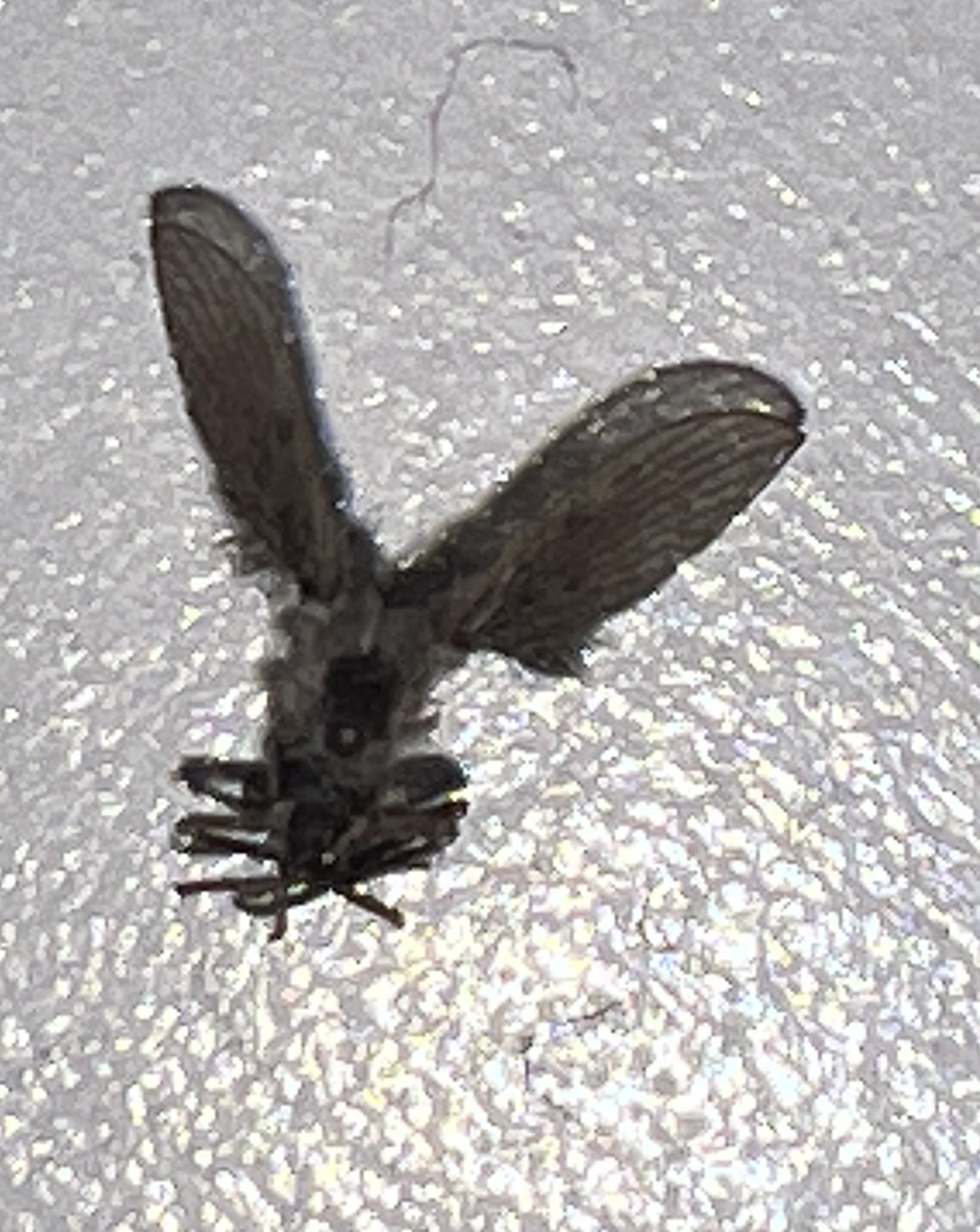
Caddisfly (likely a microcaddisfly)
Order-level identification: Trichoptera; genus/species cannot be determined reliably from this image
- Order & Family
- Trichoptera; family uncertain, possibly Hydroptilidae
- Size
- Adults typically measure about 3–20 mm long; microcaddisflies are commonly 2–5 mm.
Natural Habitat
Adults occur near freshwater streams, rivers, ponds, and lakes, often resting on nearby walls or vegetation. Larvae develop underwater, commonly in cases or retreats.
Diet & Feeding
Adults generally consume little or no food, sometimes taking nectar or water. Larvae feed on algae, plant material, detritus, or small aquatic organisms depending on family.
Behavior Patterns
Adults are mostly nocturnal and attracted to lights, with hairy, folded wings and long antennae. Larvae undergo aquatic development and metamorphose into winged adults.
Risks & Benefits
They do not bite, sting, or damage household materials. Larvae are important freshwater decomposers and prey, and their presence can indicate relatively healthy water quality.