
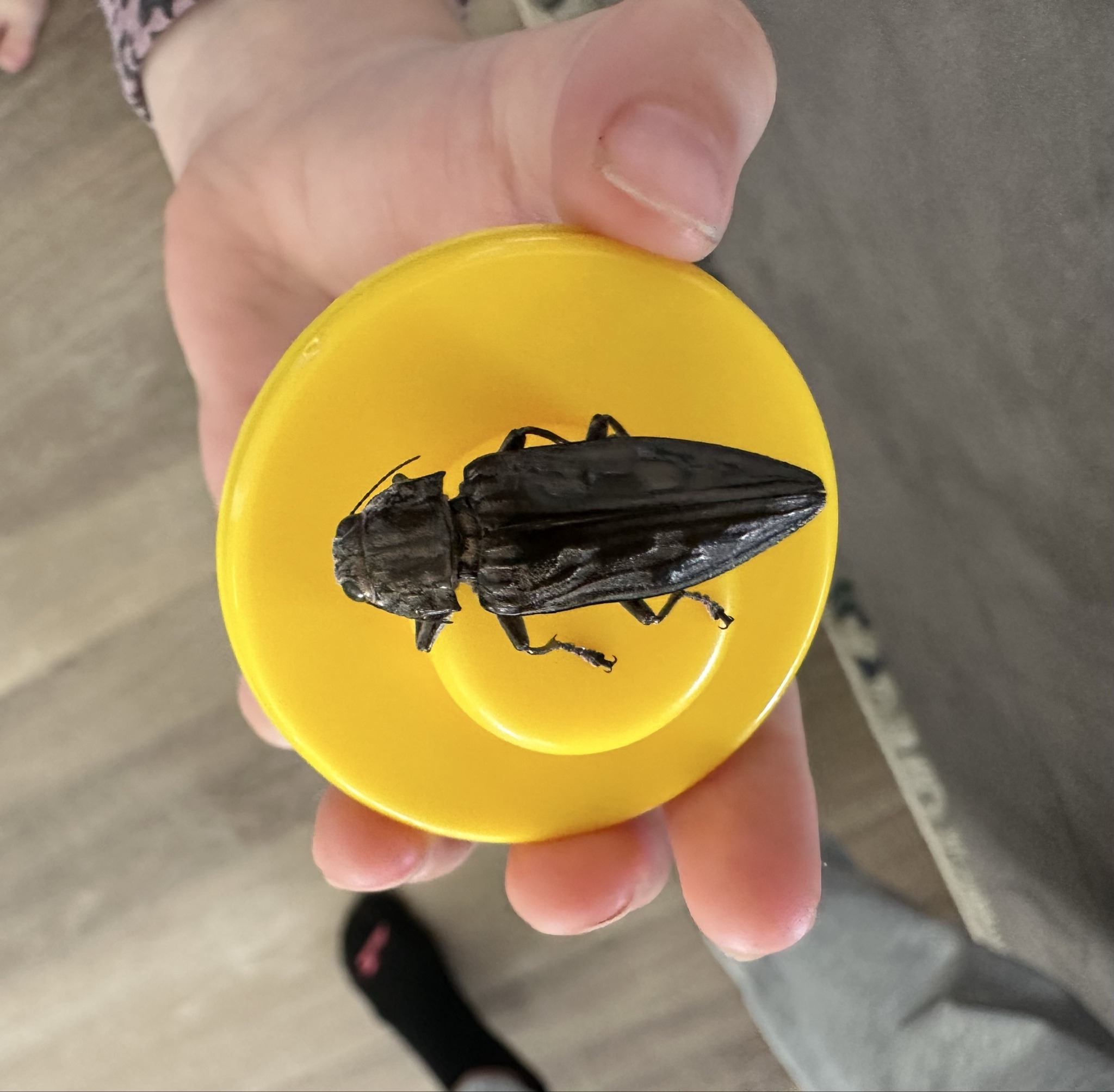
Community identification
Predaceous diving beetle (likely a giant water scavenger beetle)
Hydrophilus sp. (identification uncertain from image)
- Order & Family
- Coleoptera; Hydrophilidae
- Size
- About 25–45 mm (1–1.8 in) long, depending on species.
Natural Habitat
Freshwater ponds, marshes, ditches, and slow-moving streams; adults may fly to lights and new water bodies.
Diet & Feeding
Adults commonly eat aquatic vegetation, carrion, and small aquatic organisms; larvae are predatory on insects and other invertebrates.
Behavior Patterns
Adults swim using flattened, fringed hind legs and carry an air supply beneath the body. They are often nocturnal and can disperse by flight; larvae develop in water and pupate on land.
Risks & Benefits
Harmless to people and not venomous, though it may pinch if handled. Beneficial as a scavenger and predator that helps regulate aquatic invertebrates.