
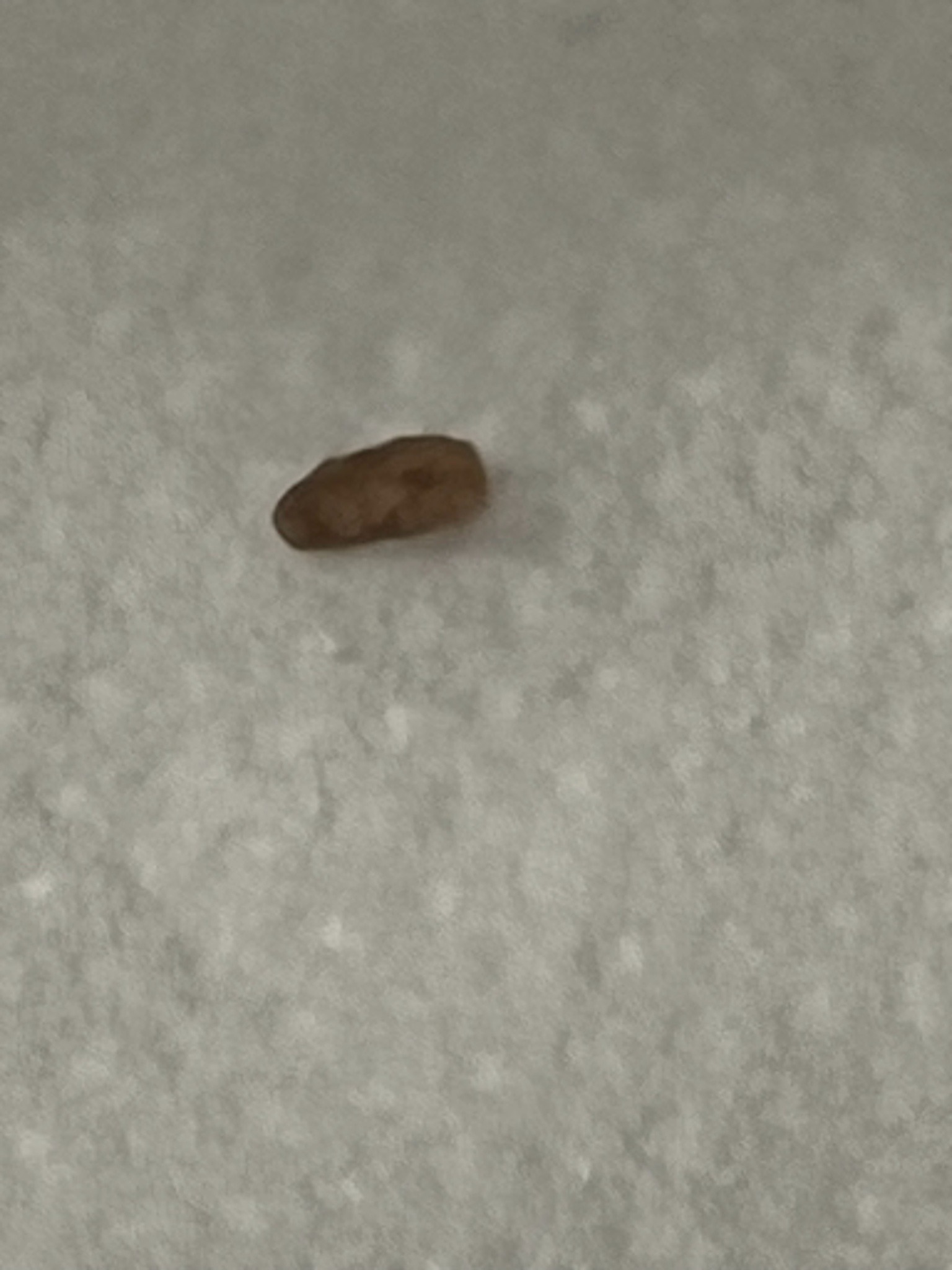
Community identification
Fly puparium / House fly pupa
Musca domestica (likely)
- Order & Family
- Diptera, Muscidae
- Size
- 5 to 8 mm in length
Natural Habitat
Found indoors or outdoors near decaying organic matter, trash, animal manure, or soil where larvae complete development.
Diet & Feeding
Pupa do not feed. As larvae (maggots), they feed on decaying organic materials, garbage, and feces; adult flies feed on liquids containing soluble organic matter.
Behavior Patterns
The puparium is an immobile resting stage in the fly life cycle where the maggot transforms into an adult fly inside a hardened, reddish-brown to dark brown larval skin shell, typically lasting 3 to 7 days before emerging.
Risks & Benefits
Pupa themselves do not bite or sting, but adult house flies can contaminate food and spread bacterial pathogens such as Salmonella and E. coli. Larvae contribute to decomposing organic material in ecosystems.