
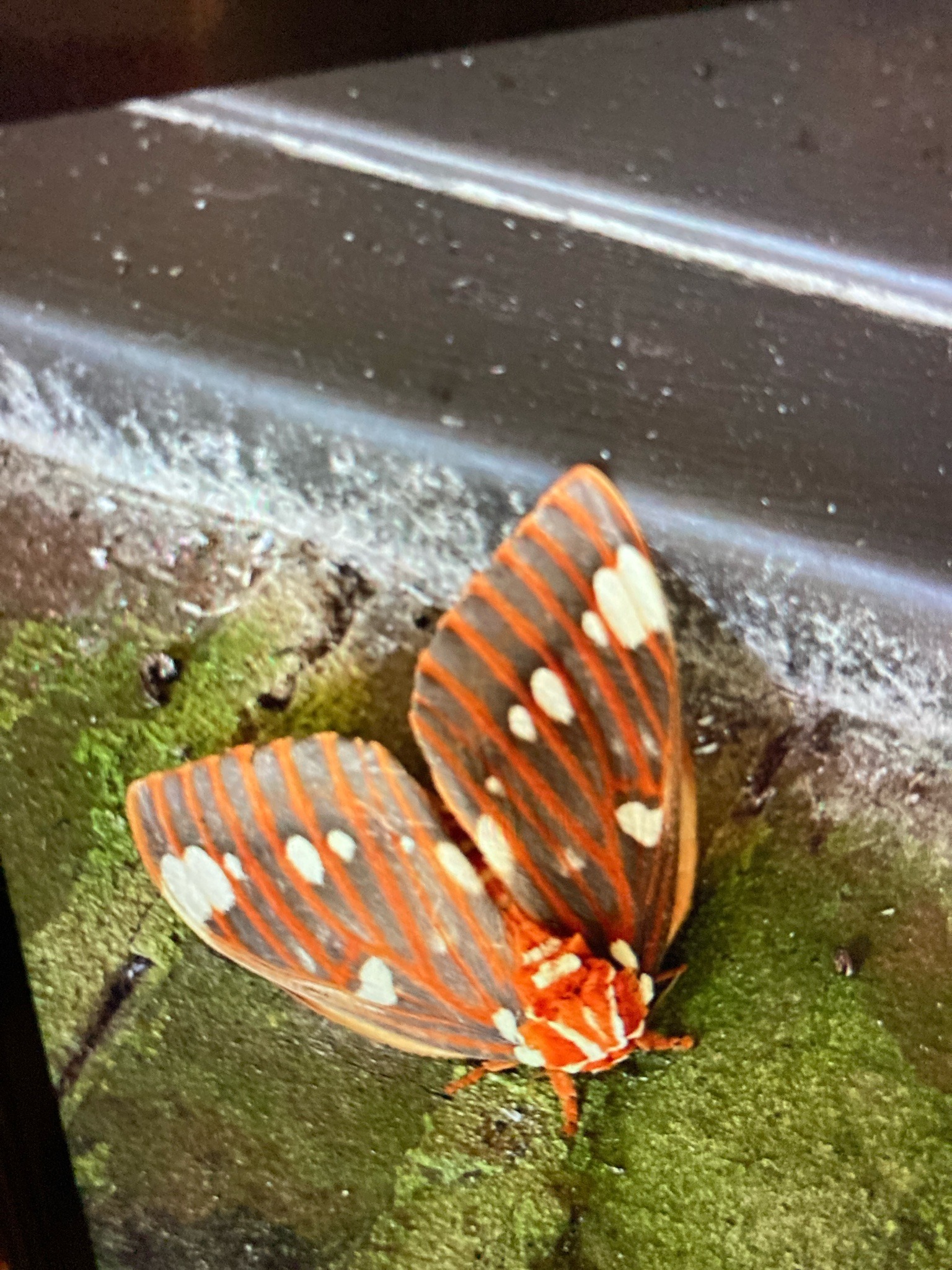
Community identification
Red-striped orange butterfly (likely a tiger longwing)
Mechanitis polymnia (probable identification)
- Order & Family
- Lepidoptera; Nymphalidae (subfamily Danainae)
- Size
- Wingspan typically 6–7.5 cm (2.4–3 in).
Natural Habitat
Humid tropical forests, forest edges, gardens, and shaded vegetation in Central and South America.
Diet & Feeding
Adults drink flower nectar and sometimes obtain minerals from damp surfaces; caterpillars feed mainly on Solanaceae plants, including nightshades.
Behavior Patterns
Usually flies slowly and may rest with wings spread or folded. Adults are chemically protected through larval host plants and often participate in mimicry complexes; development proceeds through egg, caterpillar, chrysalis, and adult stages.
Risks & Benefits
Not dangerous to people and can contribute to pollination. Caterpillars may damage nightshade foliage, but populations are generally of little economic significance.