
Community identification
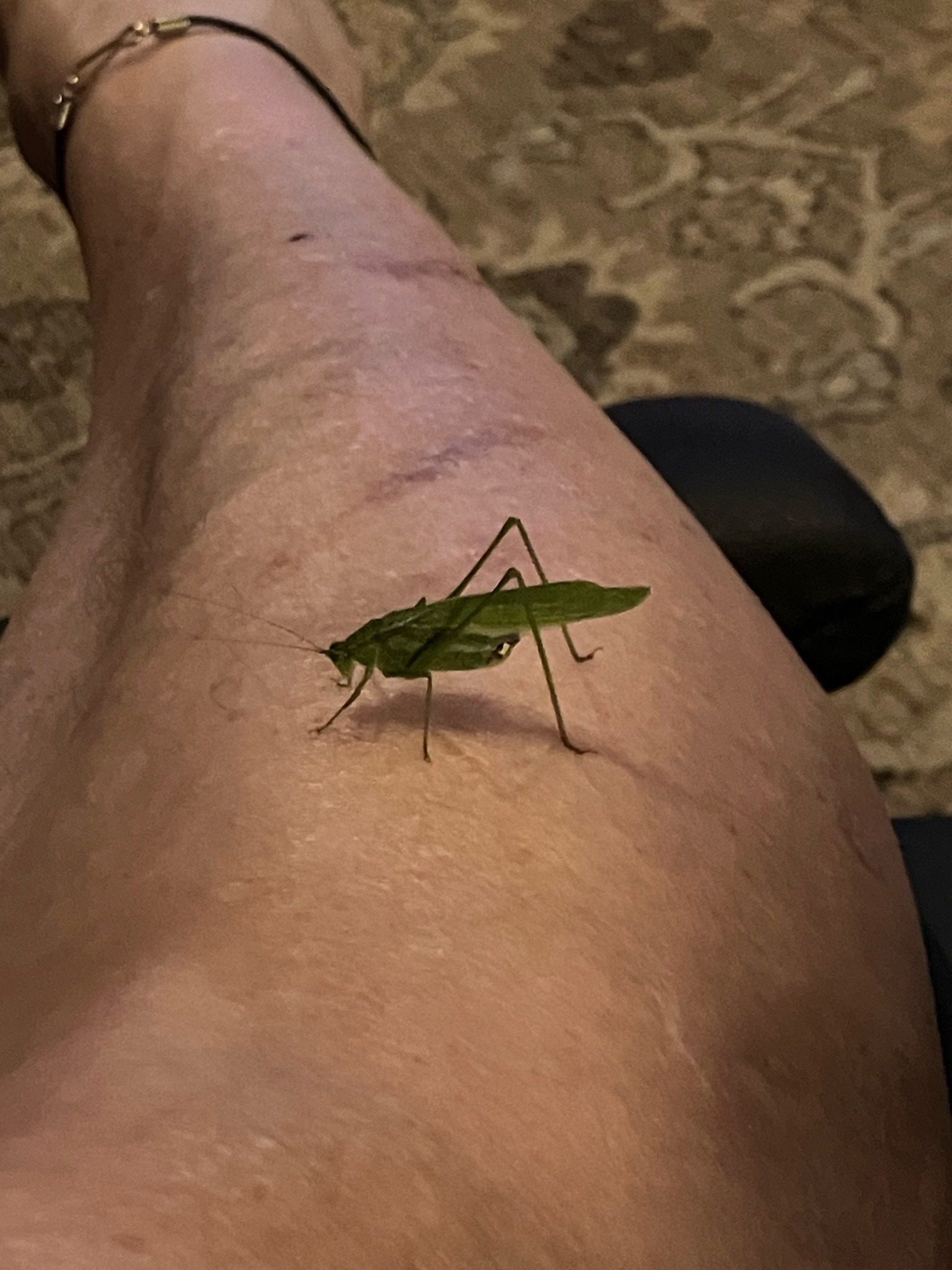
Katydid (likely a conehead katydid)
Neoconocephalus sp.
- Order & Family
- Orthoptera; Tettigoniidae
- Size
- Usually 35–55 mm (1.4–2.2 in) long, including the wings; females may be larger.
Natural Habitat
Tall grasses, meadows, marsh edges, crops, and gardens; adults may enter buildings attracted to lights.
Diet & Feeding
Primarily grasses and other plant material, with occasional small insects or insect eggs.
Behavior Patterns
Mostly nocturnal and strong-jumping or flying insects; males produce loud calls by rubbing their wings, while females use a long, curved ovipositor to insert eggs into vegetation or soil.
Risks & Benefits
Harmless to people and not venomous; it may occasionally nibble ornamental plants or crops. Katydids provide food for birds, reptiles, bats, and predatory insects.