
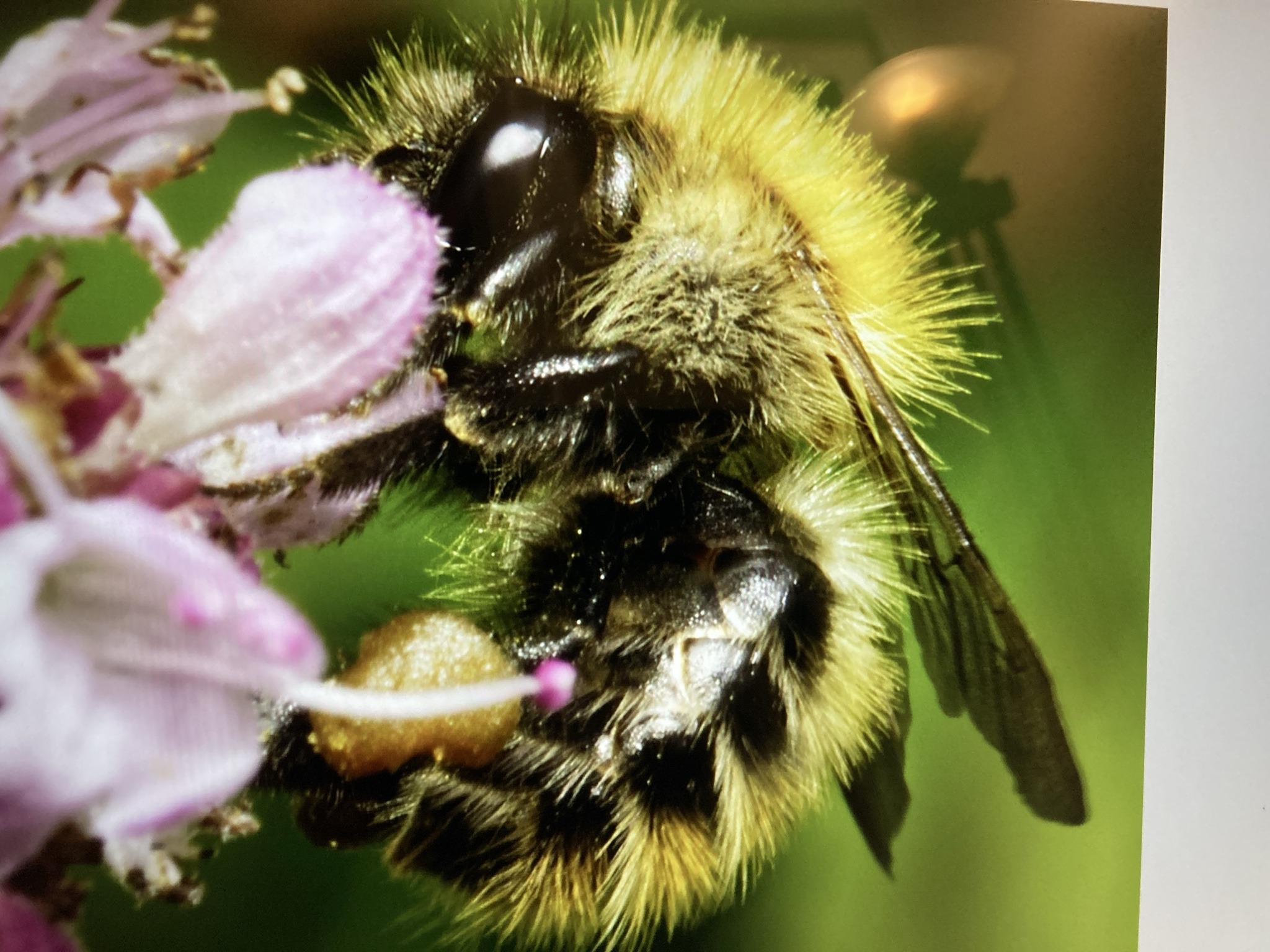
Community identification
Common eastern bumble bee
Bombus impatiens
- Order & Family
- Hymenoptera; Apidae
- Size
- Workers are about 8–14 mm long; queens reach roughly 17–21 mm.
Natural Habitat
Gardens, meadows, woodland edges, and urban areas across eastern and central North America. Nests occur in abandoned rodent burrows, cavities, or sheltered ground sites.
Diet & Feeding
Adults consume nectar and collect pollen to feed larvae, visiting many flowering plants. They are important generalist pollinators and can sonicate flowers such as tomatoes.
Behavior Patterns
Social colonies contain a queen, workers, and males, usually numbering dozens to several hundred individuals. Colonies are annual; new queens overwinter and establish nests in spring.
Risks & Benefits
They are generally nonaggressive but can sting repeatedly if the nest is threatened. Their pollination supports wild plants, gardens, and agricultural crops.