
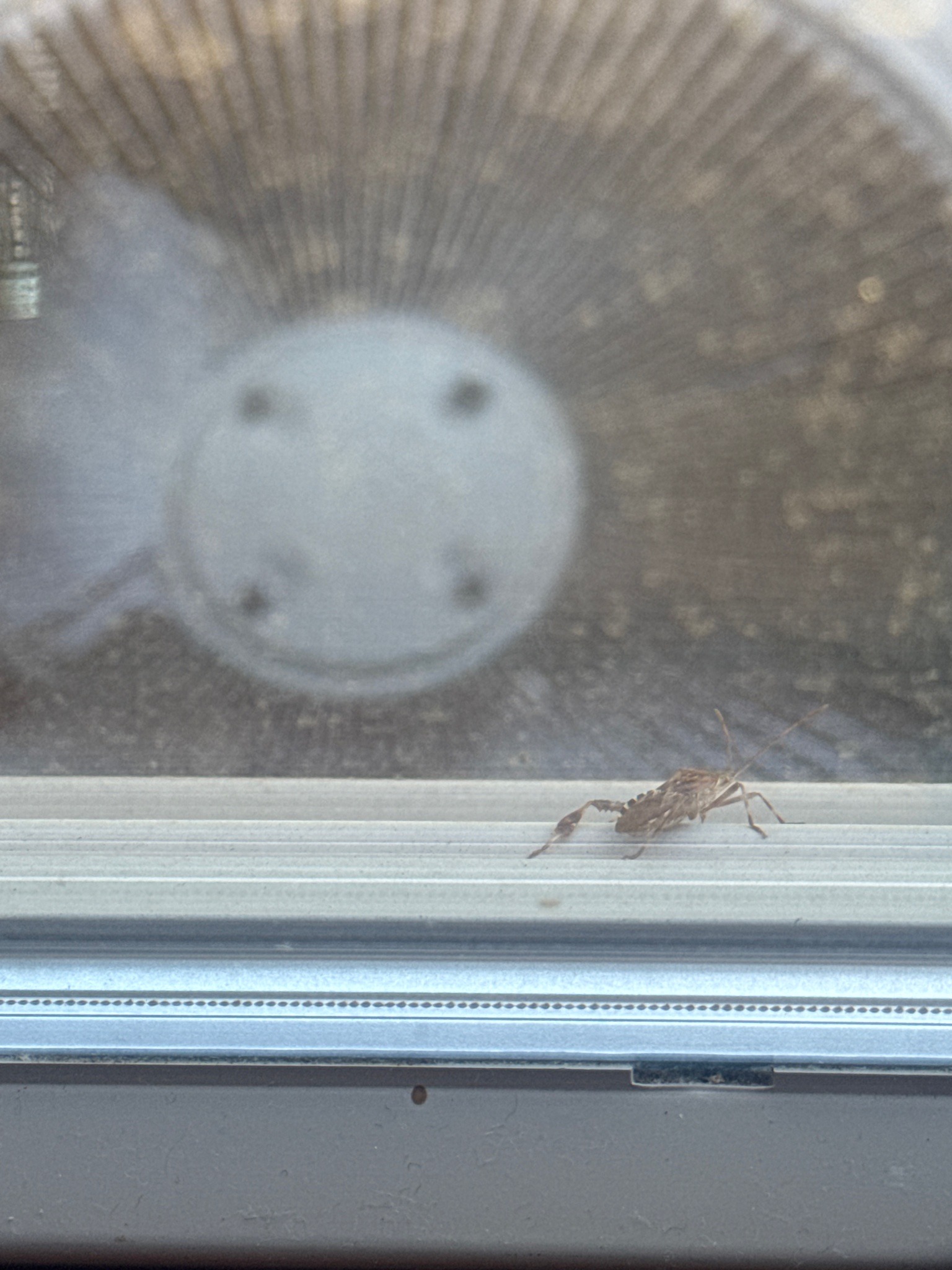
Community identification
Caddisfly (likely a micro-caddisfly)
Order Trichoptera; exact species cannot be determined from the photo
- Order & Family
- Trichoptera; likely family Hydroptilidae
- Size
- Typically 2–10 mm as adults; many Hydroptilidae measure about 3–6 mm.
Natural Habitat
Adults occur near freshwater streams, ponds, and lakes, often resting on windows or other surfaces near lights. Larvae live underwater, frequently building tiny protective cases.
Diet & Feeding
Adults often consume little or nothing, relying on larval reserves; some take nectar or other liquids. Larvae feed on algae, plant matter, or small aquatic organisms, depending on species.
Behavior Patterns
Adults are mostly nocturnal and attracted to lights. Larvae undergo aquatic metamorphosis, then emerge as winged adults that mate and lay eggs near water.
Risks & Benefits
Harmless to people and homes; they do not bite or sting. Larvae are important aquatic consumers and prey, and their presence can indicate freshwater habitat.