
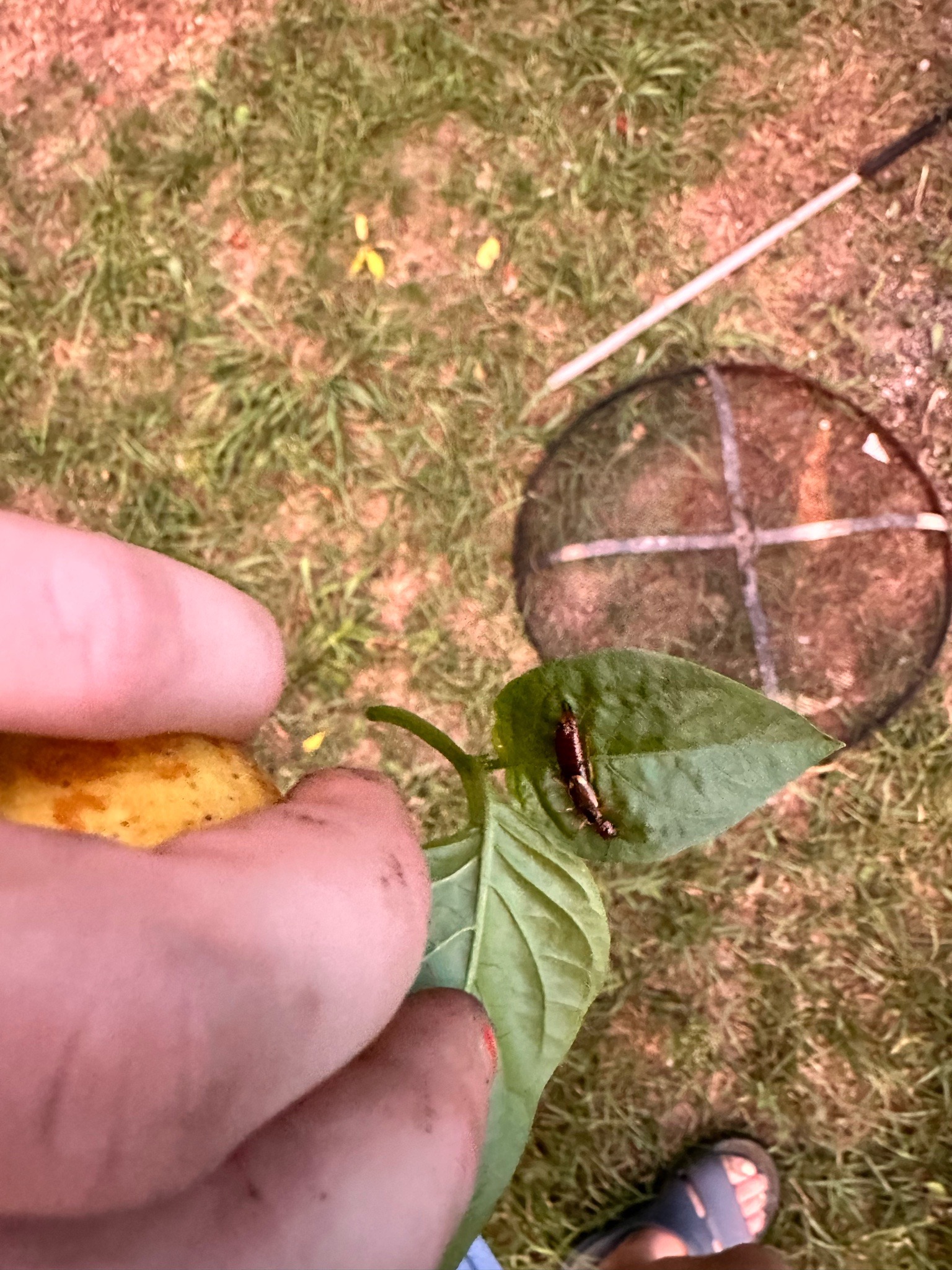
Community identification
Longhorn beetle (likely a twig pruner or related cerambycid)
Cerambycidae sp.
- Order & Family
- Coleoptera; family Cerambycidae
- Size
- Adults commonly measure about 10–30 mm long, though longhorn beetles range from roughly 3–170 mm.
Natural Habitat
Found on vegetation, woody plants, gardens, woodland edges, and forests, where larvae typically develop inside stems or wood.
Diet & Feeding
Adults feed on leaves, pollen, nectar, bark, or sap depending on species; larvae tunnel through dead, stressed, or occasionally healthy wood.
Behavior Patterns
Adults are often active at dusk or night and may rest on foliage during the day. Females lay eggs in bark or plant stems, and larvae mature concealed inside wood.
Risks & Benefits
This beetle is not dangerous to people and does not sting; some species can damage ornamental trees or timber. Cerambycid larvae aid decomposition and nutrient cycling, while adults can pollinate flowers.