
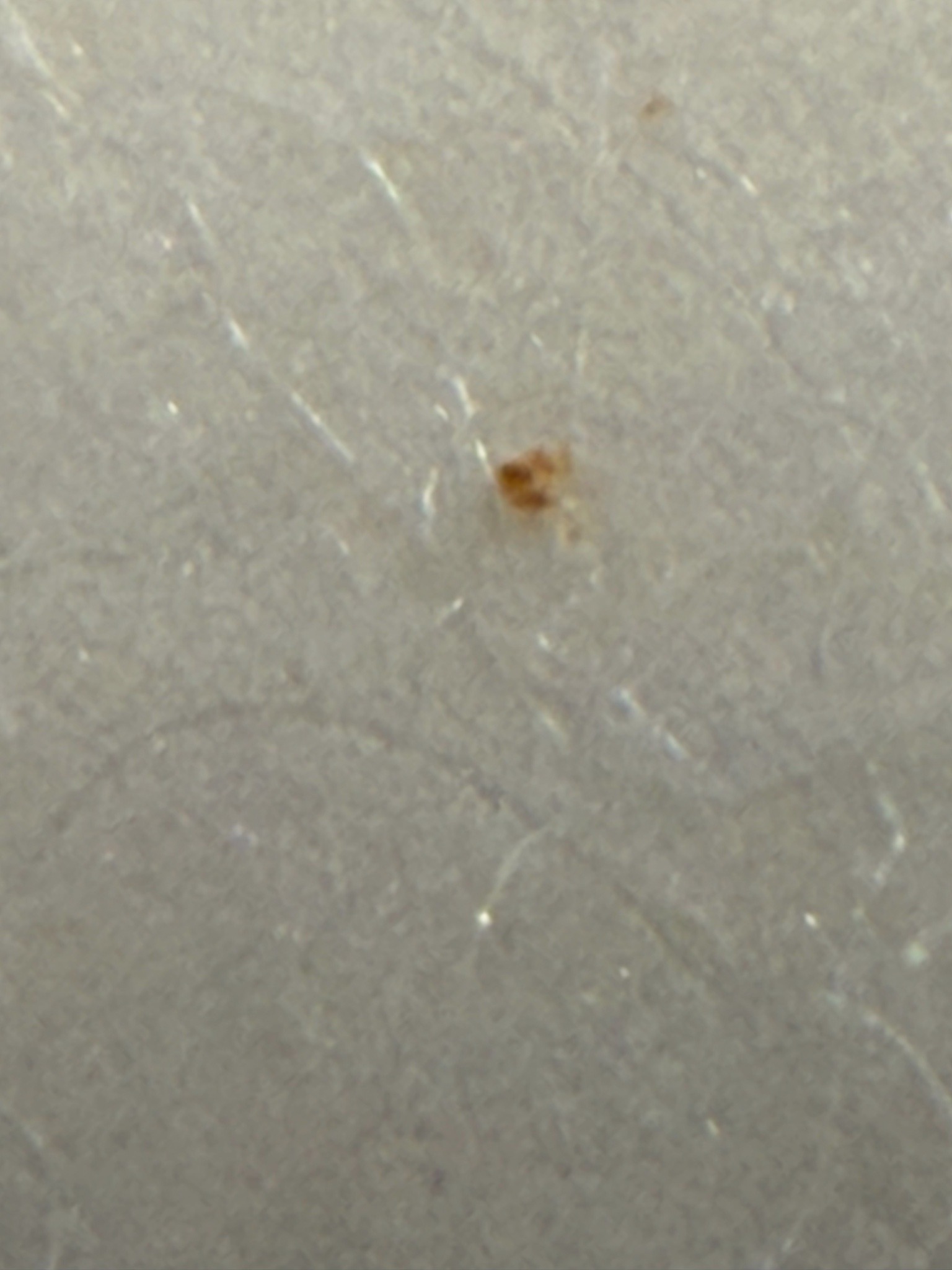
Community identification
Spider beetle (probable)
Ptinus spp. (likely Ptinus tectus or a related species)
- Order & Family
- Coleoptera; family Ptinidae
- Size
- About 2–4 mm long; the photograph is too low-resolution for precise identification.
Natural Habitat
Dry indoor environments, including pantries, cupboards, attics, and stored-food areas; often associated with dust, lint, and old nesting material.
Diet & Feeding
Larvae feed on dried organic matter such as grains, spices, cereals, dead insects, wool, feathers, and other debris. Adults may feed little or not at all.
Behavior Patterns
Usually nocturnal and secretive, moving slowly or feigning death when disturbed. Larvae develop in concealed, undisturbed materials, and adults may appear near windows or lights.
Risks & Benefits
Generally harmless to people and do not bite, sting, or transmit disease. They can contaminate or damage stored foods and occasionally natural-fiber materials; they also help decompose organic debris.