
Community identification
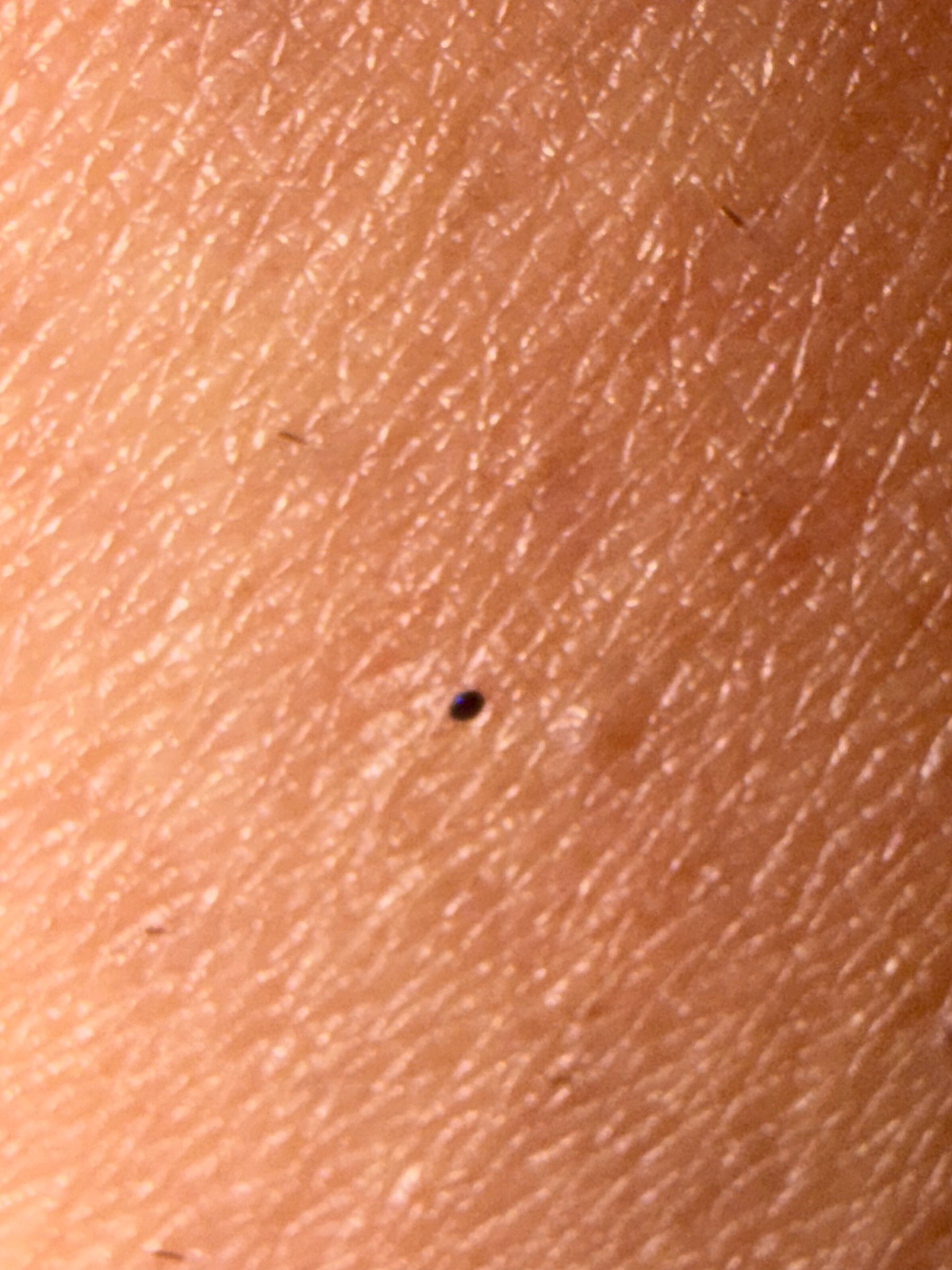
Likely blacklegged (deer) tick nymph
Ixodes scapularis (North America) or Ixodes ricinus (Europe)
- Order & Family
- Acari (mites and ticks), family Ixodidae
- Size
- Nymphs are about 1–2 mm across; adults are roughly 3–5 mm unfed and enlarge substantially after feeding.
Natural Habitat
Leaf litter, grasses, and forest edges; commonly found on wildlife and occasionally humans. The image alone cannot confirm the species or stage.
Diet & Feeding
Feeds exclusively on blood from mammals, birds, and reptiles. Nymphs commonly parasitize humans and small mammals.
Behavior Patterns
Waits on vegetation and attaches to passing hosts, then feeds for several days. It may transmit pathogens while feeding.
Risks & Benefits
Potentially transmits Lyme disease and other pathogens, depending on species and region. Ticks are also natural components of food webs and help regulate host populations.