
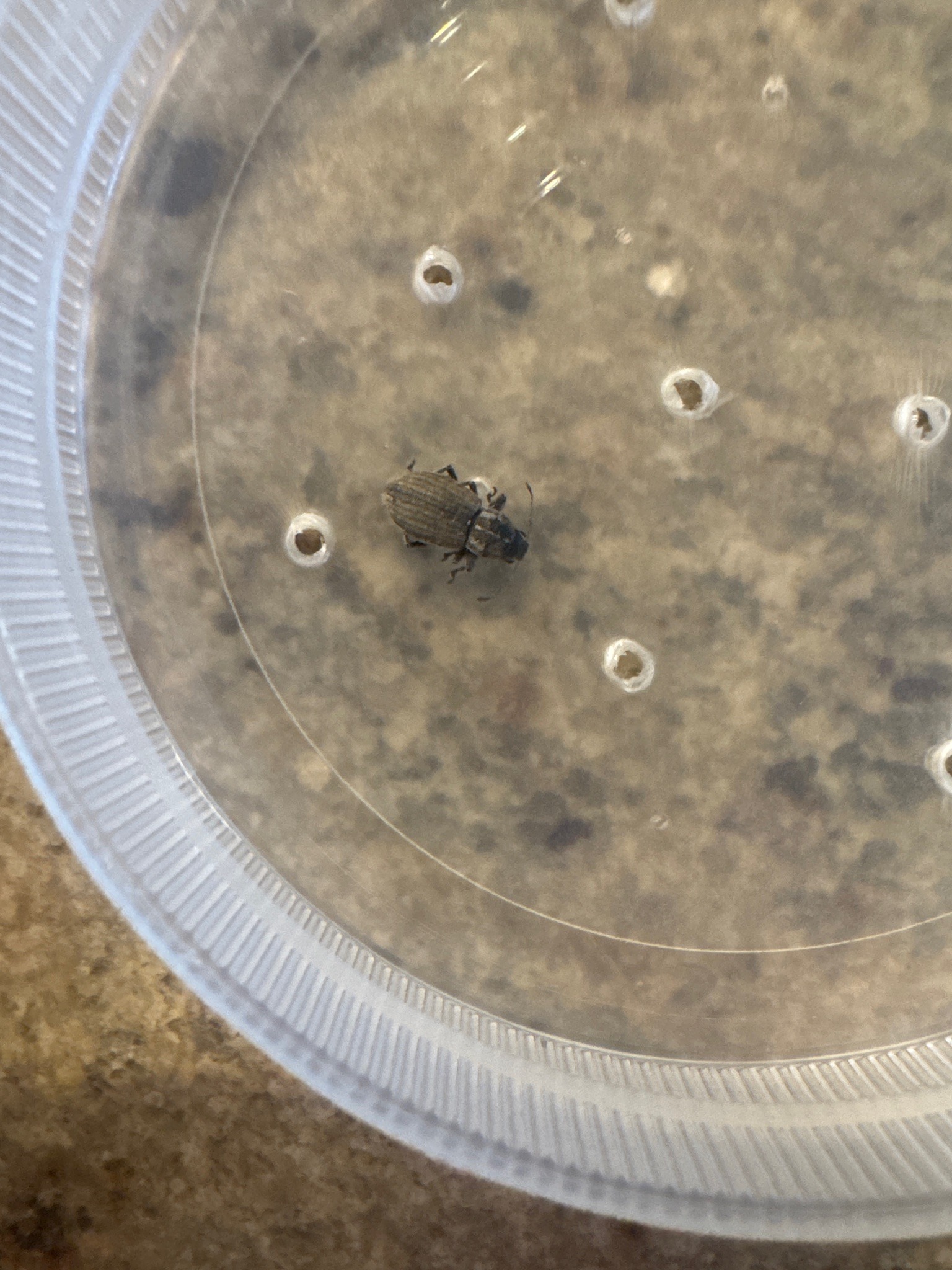
Community identification
Barklouse (booklouse)
Likely *Liposcelis* sp.
- Order & Family
- Psocoptera (Psocodea), Liposcelididae
- Size
- About 1–2 mm long; the pictured individual appears roughly this size.
Natural Habitat
Humid indoor areas, stored foods, books, cardboard, leaf litter, and under bark. Often found in containers or rooms with elevated moisture.
Diet & Feeding
Feeds mainly on mold, fungi, algae, dead organic matter, and microscopic residues rather than biting people or healthy plants.
Behavior Patterns
Small, soft-bodied insects that move actively and reproduce rapidly under warm, humid conditions. Adults may be wingless or possess reduced wings, as in this likely specimen.
Risks & Benefits
Harmless to humans and animals, with no meaningful bite or sting risk. Large indoor populations can contaminate stored food and indicate excess humidity; ecologically, they help recycle organic material.