
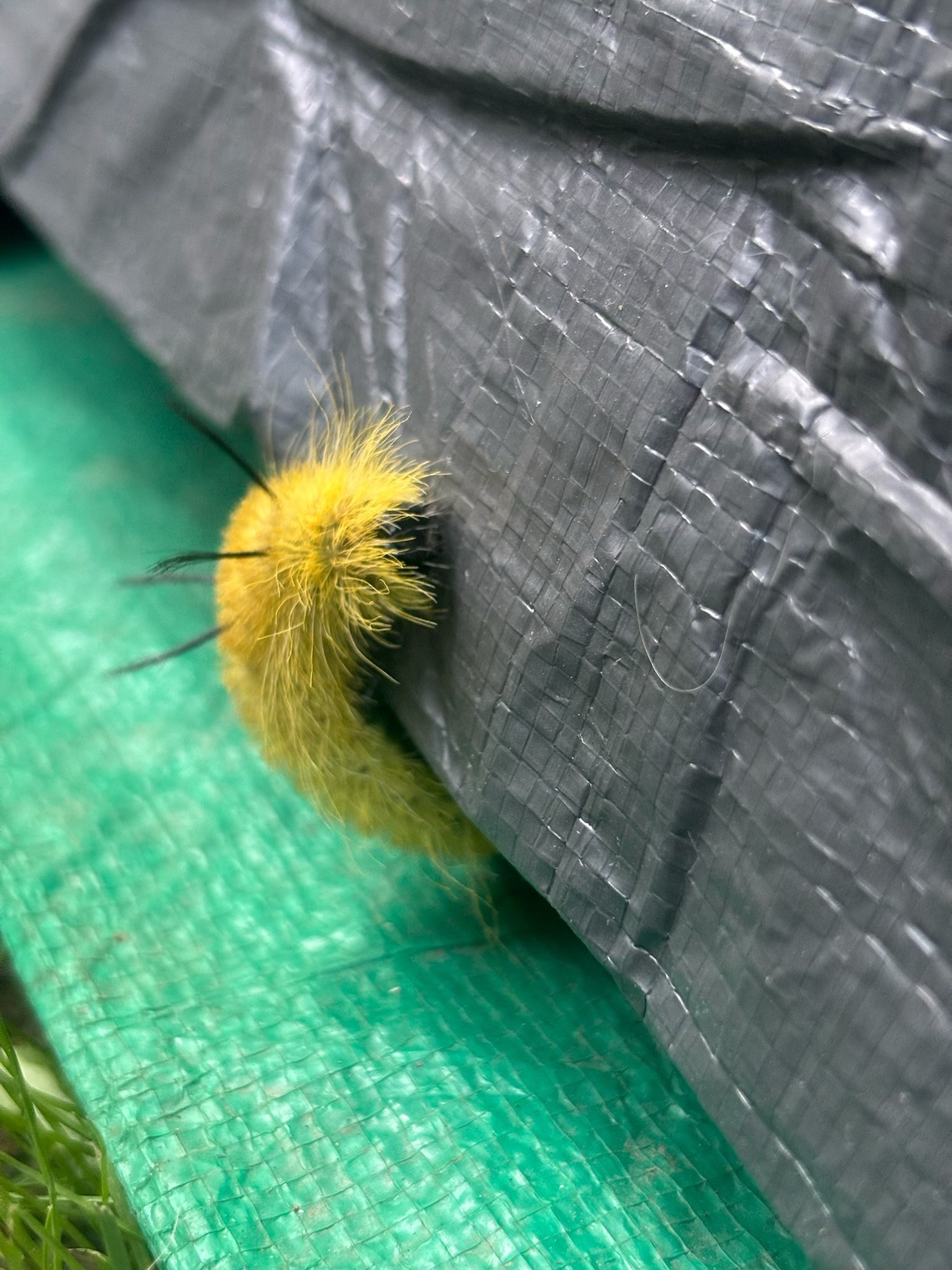
Community identification
American Dagger Moth Caterpillar
Acronicta americana
- Order & Family
- Lepidoptera: Noctuidae
- Size
- Up to 2 inches (50 mm) in length
Natural Habitat
Deciduous forests, woodlands, parks, and suburban yards across eastern and central North America
Diet & Feeding
Herbivorous, feeding on the leaves of various deciduous trees including oak, maple, birch, elm, willow, and alder
Behavior Patterns
Active from mid-summer through autumn. The bright yellow to greenish-yellow setae (hairs) and distinct long black pencil hairs serve as a warning. When mature, caterpillars wander down trees to spin silk cocoons in bark crevices or leaf litter to overwinter.
Risks & Benefits
The hairs contain urticating toxins that can cause skin irritation, itching, rashes, or burning sensations if handled directly with bare hands. As adults, the moths serve as prey for bats and birds, and the larvae contribute to natural forest herbivory.