
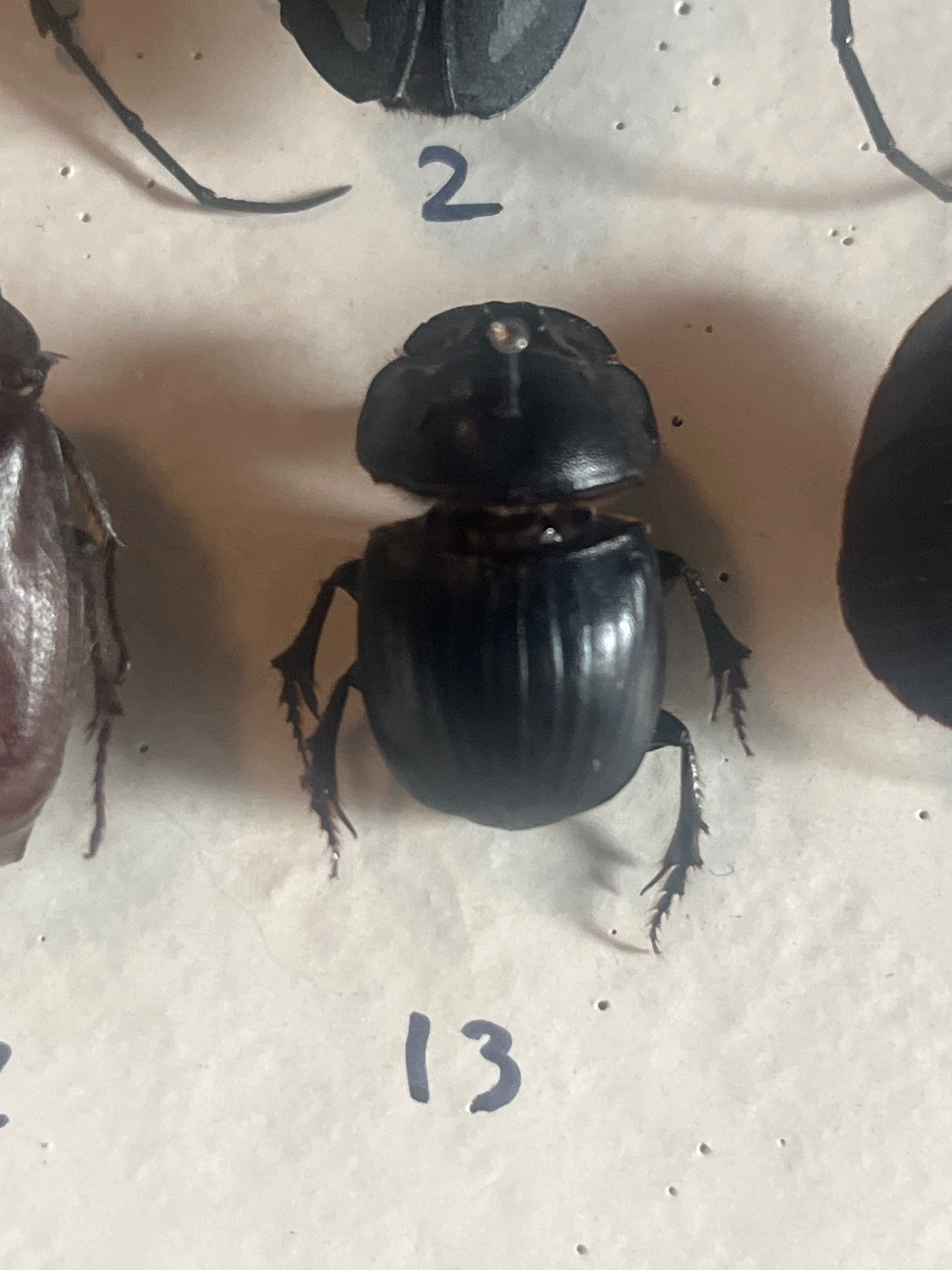
Community identification
Dung beetle (likely a scarab beetle)
Scarabaeidae sp.; exact species cannot be confirmed from the photograph
- Order & Family
- Coleoptera; Scarabaeidae
- Size
- Approximately 10–30 mm long, depending on species.
Natural Habitat
Grasslands, savannas, forests, and agricultural areas, usually wherever animal dung is available. Many species live in or beneath soil.
Diet & Feeding
Adults and larvae primarily consume herbivore dung; some species eat carrion, fungi, fruit, or decaying organic matter.
Behavior Patterns
Adults locate dung by smell, shape it into balls or bury it directly, and provision underground chambers for eggs. Larvae develop within the buried food source; adults may be nocturnal and strongly attracted to lights.
Risks & Benefits
Generally harmless to people and not venomous. Dung beetles recycle nutrients, improve soil aeration, disperse seeds, and reduce livestock-pest breeding sites.