
Community identification
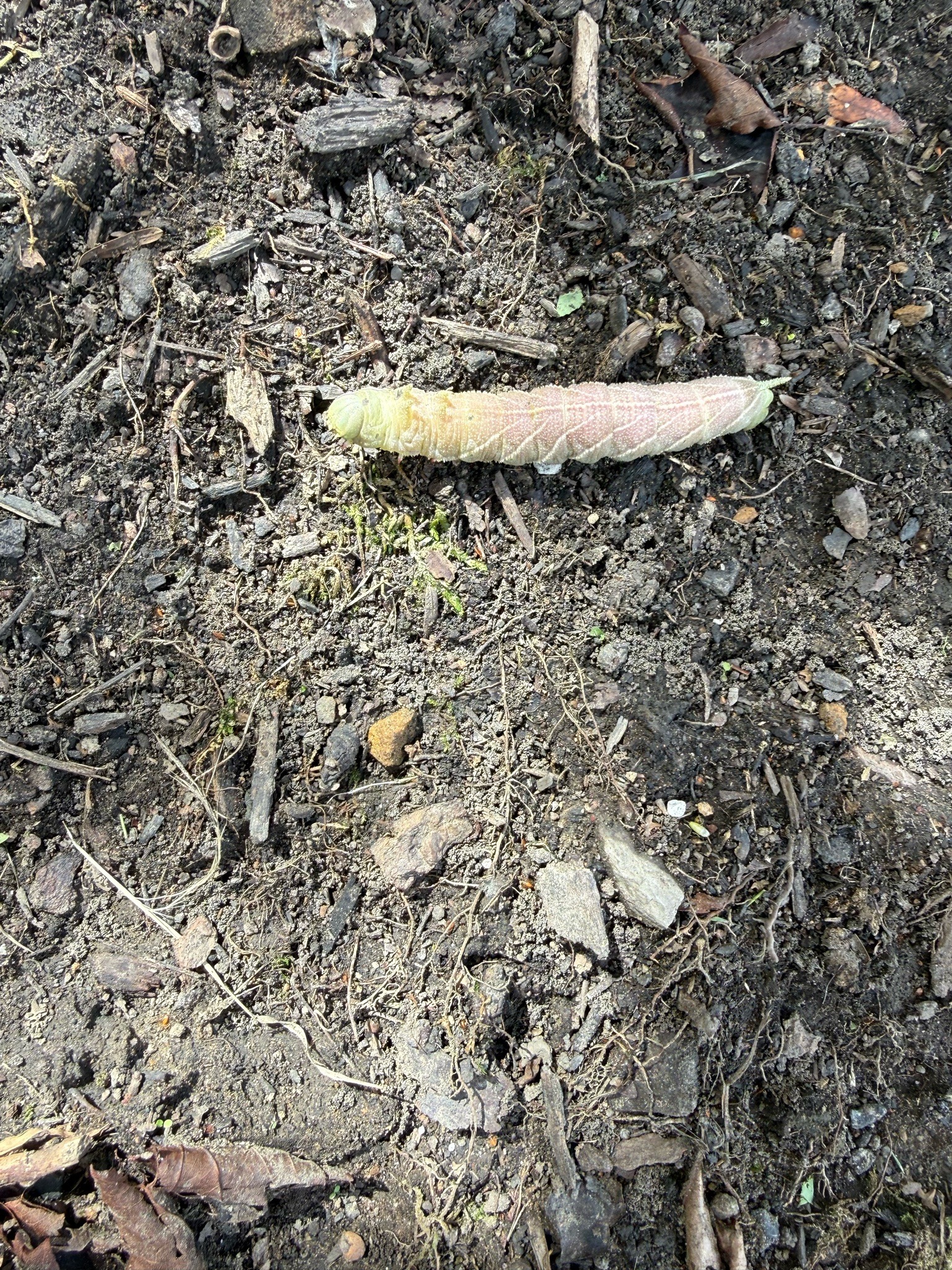
White grub (scarab beetle larva)
Scarabaeidae, genus undetermined
- Order & Family
- Coleoptera; Scarabaeidae
- Size
- Typically 10–40 mm long, depending on species; this individual appears about 25–35 mm.
Natural Habitat
Soil, compost, leaf litter, lawns, and decaying wood; this specimen appears to be on exposed garden soil.
Diet & Feeding
Larvae commonly eat plant roots, decaying organic matter, or both, depending on species. Adults often feed on foliage, flowers, fruit, or dung.
Behavior Patterns
C-shaped, soft-bodied larvae live underground and pass through three larval stages before pupating in a soil cell. They are usually nocturnal or concealed during daylight and may surface after disturbance or heavy rain.
Risks & Benefits
Some species damage lawns, crops, and garden roots; others recycle organic matter and serve as important food for birds, mammals, and predatory insects. Identification to species requires clearer views of the head, legs, and terminal abdomen.