
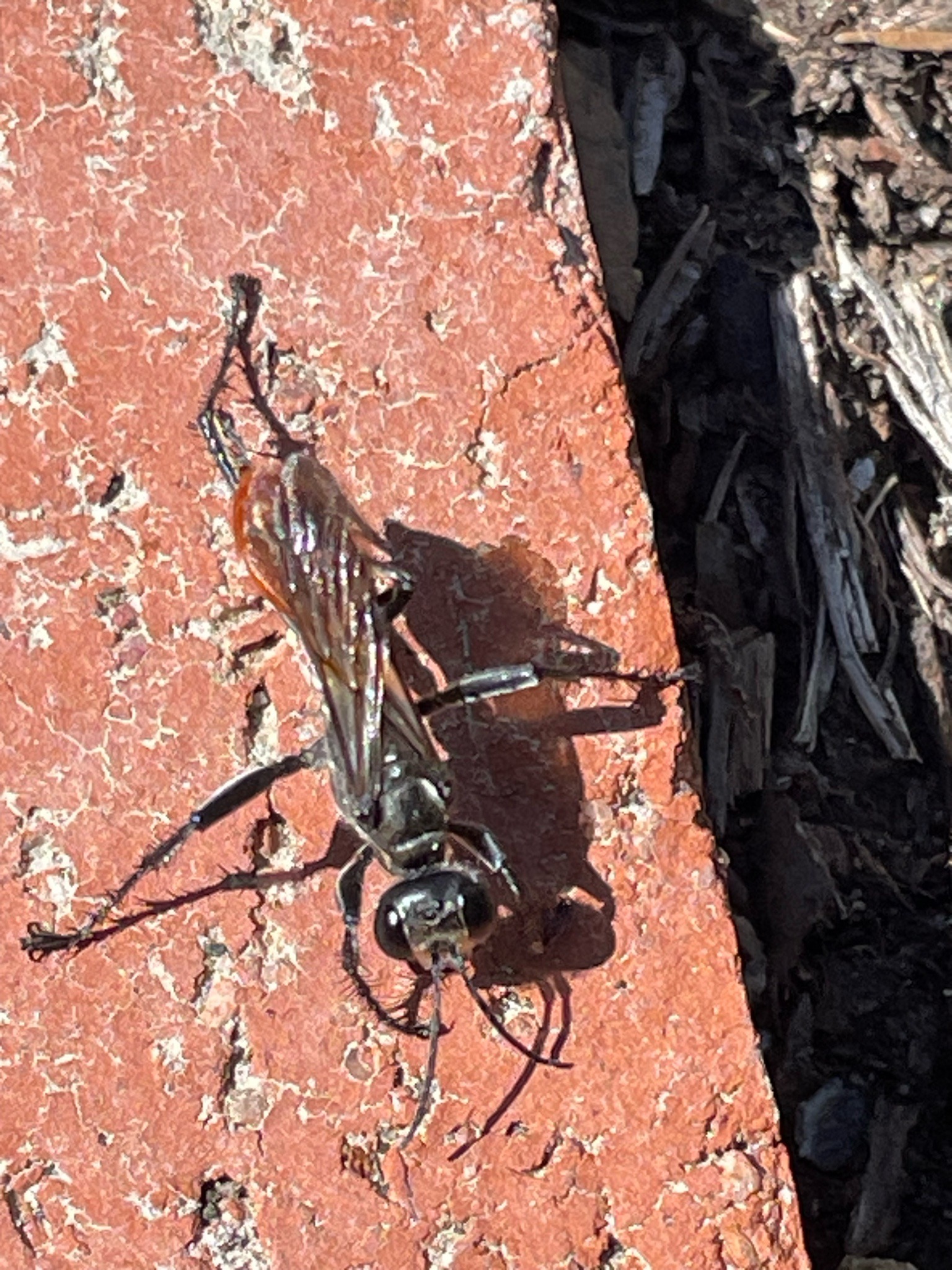
Community identification
Great black wasp
Sphex pensylvanicus
- Order & Family
- Hymenoptera; family Sphecidae (thread-waisted wasps)
- Size
- Typically 25–35 mm (1–1.4 in) long; females are larger than males.
Natural Habitat
Sunny, open areas with sandy or loose soil, including gardens, meadows, prairies, and forest edges. Adults commonly visit flowers and nest in soil.
Diet & Feeding
Adults consume nectar, especially from flowers such as milkweed and goldenrod. Females provision nests with paralyzed grasshoppers and katydids for their larvae.
Behavior Patterns
Solitary and generally nonaggressive unless handled; females excavate branching underground nests and drag in prey. Adults are active in warm weather, usually from mid-summer into early fall.
Risks & Benefits
The sting can be painful, but this species rarely stings people without direct provocation. It benefits gardens and ecosystems by pollinating flowers and controlling grasshopper and katydid populations.