
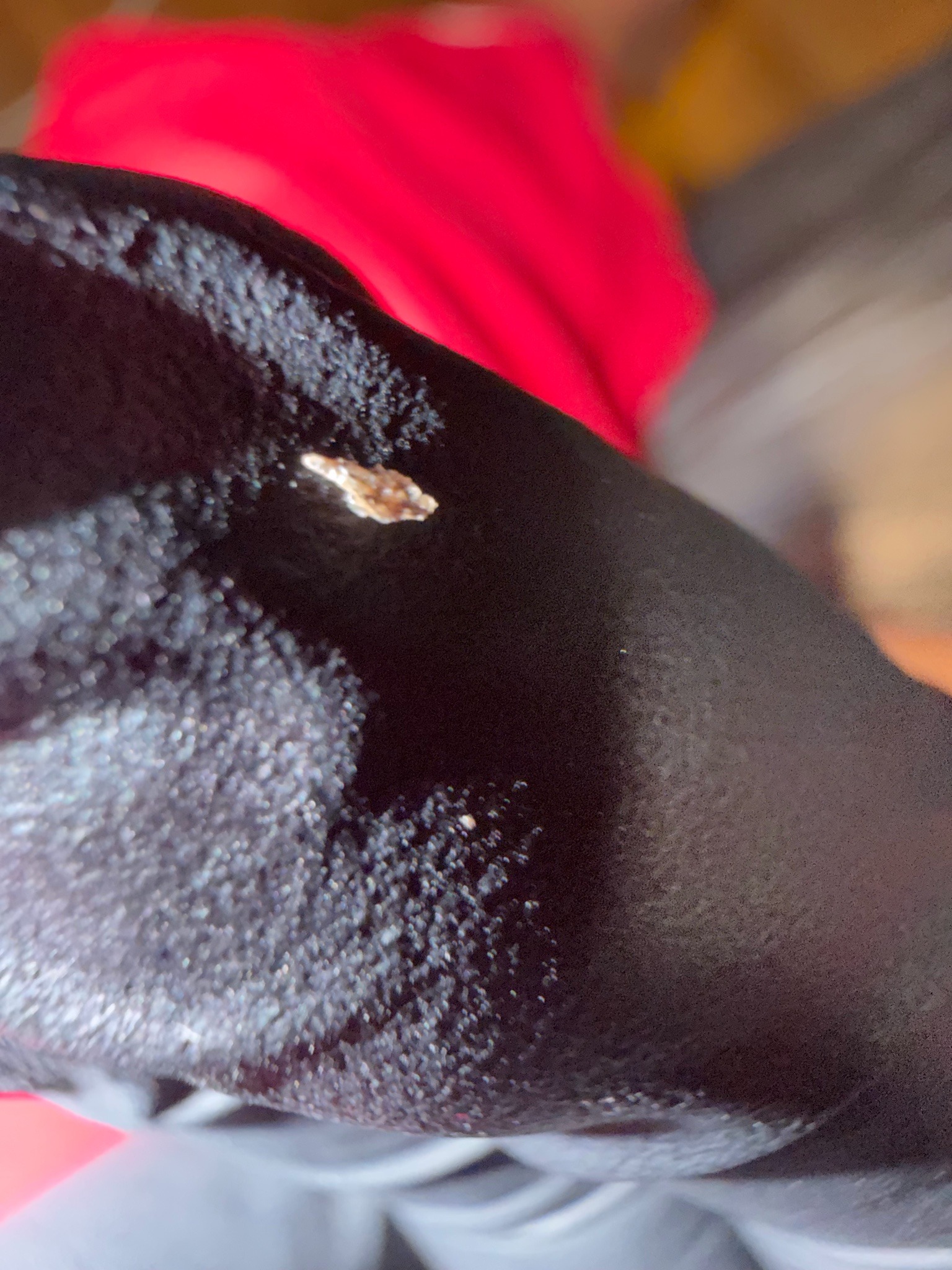
Community identification
Possibly a case-bearing clothes moth larva
Likely *Tinea pellionella* (identification uncertain from image)
- Order & Family
- Lepidoptera; Tineidae
- Size
- Larva and portable case typically 5–10 mm long.
Natural Habitat
Dark, undisturbed indoor areas such as closets, carpets, upholstery, and stored textiles.
Diet & Feeding
Larvae consume keratin-containing materials, including wool, fur, feathers, hair, and lint; adults do not feed on fabrics.
Behavior Patterns
Larvae hide in and move with a silken, fiber-covered case, feeding mostly at night. Adults are small moths that reproduce in secluded household areas.
Risks & Benefits
They are harmless to people and do not bite, but infestations can damage wool, fur, carpets, and other animal-fiber textiles. They provide limited ecological value as decomposers of keratin-rich material.