
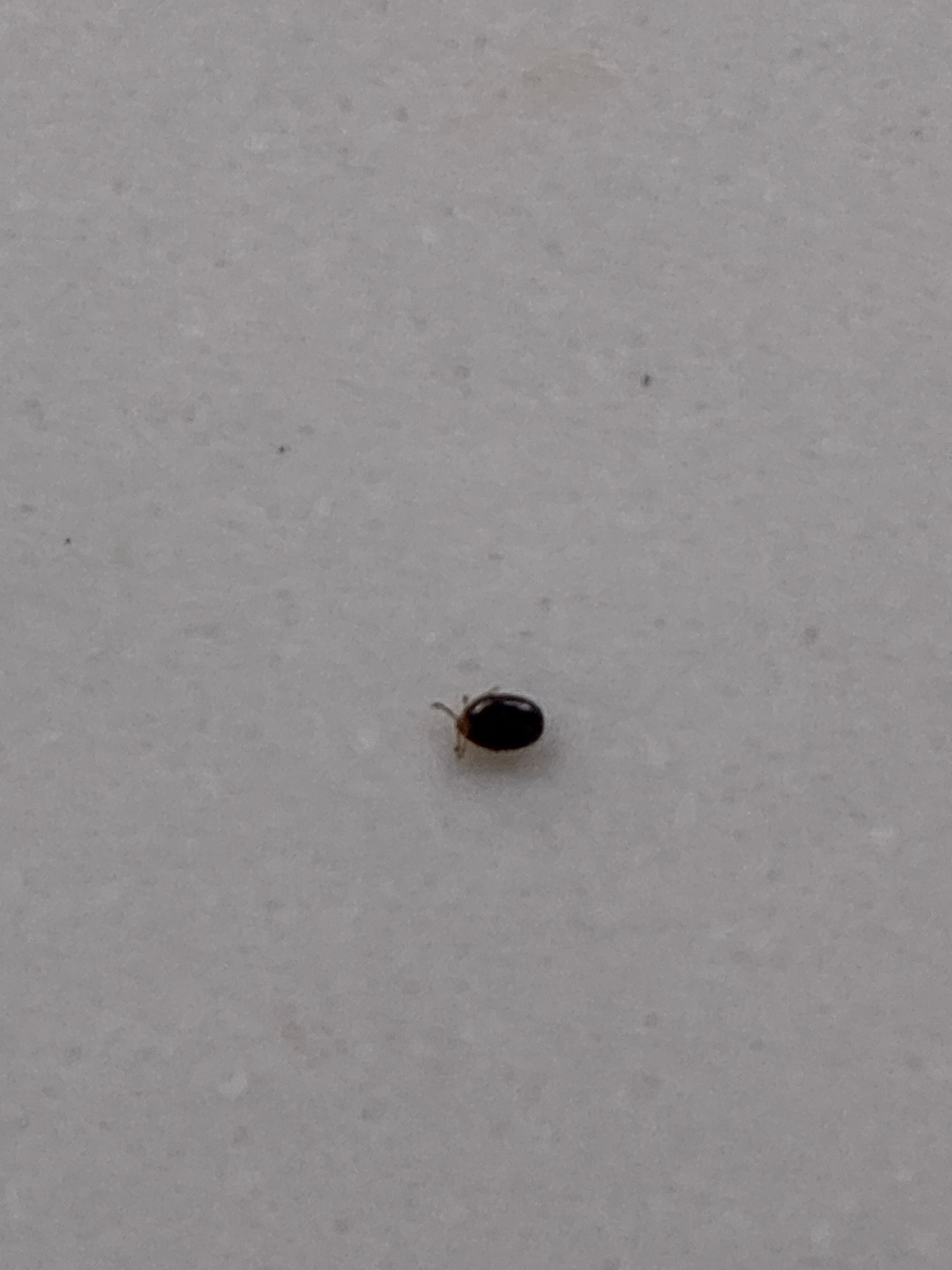
Community identification
Spider beetle (likely a smooth spider beetle)
Gibbium aequinoctiale
- Order & Family
- Coleoptera; Anobiidae (often treated within Ptinidae)
- Size
- About 1.5–3 mm long.
Natural Habitat
Dry indoor areas such as pantries, cupboards, attics, and wall voids; it may also occur in bird or rodent nests. It is commonly associated with stored organic materials.
Diet & Feeding
Larvae feed on dried plant and animal matter, including grains, spices, pet food, wool, feathers, and dead insects. Adults typically feed little or not at all.
Behavior Patterns
Adults are shiny, rounded, dark beetles with long legs and may resemble tiny spiders. They are mostly nocturnal, hide in cracks, and develop slowly in protected, undisturbed sites.
Risks & Benefits
They do not bite, sting, transmit disease, or damage buildings. Infestations can contaminate or damage stored food, textiles, and other dry materials; they also recycle decomposing organic matter.