
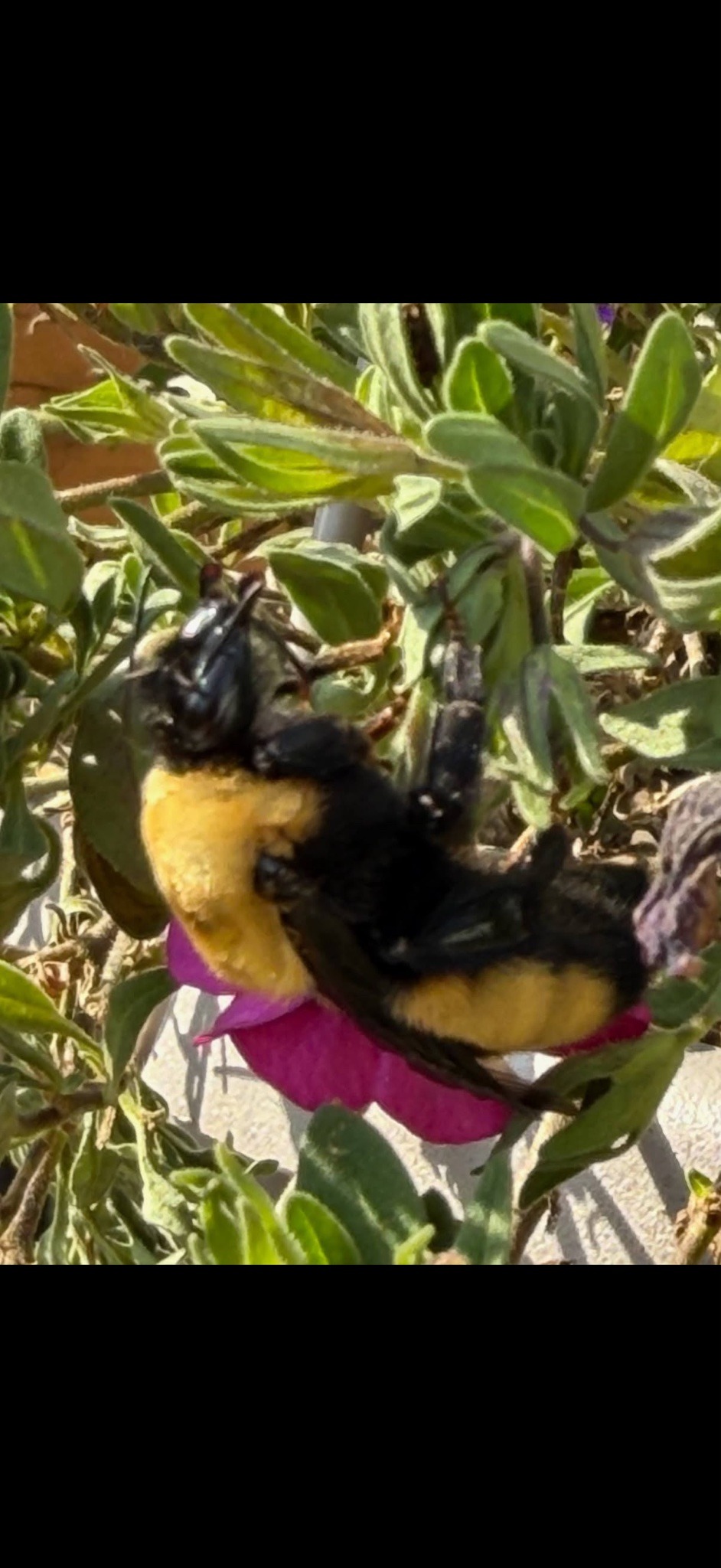
Community identification
Blue-black carpenter bee (likely)
Xylocopa sp., probably Xylocopa caerulea or a closely related species
- Order & Family
- Hymenoptera; Apidae
- Size
- About 20–30 mm long, depending on species and sex.
Natural Habitat
Warm gardens, shrublands, woodland edges, and coastal or subtropical areas with abundant flowers and dead wood for nesting.
Diet & Feeding
Adults consume nectar and collect pollen; females provision larval cells with pollen and nectar. They are important pollinators, often using buzz pollination.
Behavior Patterns
Usually solitary, though multiple bees may nest near one another. Females excavate tunnels in wood; adults are strong fliers and may defend nest entrances, while males generally cannot sting.
Risks & Benefits
Females can sting if handled or trapped, but they are generally nonaggressive. They provide valuable pollination, though extensive nesting in exposed untreated wood can cause minor structural damage.