
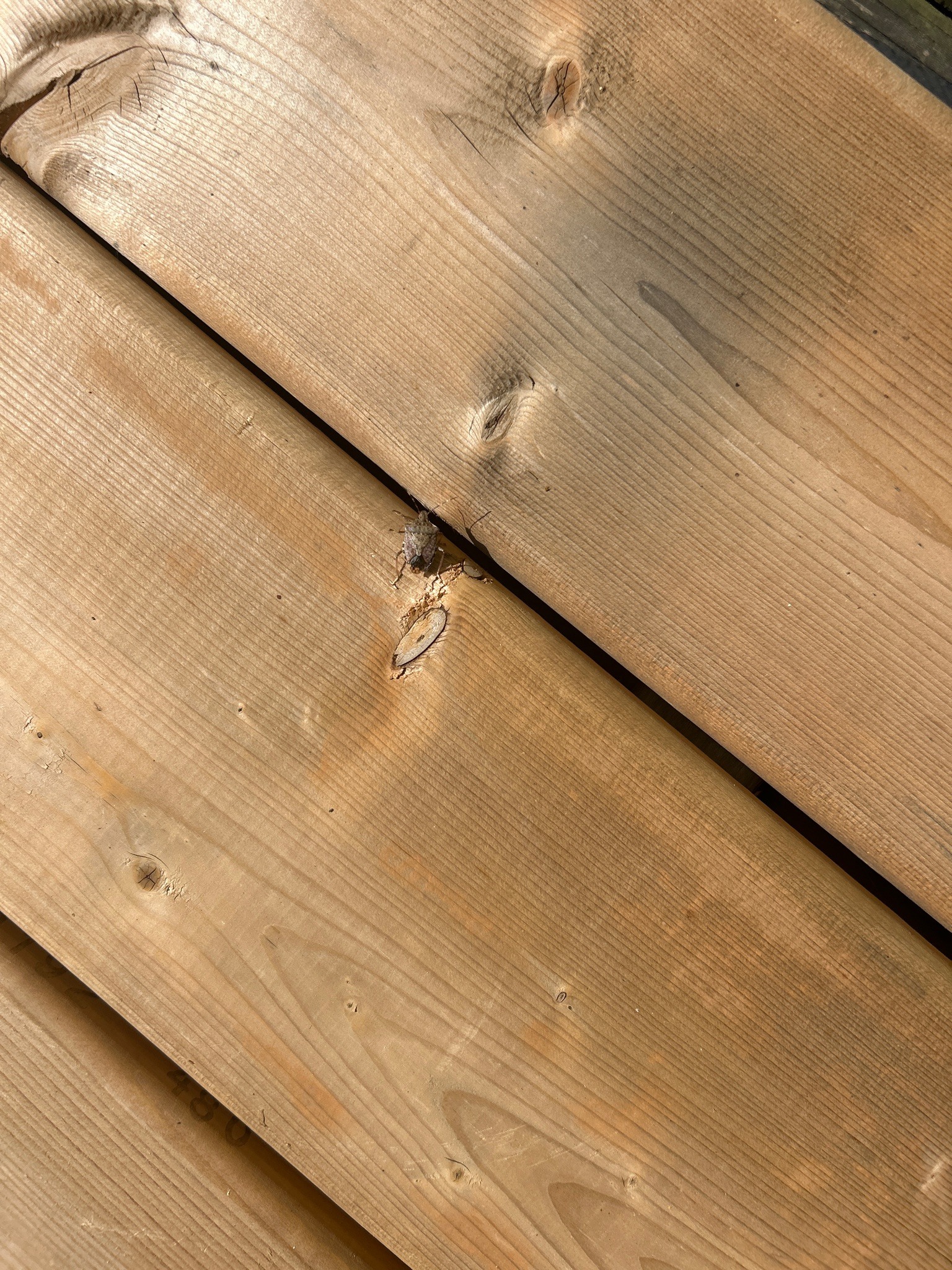
Carpenter ant
Camponotus species (likely Camponotus pennsylvanicus)
- Order & Family
- Hymenoptera; Formicidae
- Size
- Workers typically 6–13 mm long; queens may reach about 17 mm.
Natural Habitat
Wooded areas, wall voids, structural timbers, decks, and other damp or decaying wood. The pictured excavation marks are consistent with nesting in wood, though species-level identification from the image is uncertain.
Diet & Feeding
Omnivorous: feeds mainly on honeydew and other sugary liquids, plus dead insects and small arthropods. It does not eat wood; workers excavate it to create galleries.
Behavior Patterns
Colonies are social and may contain thousands of workers, with satellite nests connected to a parent colony. Winged reproductives emerge seasonally, while workers are mostly nocturnal and may forage indoors.
Risks & Benefits
They can weaken damp or structurally compromised wood, making infestations a property concern, but they do not normally damage sound wood as aggressively as termites. Ecologically, they recycle wood and prey on other insects.