
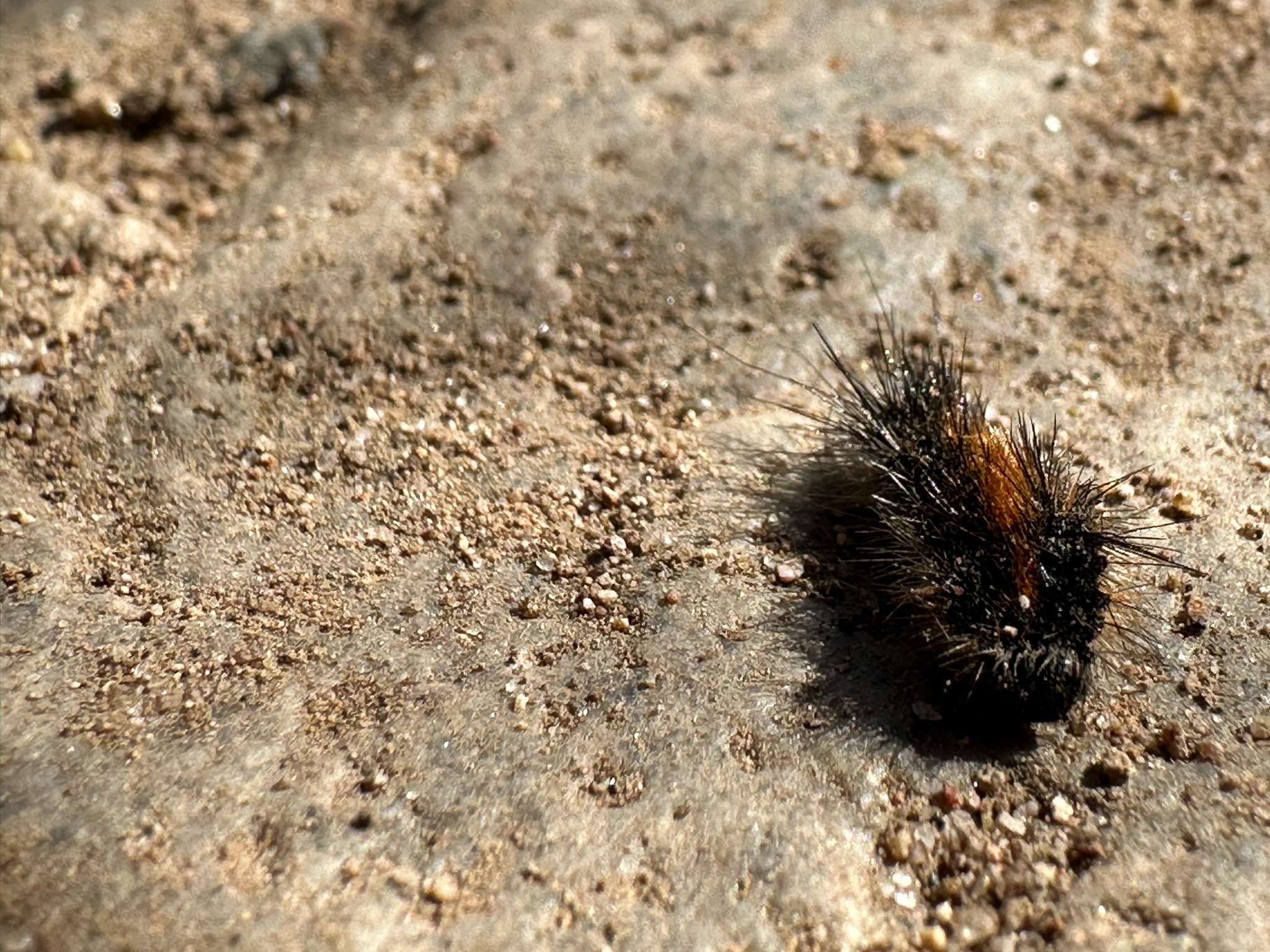
Woolly Bear Caterpillar
Pyrrharctia isabella
- Order & Family
- Lepidoptera (Order), Erebidae (Family)
- Size
- Typically 1.5 to 2 inches (3.8 to 5 cm) in length when fully grown.
Natural Habitat
Found in a variety of habitats, including fields, pastures, forests, and suburban areas across North America.
Diet & Feeding
Herbivorous. Feeds on a wide range of plants, including grasses, weeds (like dandelion and plantain), and leaves of trees.
Behavior Patterns
Known for curling into a tight ball when disturbed or threatened. They are famous for being seen in the fall when they wander in search of a place to overwinter. They survive freezing temperatures by producing a cryoprotectant in their tissues.
Risks & Benefits
Generally harmless to humans. While they have stiff hairs (setae), they do not sting, though the hairs may cause mild skin irritation in sensitive individuals. They are beneficial as part of the food web, providing food for birds and other predators. According to folklore, the width of their brown band predicts the severity of the coming winter, though this is not scientifically supported.