
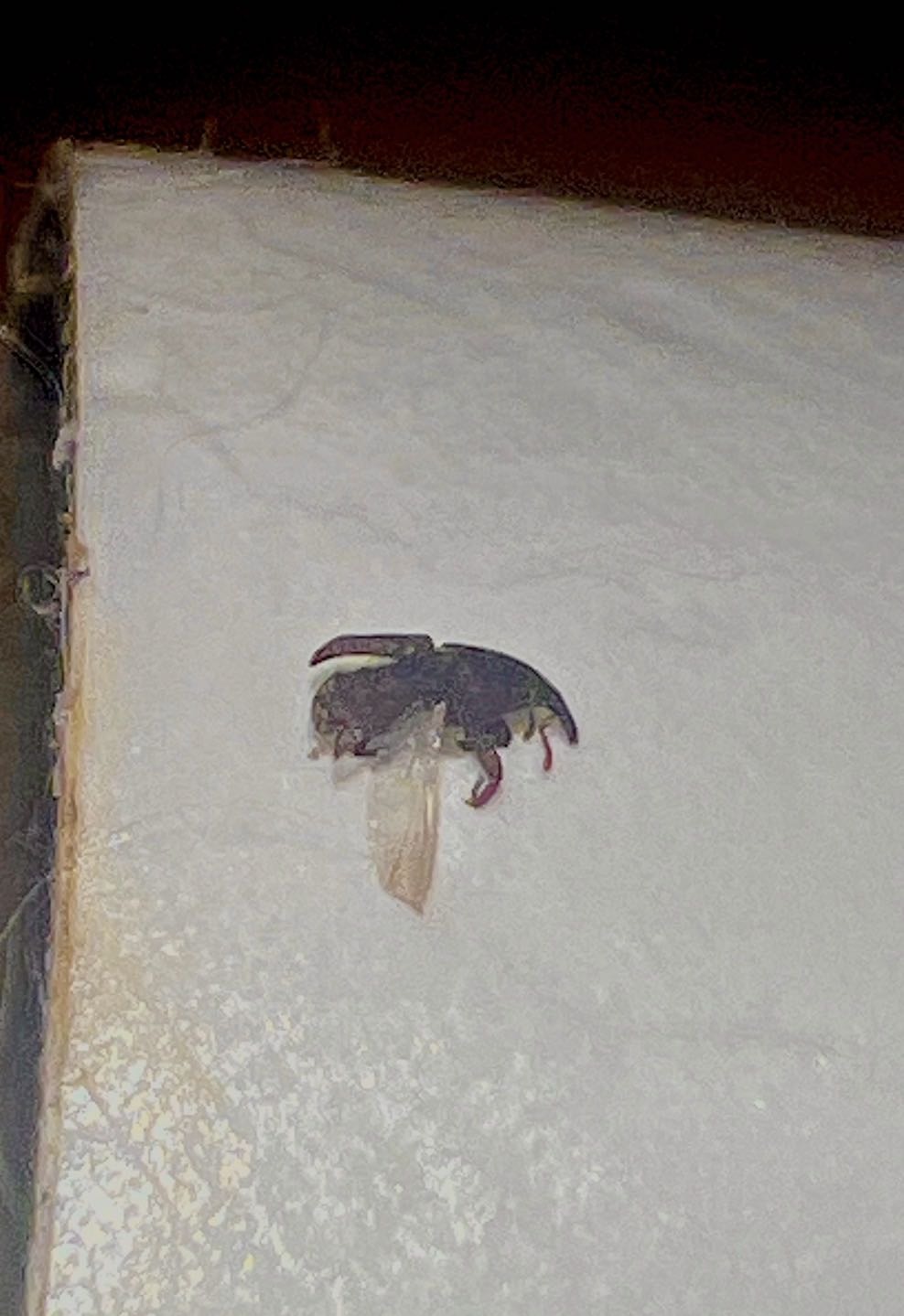
Community identification
Flower chafer beetle (likely a scarab beetle)
Cetoniinae sp. (exact species unclear from the image)
- Order & Family
- Coleoptera; Scarabaeidae
- Size
- Usually about 10–25 mm long, depending on species.
Natural Habitat
Adults occur on flowers, fruit, sap flows, gardens, and woodland edges; larvae typically develop in soil, compost, or decaying wood.
Diet & Feeding
Adults feed mainly on nectar, pollen, flowers, and ripe or fermenting fruit. Larvae generally consume decaying plant material and organic soil matter.
Behavior Patterns
Adults are strong fliers and often visit flowers in warm daylight; many species produce a buzzing flight. They lay eggs in soil, compost, or rotting wood, where larvae develop before pupating.
Risks & Benefits
Generally harmless to people and homes, though adults may damage flowers or fruit. Larvae help decompose organic matter and recycle nutrients; adults can pollinate plants.