
Community identification
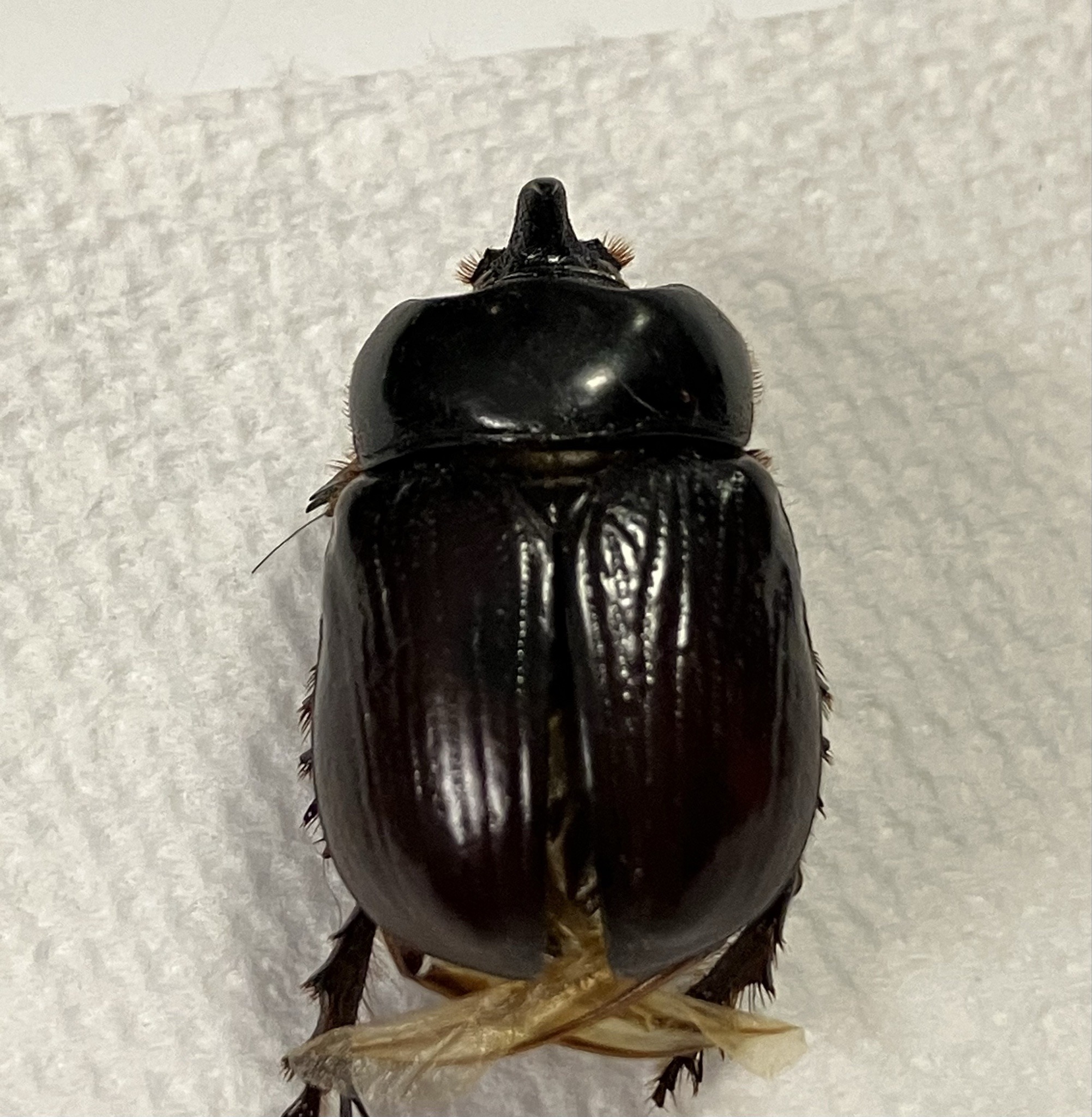
Dung beetle (likely a dor beetle)
Likely *Geotrupes* species; species-level identification requires location and clearer diagnostic features
- Order & Family
- Coleoptera, Geotrupidae
- Size
- Typically 10–25 mm long, depending on species.
Natural Habitat
Grasslands, pastures, woodland edges, and gardens containing animal dung or decaying organic matter.
Diet & Feeding
Adults and larvae primarily consume herbivore dung; some species also use fungi, carrion, or decaying vegetation.
Behavior Patterns
Adults excavate tunnels beneath dung and bury food for themselves or their larvae. Many are nocturnal and strong fliers, often attracted to lights.
Risks & Benefits
Harmless to people and generally non-aggressive. They recycle nutrients, improve soil structure, disperse seeds, and reduce dung available to nuisance flies.