
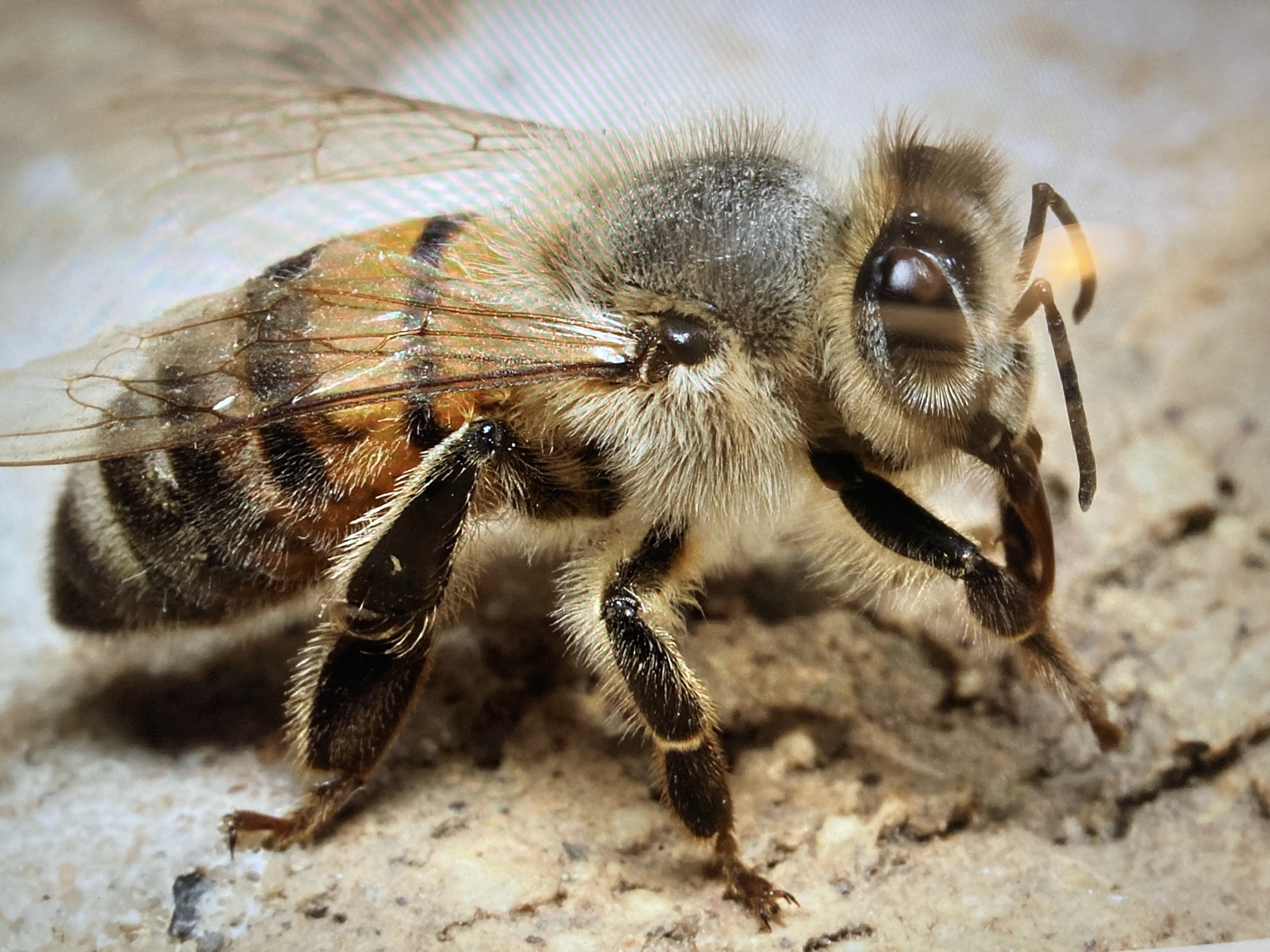
European honey bee
Apis mellifera
- Order & Family
- Hymenoptera; family Apidae
- Size
- Workers: 10–14 mm; queens: 15–20 mm; drones: 15–17 mm.
Natural Habitat
Worldwide in temperate and tropical regions, especially gardens, meadows, orchards, woodlands, and managed hives. Colonies nest in cavities or purpose-built hive boxes.
Diet & Feeding
Adults consume nectar and pollen; nectar supplies carbohydrates, while pollen provides protein and other nutrients. Larvae are fed glandular secretions, pollen, and honey-derived food.
Behavior Patterns
Highly social, colony-living insects organized around a queen, workers, and drones. Workers forage, communicate locations through dances, build wax comb, pollinate plants, and defend the nest with barbed stings.
Risks & Benefits
Stings can cause pain and, in allergic people, potentially life-threatening anaphylaxis; stepped-on or threatened colonies may attack. They are major pollinators supporting wild plants and many agricultural crops, and produce honey and beeswax.