
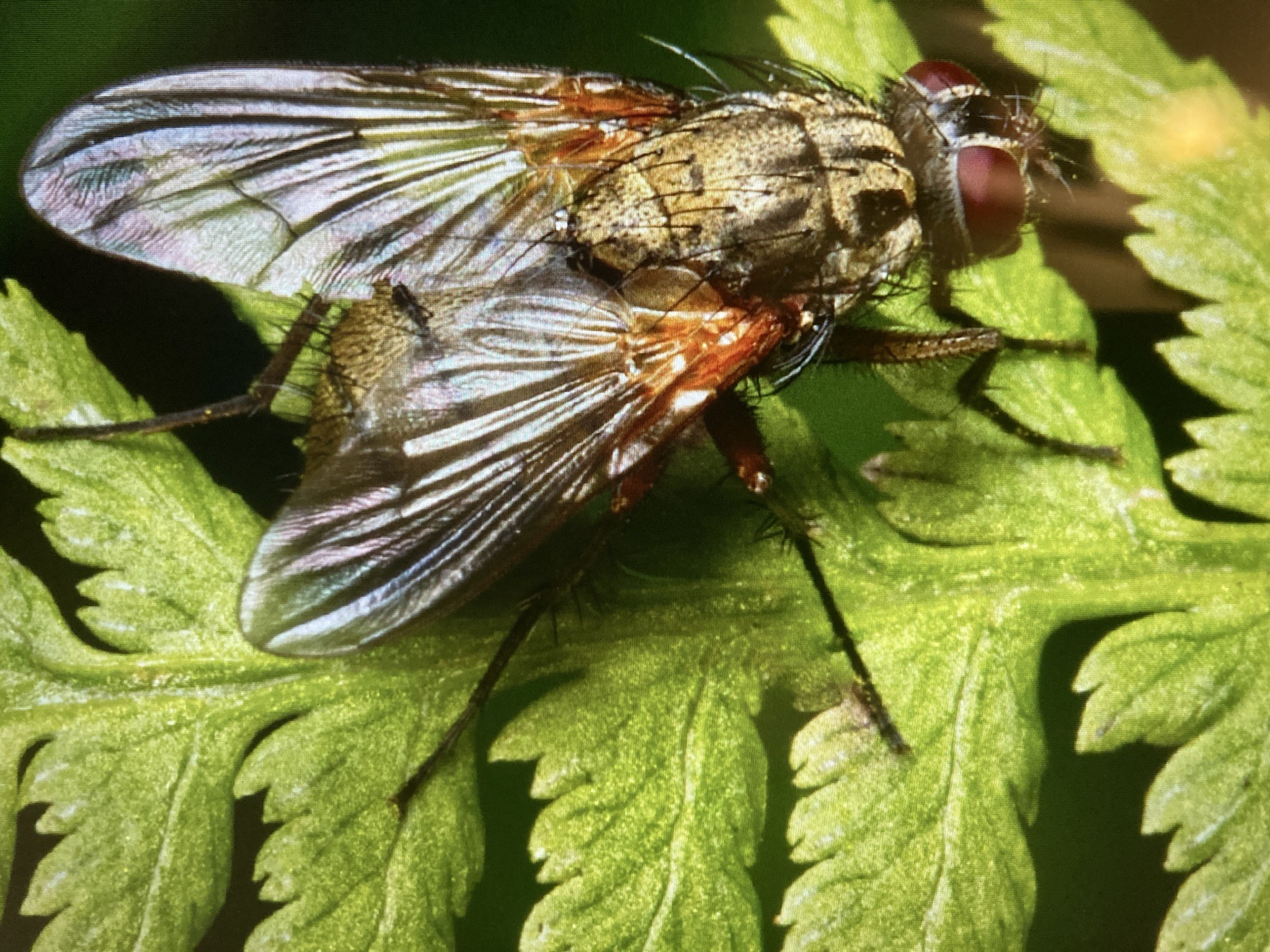
Community identification
Cluster fly
Pollenia rudis
- Order & Family
- Diptera; Polleniidae
- Size
- Approximately 6–10 mm long.
Natural Habitat
Woodlands, gardens, fields, and buildings, especially near lawns or soil where larvae develop.
Diet & Feeding
Adults feed mainly on flower nectar, plant juices, and honeydew; larvae parasitize and feed inside earthworms.
Behavior Patterns
Adults are sluggish, often bask in sunlight, and overwinter communally in wall voids, attics, and other sheltered sites. Several generations may occur annually.
Risks & Benefits
They do not bite, sting, or transmit major human diseases, though indoor aggregations are a nuisance. Larvae help regulate earthworm populations, while adults contribute modestly to pollination.