
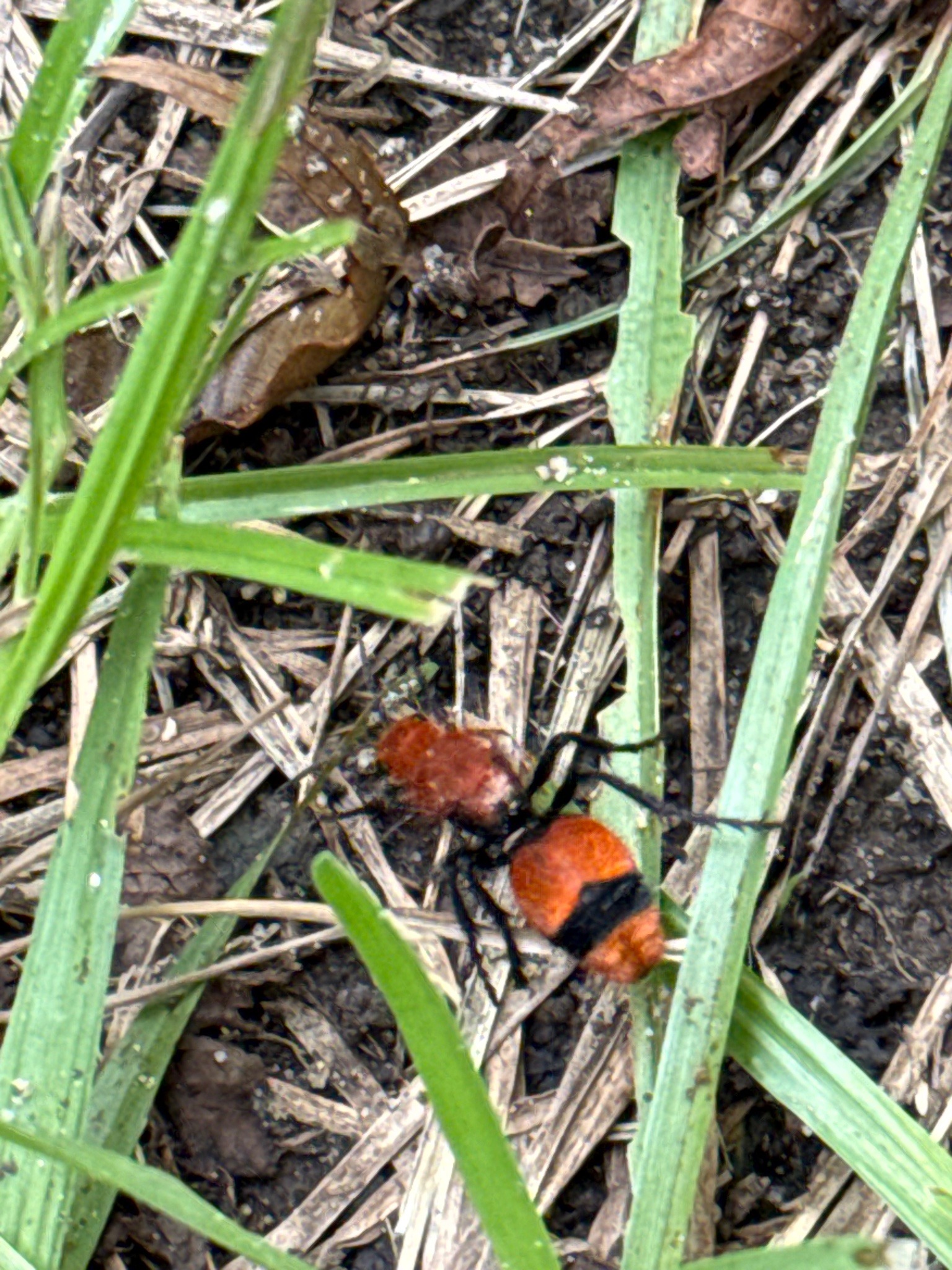
Red velvet ant (cow killer)
Dasymutilla sp., likely Dasymutilla occidentalis
- Order & Family
- Hymenoptera; Mutillidae
- Size
- About 12–25 mm (0.5–1 in), depending on species and sex.
Natural Habitat
Open, sandy or well-drained ground, grasslands, woodland edges, and lawns across much of North America. Females are wingless and commonly roam on soil and leaf litter.
Diet & Feeding
Adults consume nectar and possibly other plant liquids; males may also feed on honeydew. Larvae are parasitoids of ground-nesting bees and wasps, consuming developing brood.
Behavior Patterns
The pictured individual is likely a female, recognizable by its wingless body and dense red-orange hairs. Females search actively for host nests and can produce a loud squeak when handled; males are winged.
Risks & Benefits
Females have an exceptionally painful sting, but they are not aggressive and rarely sting unless restrained. They benefit ecosystems by regulating solitary bee and wasp populations and contributing modestly to pollination.