
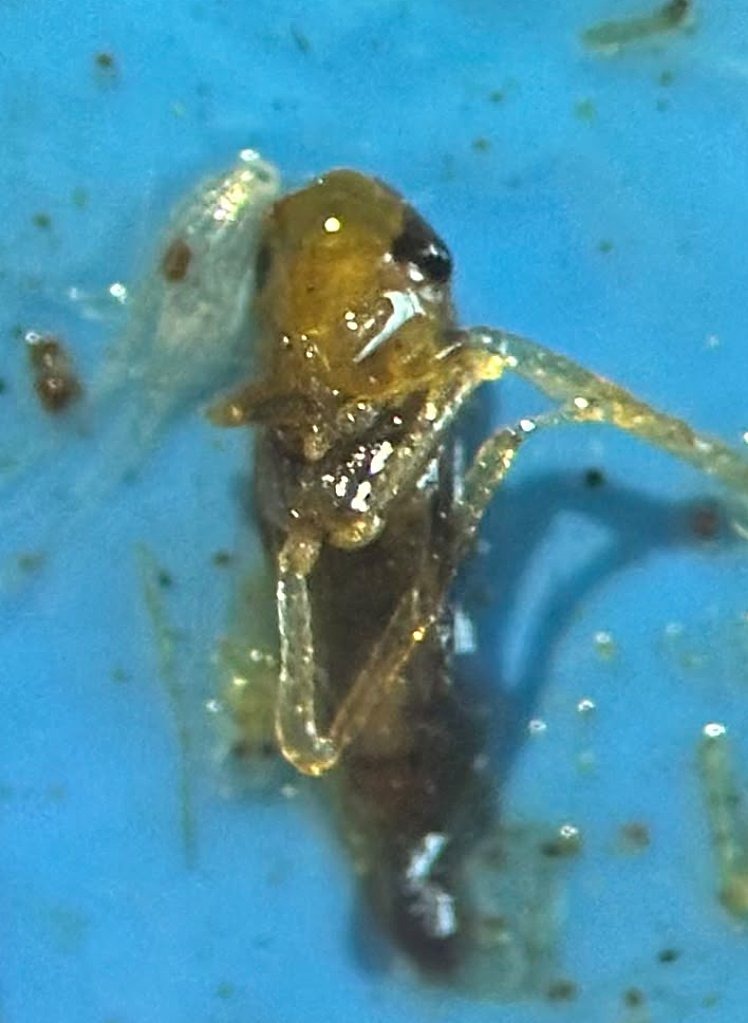
Community identification
Likely fungus gnat (adult)
Bradysia spp. (tentative)
- Order & Family
- Diptera; Sciaridae
- Size
- Adults are typically 1.5–4 mm long; the pictured specimen appears partly damaged or submerged.
Natural Habitat
Moist soil, decaying organic matter, fungi, and damp indoor plant media. Adults commonly occur around houseplants, greenhouses, and shaded vegetation.
Diet & Feeding
Larvae feed mainly on fungi, algae, and decaying organic matter, sometimes grazing on fine roots. Adults generally consume little, occasionally taking liquids such as nectar.
Behavior Patterns
Adults are weak fliers and often crawl or hover near soil surfaces; they are attracted to moisture and light. Larvae develop in moist substrates and can complete several generations annually indoors.
Risks & Benefits
Usually harmless to people and pets. Larvae may damage seedlings and roots when abundant, while contributing to decomposition and serving as prey for other organisms.